
molecular-biology

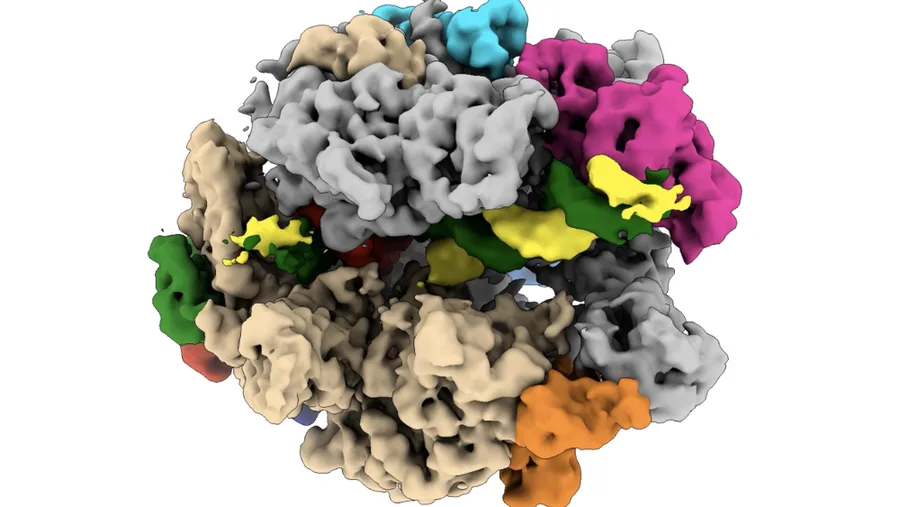
All living things have a fleet of tiny copy machines that turn instructions from DNA into RNA, the molecules responsible for helping build proteins that keep organisms alive. One of these, called eukaryotic RNA polymerase II, performs a crucial early step required by nearly every biological process. A team led by Penn State researchers has captured a glimpse of this molecular machinery as it oper…

There has been a growing focus on ‘molecular chameleons’ possessing structural flexibility; compounds that can dynamically adjust their conformations depending on the characteristics of the medium to either conceal or reveal polar parts in aqueous/lipidic environments. Drug discovery has shifted in the past few decades toward more complex molecules, such as cyclic and macrocyclic peptides, as wel…

Researchers used cryo-electron microscopy to reveal that two classes of antibiotics shut down RNA polymerase in bacteria by locking a key structural component in place. This discovery gives new insight into the basic biology of the enzyme, revealing a previously unknown moving part that may be essential across domains of life.

Molecular Identification of Freshwater Snails (Mollusca: Gastropoda) from Selected Rivers in Zamboanga Peninsula, the Philippines Document Type Article Publication Date 2025 Recommended Citation Siglos, L., & Lopez, C. (2025). Molecular Identification of Freshwater Snails (Mollusca: Gastropoda) from Selected Rivers in Zamboanga Peninsula, the Philippines. Philippine Journal of Science, 154(2), 48…

Document Type Article Publication Date 2025 Recommended Citation Delocado, E. D., Banzon, V. R., & Sanchez, E. G. (2025). A Concoction Pipeline for Generating Molecular Operational Taxonomic Units (MOTUs) Among Riparian and Aquatic Beetles. Journal of Visualized Experiments, Issue 221, Article number e68323. https://archium.ateneo.edu/

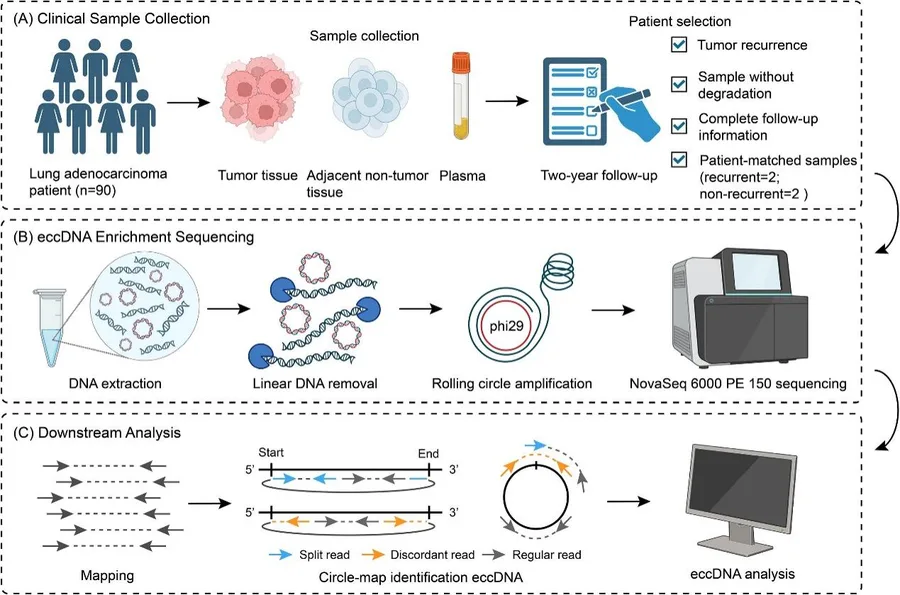
A multi-omics study has revealed distinct extrachromosomal circular DNA (eccDNA) features associated with postoperative recurrence in lung adenocarcinoma (LUAD). By integrating Circle-seq with genomic, transcriptomic, epigenomic, and clinical data, the researchers characterized recurrence-associated eccDNA profiles and identified a seven-gene signature with potential value for recurrence risk str…

dc.title: Two studies in molecular and computational biology: ATM loss driving transcriptional disruption, and the practical limits of zero-shot evolutionary models dc.description.abstract: This dissertation contains two independent bodies of work in molecular biology and computational biology. The first investigates the mechanistic basis of cerebellar neurodegeneration in Ataxia-Telangiectasia (…

Brain health depends on the fine coordination of metabolic and neuronal pathways, and disturbances in this balance are recognized as major drivers of neurodegenerative, neurological, and neuropsychiatric disorders. Increasing evidence indicates that microRNAs (miRNAs), as key post-transcriptional regulators of gene expression, play important roles in the molecular networks underlying neurological…

Nature Communications, Published online: 25 July 2026; doi:10.1038/s41467-026-75985-8 The lncRNA Trdn-as regulates the formation of the cardiac-specific TRDN isoform through transcriptional interference and m6A modification. This is crucial for accurate cardiac dyad calcium release and prevents QT prolongation and cardiomyopathy.

research.ioresearch.io

Sign up to keep scrolling

Create your feed subscriptions, save articles, keep scrolling.

Already have an account?