
bioinformatics
Precise activation of tens of thousands of genes is critical for healthy development and growth. Specialized segments of our DNA are responsible for carefully orchestrating genetic sequences that result in the production of enzymes, hormones, proteins and other crucial components underlying cell structure and function.

Scientists have revealed the DNA identity of the "initiator," a crucial sequence that kickstarts gene activation. AI analysis of a half million data points deciphered the initiator's identity. Researchers can use the new information to scan for mutations that may lead to diseases such as cancer.

Scientists have revealed the DNA identity of the "initiator," a crucial sequence that kickstarts gene activation. AI analysis of a half million data points deciphered the initiator's identity. Researchers can use the new information to scan for mutations that may lead to diseases such as cancer.

Hertz Fellow Rebecca Carlson has received an award from the Hertz Foundation's Harold Newman and David Galas Entrepreneurial Initiative, to support her new venture--the Deliverome Project, which publicly launched on May 27. Since 2012, the Entrepreneurial Initiative has provided financial and professional support to Hertz Fellows who propose innovative entrepreneurial projects, offering up to $25…

Researchers developed a computational tool that could help to finding genes most directly related to disease, and which in a reported study identified 21 genes related to asthma, most of which hadn’t been discovered by other methods. The post DANDELION Computational Tool Identifies Previously Unknown Asthma-Related Genes and Pathway appeared first on GEN - Genetic Engineering and Biotechnology Ne…
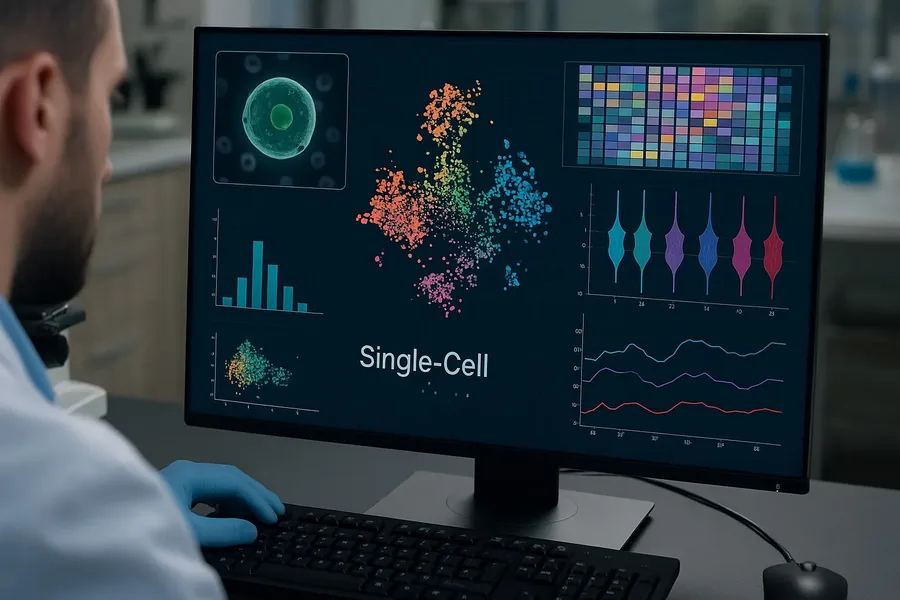
Modern biology research can now generate valuable data on an unprecedented scale. But there is one major obstacle: making sense of these complex high-dimensional datasets.
Researchers at Karolinska Institutet and Stockholm University have developed a new tool that estimates a cell's biological age by analysing its gene activity.
Coding agents have changed how we work as bioinformaticians. The change is recent enough that most published guidance is already out of date, and the tools are meaningfully different from six months ago. The friction of writing and executing code is mostly gone. We now work most on things the AI agents can’t be trusted… Read More » Bioinformatics in the world of AI coding agents
Published on August 20, 2026 1:54 PM GMT After being invested in AIxBio for some time now, I have accepted it as my niche mainly because I love dealing with fields that has high risk and where getting things right genuinely matters. And to me, biology represents the highest end of that spectrum. While I have a deep knowledge in building computing systems and security in cloud, I lack the groundin…
Published on August 20, 2026 1:00 PM GMT In May 2025 I met Yo Shavit , who was working on national security policy at OpenAI and was thinking about how to prepare for a future in which models could seriously assist attackers in creating pandemics. We had a call, and when I shared notes with my team their main response was: "maybe start with not making models that can do that?" Which is, in many w…

You heard me right, this isn't some SciFi or a new movie script, it's real. Actual Neurons cultivated in labs, wired into computing systems. Though my first question is... does this mean we are a bit closer to AGI? A future where machines don't simply just calculate but think? So what is this even? It's Bio-computing. And what is Bio-computing? It's using living neurons as processors instead of y…
Nearly every cell in the human body contains essentially the same genetic information, yet different cells activate different genes. For regulatory proteins to reach these genes, DNA must be accessible.

Researchers at Karolinska Institutet and Stockholm University have developed a new tool that estimates a cell's biological age by analysing its gene activity. In the journal Advanced Science, they also demonstrate how the tool can be used to identify substances that influence cellular ageing.
Diffusion of hydrolytic enzymes into biomass particles is a potential limiting step, which has yet to be studied in detail separate from intrinsic hydrolysis kinetics. We developed and applied a pore-enzyme diffusion model for both adsorbing and non-adsorbing enzymes and coupled them to reactor-level mass balance equations. With this multi-scale model, the effects of biomass particle porosity, si…

Researchers are embarking on the RNA equivalent of the Human Genome Project, including sequencing all the chemical modifications that make cells unique.

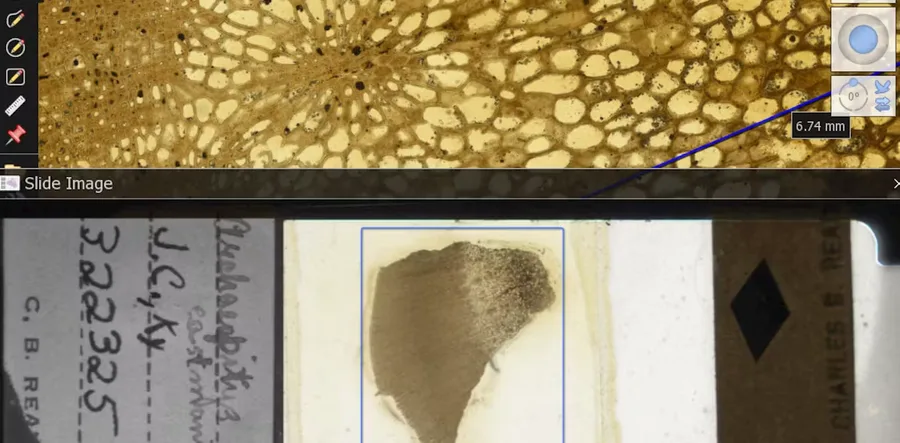
Pollen, algae, insects, radiolarians – each unique microfossil holds clues to how Earth has changed over millions of years. Combining AI with digital scanners helps researchers piece it all together.

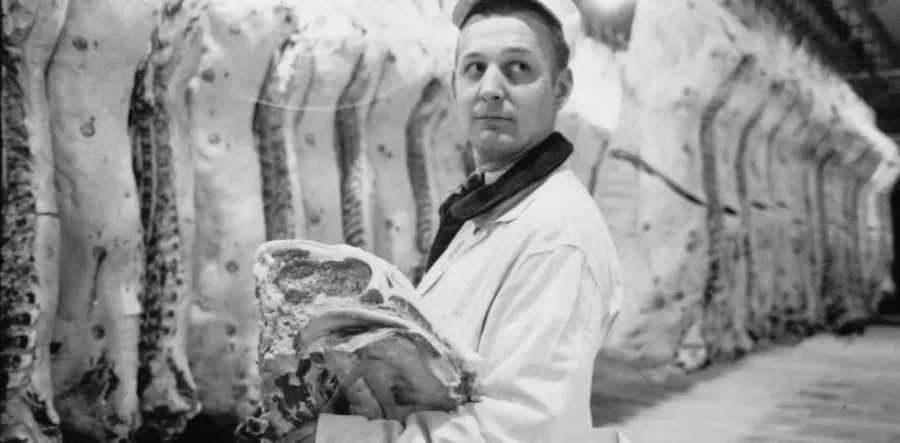
It’s relatively easy to grow a bunch of animal cells to turn into a burger. But to grow a steak made of cultured meat is a trickier task. Bioengineers must create organized, three-dimensional tissues.

The goal of creating synthetic cells is not to replace nature, but to learn more deeply about biology and reengineer it to help society.

research.ioSign up to keep scrolling
Create your feed subscriptions, save articles, keep scrolling.