Scientists have revealed the DNA identity of the "initiator," a crucial sequence that kickstarts gene activation. AI analysis of a half million data points deciphered the initiator's identity. Researchers can use the new information to scan for mutations that may lead to diseases such as cancer.
In a new research report, scientists at Johns Hopkins Medicine say they have developed a technology that allows them to capture a 3D molecular "snapshot" of hundreds of hair follicles as they develop and then reconstruct the fourth dimension -- time -- to effectively create a stop-motion animation of how this organ forms.
Thirty years ago, an insight from a rare brain disease took Robert Darnell's career in an unexpected direction. He's still surprised by what he's learning.
Researchers at Karolinska Institutet and Stockholm University have developed a new tool that estimates a cell's biological age by analysing its gene activity. In the journal Advanced Science, they also demonstrate how the tool can be used to identify substances that influence cellular ageing.
In a rare pair of papers published back-to-back in the journal Genes & Development, research teams led by senior author Anindya Bagchi, PhD, associate professor in the Cancer Genome and Epigenetics Program, establish a unified framework that governs one of cancer's most powerful master regulators.
A new study conducted by an international team of researchers including eating disorder expert Dr. Cynthia Bulik suggests understanding the specific genetic patterns of each disorder could lead to more tailored treatments for patients.
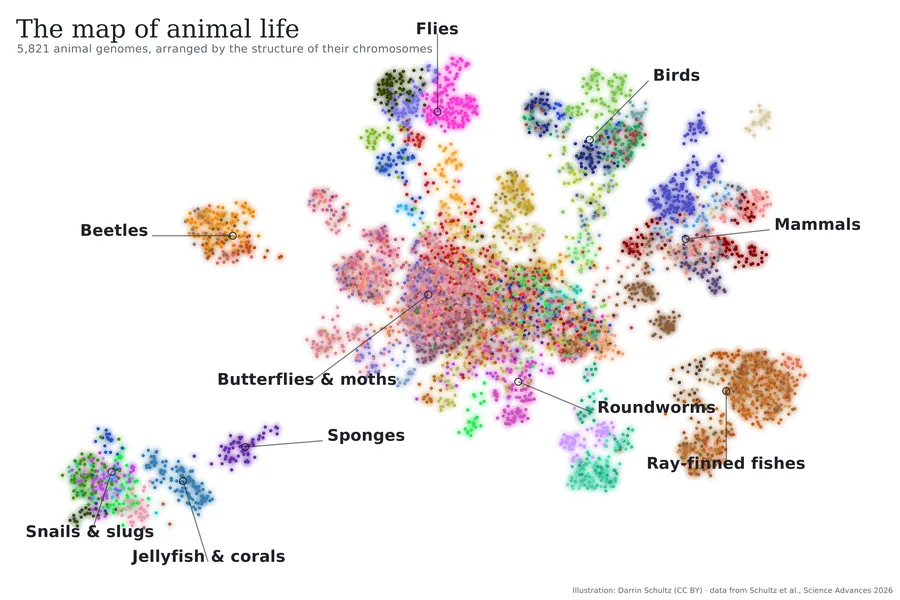
A human, an octopus, and a coral could hardly look more different -- yet deep inside their cells, their chromosomes still carry recognizable pieces of a genome inherited from an animal ancestor that lived more than 600 million years ago. A study published today in Science Advances by researchers at the University of Vienna maps how those pieces have been reshuffled across the world of animals and…
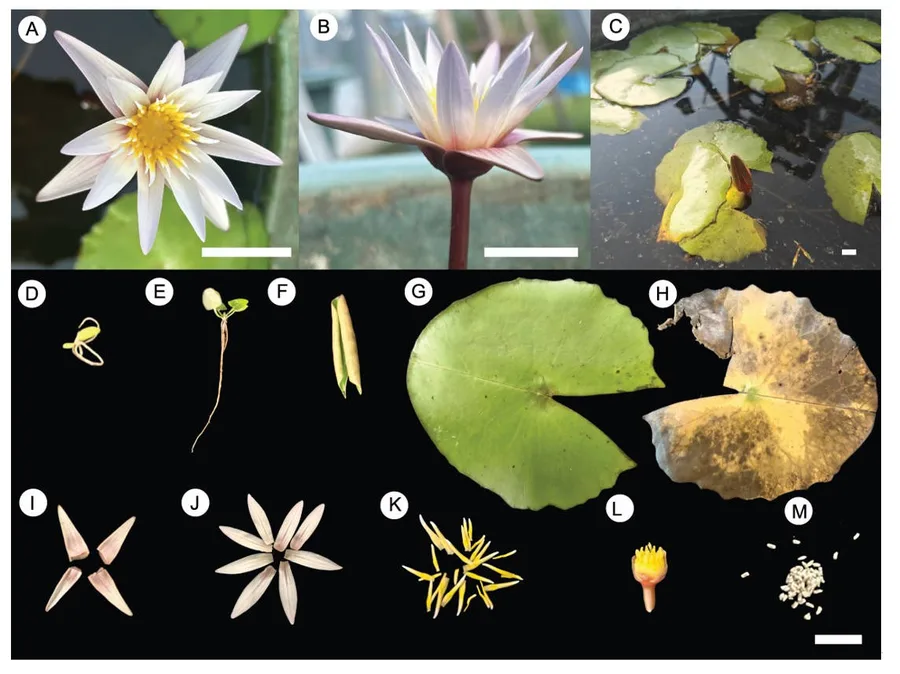
A new complete genome for the miniature water lily Nymphaea minuta offers a rare view into how early flowering plants built the genetic systems that support survival, development, and adaptation with unusual precision. By producing a gap-free telomere-to-telomere (T2T) genome and linking it with a broad ribonucleic acid sequencing (RNA-seq) atlas, researchers traced how this ancient aquatic herb …
Andelyn Biosciences, Inc., a leading patient-focused cell and gene therapy Contract Development and Manufacturing Organization (CDMO), has partnered with Queen's University to develop and manufacture AAV9-GM2, a gene therapy candidate for the treatment of GM2 gangliosidoses, such as Tay-Sachs and Sandhoff diseases.
ASHG is proud to announce the 2026-2027 ACGT Program cohort. Beginning in fall 2026, these emerging leaders will gain hands-on experience in science policy and advocacy, strengthening their ability to communicate the value of human genetics and genomics and help advance policies that improve human health.
Hepatocellular carcinoma (HCC) is the most common form of primary liver cancer and remains one of the leading causes of cancer-related deaths worldwide. Despite advances in targeted therapies and immunotherapy, substantial molecular heterogeneity continues to limit accurate prognostic prediction and effective treatment selection. While metabolic reprogramming is increasingly recognized as a hallm…
Hepatocellular carcinoma (HCC) remains a highly prevalent malignancy worldwide with limited therapeutic options and frequent resistance to treatment, necessitating the development of targeted pharmacological interventions. Although artesunate, a derivative of the widely used antimalarial drug artemisinin, has emerged as a promising anticancer candidate, the molecular basis underlying its antitumo…
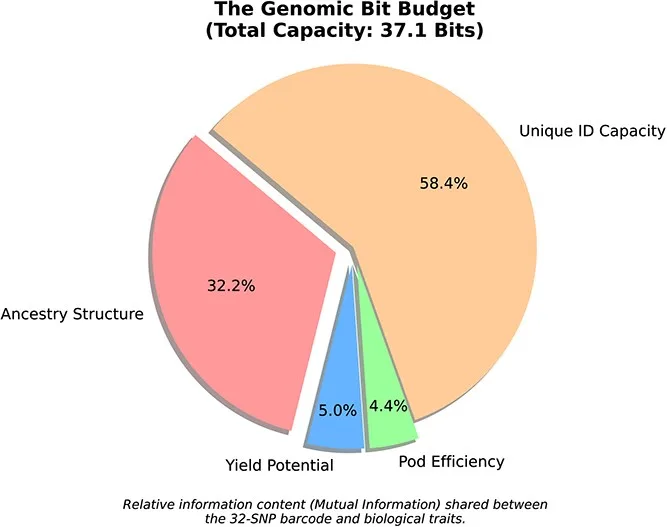
Cacao genebanks preserve the diversity needed to breed trees for changing climates, emerging diseases, and more resilient production. However, historical mislabeling, synonymy--one genotype recorded under several names--and homonymy--different genotypes sharing one name--can undermine breeding and field recommendations. High-density genotyping can resolve these problems, but routine use may deman…
Postmenopausal osteoporosis, characterized by compromised bone density and an increased risk of fractures, is driven by estrogen deficiency and represents a significant clinical challenge.
The new approach, backed by experimental evidence from an interdisciplinary team at UChicago, identified central disease-driving genes, most not previously linked to asthma.
After 30 years of focus on fixing the genetic mutation behind Huntington's, and no successful treatments, work from Berkeley Lab illuminates a new aspect of the fatal disease that could be targeted with simple, already-available compounds.
A research team has assembled the first haplotype-resolved, telomere-to-telomere genome of monk fruit, creating a complete genetic map of a crop valued for mogroside V, a natural sweetener about 300 times sweeter than sucrose. By combining genome assembly, population resequencing and developmental transcriptomics, the researchers traced the crop's origin, showed that its low genetic diversity ref…















 research.io