After years of failed treatments, a single infusion of genetically reprogrammed immune cells sent severe rheumatoid arthritis into lasting, medication-free remission in several patients. Rheumatoid arthritis begins when the immune system turns against the tissue lining the joints. The resulting inflammation causes pain, stiffness, and swelling and can gradually erode cartilage and bone. Available…
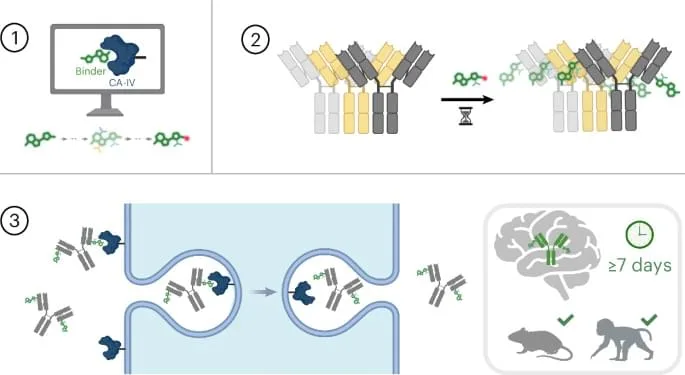
After AAV directed evolution led to discovery of a new blood-brain-barrier (BBB) receptor (carbonic anhydrase IV) which facilitates transcytosis, Ding et al. linked a small molecule binder of CA-IV to antibodies, allowing the antibodies to traverse the BBB. This is a major advance since it represents the first time that a receptor target discovered via […]
The U.S. Food and Drug Administration this week granted permission for investigators at the University of Colorado Anschutz to conduct a clinical trial testing genetically engineered immune cells in adults with advanced colorectal cancer and pediatric patients with solid cancers who have exhausted standard treatment options.
A late-stage clinical trial found that, when combined with an SMN2-targeting drug, Isembyld caused young patients’ motor skills to improve after a year.
[GentiBio, Inc. (AllSci)] GentiBio, Inc. has received a USD 1.07 million NIH Phase II grant from the National Institute of Diabetes and Digestive and Kidney Diseases to advance an allogeneic, off-the-shelf engineered Treg therapy for newly diagnosed type 1 diabetes. q
Researchers used DNA sequencing to map mutations in normal tissue from cancer patients undergoing different types of treatment. They found significant differences in the genetic mutations in healthy tissue, depending on whether the patients received radiotherapy, chemotherapy, or chemoradiation. The post Cancer Treatment Genetic Effects in Healthy Cells May Reveal Clues to Side Effects and Resist…
UCLA researchers developed ready-made cancer-fighting T cells from cord blood stem cells that can attack solid tumors through two separate detection systems. In mice, a single dose controlled cancer and extended survival while avoiding a dangerous complication associated with donor-derived T-cell therapies.
We developed ARO-RAGE, an inhaled siRNA targeting RAGE, a key driver of pulmonary inflammation. In preclinical models and a first-in-human study, it achieved deep and durable RAGE silencing, and was safe and well tolerated, supporting a novel platform for inhaled RNA therapeutics.
(NYT) – Artificial intelligence was used to help develop a drug candidate, rentosertib, for a rare lung condition. Its maker says the drug also seems to reduce the biological hallmarks of age. Last year, a clinical trial conducted by Insilico … Read More
Poly (ADP-ribose) polymerase inhibitors (PARPi) have revolutionized the treatment of homologous recombination (HR)-deficient tumors. Nevertheless, their clinical utility is often compromised by the emergence of resistance. Although genetic restoration of HR is a well-established resistance mechanism, emerging evidence suggests that epigenetic and chromatin responses are also central determinants …
The U.S. Food and Drug Administration has granted permission for investigators at the University of Colorado Anschutz to conduct a clinical trial testing genetically engineered immune cells in adults with advanced colorectal cancer and pediatric patients with solid cancers who have exhausted standard treatment options.
Seattle biotech BrainChild Bio has raised $116 million to advance an experimental CAR T cell therapy for DIPG, a rare and deadly brain tumor that primarily affects young children. The company is building on technology developed at Seattle Children’s and is also developing CAR T therapies for other pediatric and adult brain tumors. Read More
Shinshu University Hospital's expertise in CAR T-cell therapy R&D and clinical application will be combined with Teijin Regenet's manufacturing and quality-management expertise cultivated through its CDMO business for regenerative medicine products. The post CAR T Manufacturing in Japan Gets Boost from Teijin-Shinshu University Research Collaboration appeared first on GEN - Genetic Engineering an…
For most of medical history, treating a genetic disease meant managing the symptoms for life. Yet gene therapy suggests that some diseases can be addressed at their source by altering genetic fabrication. Though the field is still young, it has moved from theory to a real part of clinical medicine. What Is Gene Therapy? Essentially, […]
Before the end of September, UniQure is expected to report four-year results from the closely tracked clinical trial of its gene therapy for Huntington’s disease.
Researchers have designed a new DNA-based treatment that targets PCSK9, a protein closely tied to high LDL cholesterol and atherosclerosis. Their most effective molecule reduced PCSK9 protein by 87% in human liver cells and lowered cholesterol by 47% in genetically modified mice after a single injection.










 research.io