


A human, an octopus, and a coral could hardly look more different -- yet deep inside their cells, their chromosomes still carry recognizable pieces of a genome inherited from an animal ancestor that lived more than 600 million years ago. A study published today in Science Advances by researchers at the University of Vienna maps how those pieces have been reshuffled across the world of animals and reveals that animal genomes evolve along a limited set of irreversible "evolutionary highways". The latest findings provide an important basis for the conservation of animal biodiversity.
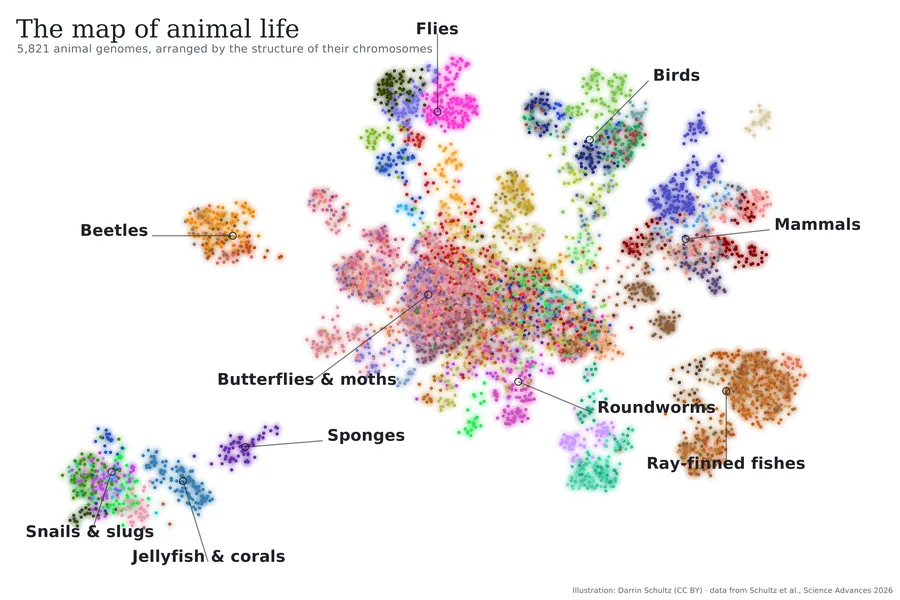
Roadmap of Animal Biodiversity: Largest-Ever Comparison of Chromosome-Scale Genomes
University of Vienna