Scientific Reports, Published online: 13 September 2026; doi:10.1038/s41598-026-70912-9 Cross-sectional assessment of cerebral hemodynamics in individuals with type 2 diabetes and orthostatic hypotension
Menopause is usually discussed as the end of monthly periods and fertility, but the changes reach far beyond the reproductive system. A new study suggests that the age when menopause happens may be linked to how the brain ages many years later. Researchers followed 2,603 older women and found that women who reached menopause at […] The post Earlier Menopause May Lead to Early Alzheimer’s Diagnosi…
Smoking is one of the clearest preventable causes of disease and early death. Yet for decades, researchers have noticed a puzzling pattern: people who smoke have often appeared less likely to develop Parkinson’s disease. This does not mean smoking is healthy or should be used to prevent Parkinson’s. Cigarettes greatly increase the risk of cancer, […] The post A Strange Clue to Parkinson’s Risk ap…
ObjectiveThe gut microbiome gets altered during ischemic stroke (IS); however, whether distinct microbial signatures characterize specific IS subtypes, such as large-artery atherosclerosis (LAA) and small-vessel occlusion (SVO), and their relation to subtype-specific clinical features, remains unclear. This study aimed at comparing gut microbiome profiles among patients with LAA, patients with SV…
FRIDAY, Sept. 11, 2026 — A spinal implant can significantly reduce pain suffered by people with diabetes-related nerve damage, a new study says.Spinal cord stimulation blunted pain and improved sensation in patients suffering from diabetic...
BackgroundNeuromodulation techniques (NMTs) have shown potential therapeutic value in Alzheimer’s disease (AD), but the comparative efficacy of different modalities remains unclear. This study aimed to systematically compare and rank available NMTs to identify their relative benefits across cognitive, functional, and neuropsychiatric outcomes.ObjectiveTo evaluate and rank the efficacy of NMTs in …
Only one in five women know that they’re more likely to develop Alzheimer’s disease than men, according to a recent survey. Maria Shriver wants that number to climb—and for women to start thinking about their brains decades before symptoms show up.
“When people talk about living longer, you’re seeing a lot about people in the gym,” Shriver said Thursday at the TIME100 Health Leadership Forum in N…
Introduction/Aims Conventional F wave analysis involves a relatively uniform physiological environment induced by supramaximal stimulations. The F wave characteristics in a dynamic physiological condition, however, are rarely investigated. This study aimed to improve understanding of F wave properties in the more dynamic process by introducing a novel method to analyze F waves based on the compou…
A major artery in the brain can be successfully reopened after a stroke, yet a patient may still be left with serious problems walking, speaking or thinking. For years, doctors have struggled to explain why restoring circulation does not always lead to the recovery they expect. A new study suggests that the trouble may continue […] The post Why Stroke Treatment Sometimes Falls Short appeared firs…
A randomized, double-blind, placebo-controlled trial found that low-dose tizanidine did not provide sustained reductions in headache burden over 12 weeks in people with episodic migraine, despite a transient improvement with the 1 mg dose at week 4. Exploratory analyses suggested that smoking and sex may influence tizanidine exposure, while sex-specific efficacy signals remained hypothesis-genera…
For people recently diagnosed with multiple sclerosis (MS), early treatment choices were associated with only slight differences after two years, based on the first treatment they used, according to a study published September 9, 2026, in Neurology Open Access, an official journal of the American Academy of Neurology.
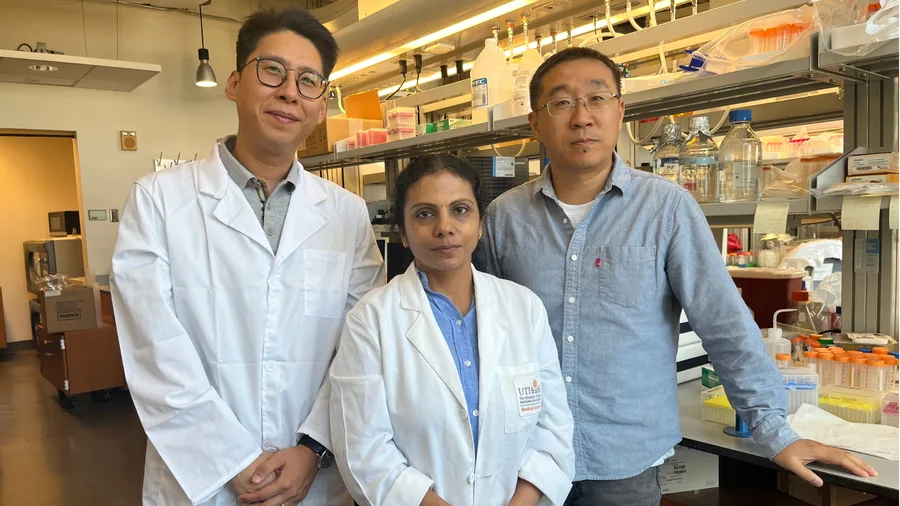
A team of UTHealth Houston researchers slowed and even reversed diabetic nerve damage in mice, bringing researchers one step closer to developing a treatment for humans.
A team of UTHealth Houston researchers slowed and even reversed diabetic nerve damage in mice, bringing researchers one step closer to developing a treatment for humans.
The Lasker Foundation has announced that UT Southwestern Medical Center sleep researcher Masashi Yanagisawa, M.D., Ph.D., is a recipient of the 2026 Albert Lasker Basic Medical Research Award for his discovery of orexin, a brain peptide that maintains wakefulness, and demonstration that the absence of its action is responsible for narcolepsy, a profound disorder of sleep.
Billy Joel says he is doing better after brain surgery helped relieve some of the symptoms of normal pressure hydrocephalus, a disorder he was diagnosed with in 2025. On SiriusXM’s Billy Joel channel Wednesday, the singer talked about the surgery he agreed to after noticing “my balance was not good, I had this sensation of […]







 research.io