


A research team has assembled the first haplotype-resolved, telomere-to-telomere genome of monk fruit, creating a complete genetic map of a crop valued for mogroside V, a natural sweetener about 300 times sweeter than sucrose. By combining genome assembly, population resequencing and developmental transcriptomics, the researchers traced the crop's origin, showed that its low genetic diversity reflects ancient climate-driven population decline more than severe domestication, and identified stage-specific gene activity linked to mogroside production. The work provides a clearer view of how monk fruit became cultivated and offers a powerful foundation for breeding sweeter, more resilient varieties and designing biological systems that can produce mogrosides efficiently.
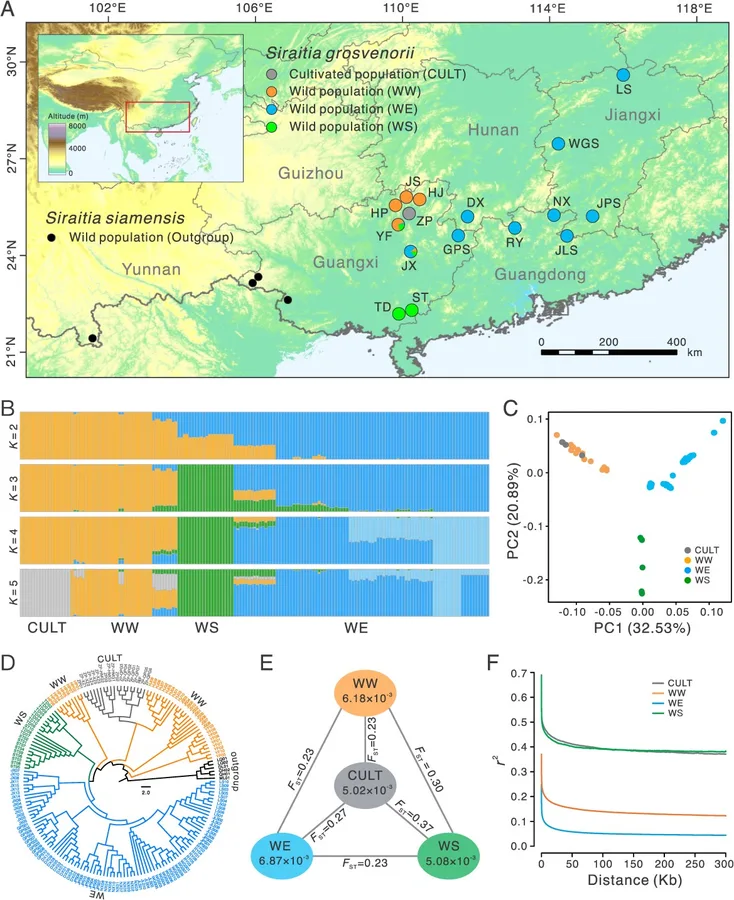
Complete Monk Fruit Genome Reveals a Gentle Path to Domestication
Chinese Academy of Sciences