


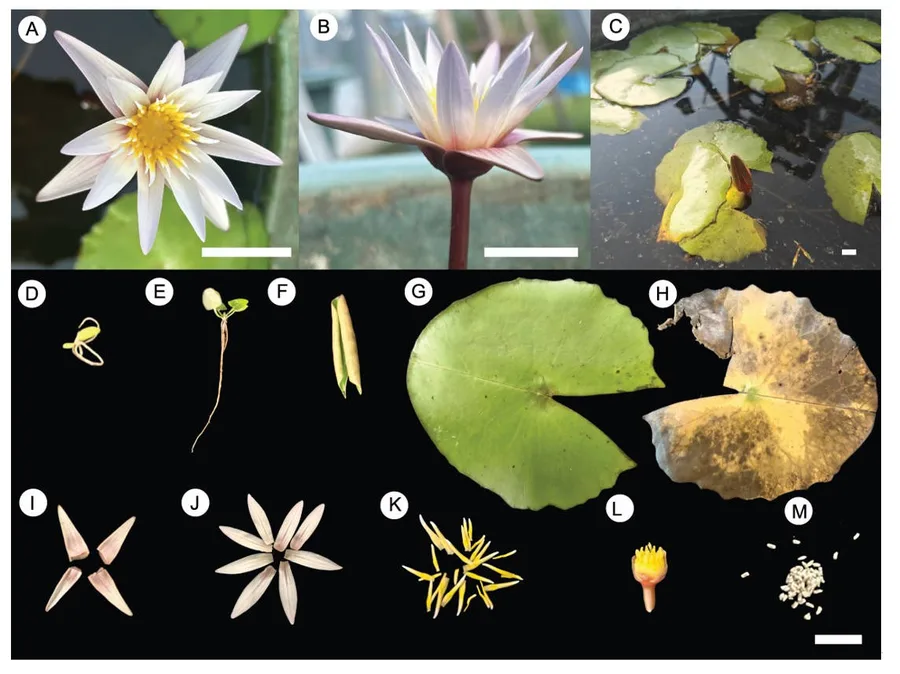
A new complete genome for the miniature water lily Nymphaea minuta offers a rare view into how early flowering plants built the genetic systems that support survival, development, and adaptation with unusual precision. By producing a gap-free telomere-to-telomere (T2T) genome and linking it with a broad ribonucleic acid sequencing (RNA-seq) atlas, researchers traced how this ancient aquatic herb coordinates leaf resilience and seed germination across changing water conditions. The work reveals a compact genome, seven major developmental programs, and two regulatory models: one that helps leaves respond to drying and recovery, and another that balances rapid seedling growth with immune defense.
A Complete Water Lily Genome Reveals How Ancient Plants Survive Drying
Chinese Academy of Sciences