Inside every cell, thousands of proteins must reach the right place at the right time. Helping coordinate this complex logistics network are centriolar satellites--tiny, membrane-less organelles that play important roles in protein trafficking, cell division, and the formation of cilia.
Senescence is a state in which stressed cells stop dividing but remain alive. New findings reveal that the underlying process unfolds in distinct stages that depend on the type of drug used, and show how a new class of drugs triggers inflammation.
A new study from the Yale Department of Pathology and Department of Ophthalmology and Visual Sciences suggests that immune cells that live at the borders of the brain are shaped not only by inflammatory signals, but also by the physical environment of the tissues they inhabit.
Thirty years ago, an insight from a rare brain disease took Robert Darnell's career in an unexpected direction. He's still surprised by what he's learning.
Scientists at Sanford Burnham Prebys Medical Discovery Institute, Mayo Clinic and their international collaborators published findings July 29, 2026, in Nature revealing a new connection between energy-producing mitochondria and chronic inflammation during aging. They also found that blocking a related gene reduced inflammation and promoted healthier aging in mice.
Researchers at Karolinska Institutet and Stockholm University have developed a new tool that estimates a cell's biological age by analysing its gene activity. In the journal Advanced Science, they also demonstrate how the tool can be used to identify substances that influence cellular ageing.
In a rare pair of papers published back-to-back in the journal Genes & Development, research teams led by senior author Anindya Bagchi, PhD, associate professor in the Cancer Genome and Epigenetics Program, establish a unified framework that governs one of cancer's most powerful master regulators.
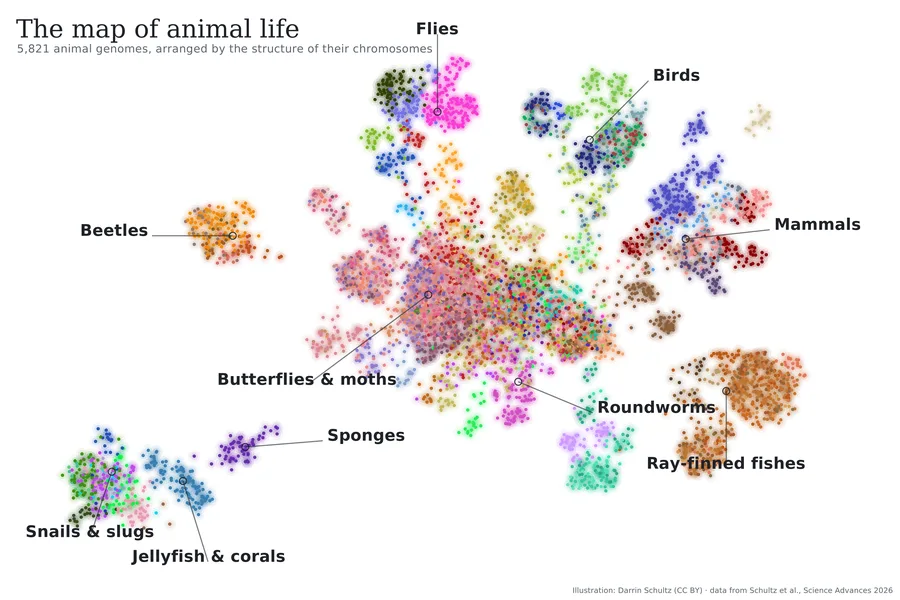
A human, an octopus, and a coral could hardly look more different -- yet deep inside their cells, their chromosomes still carry recognizable pieces of a genome inherited from an animal ancestor that lived more than 600 million years ago. A study published today in Science Advances by researchers at the University of Vienna maps how those pieces have been reshuffled across the world of animals and…
The Wistar Institute announces the appointment of Brian Fuglestad, Ph.D., as associate professor in the Center for Advanced Therapeutics (CAT). Fuglestad uses biophysical and biochemical approaches to study proteins at the molecular and atomic level.
New research reports that immune responses produced in the lymph nodes shared by the liver, pancreas, and intestine shape T-cell tolerance, pointing to potential new approaches for hard-to-treat pancreatic cancers.
- ORNL-led research supporting materials science for neuromorphic computing and neurological disorders shows lipid bilayers are an integral part of biological memory and learning
- Latest findings are the result of a decades-long collaboration between two Oak Ridge National Laboratory scientists.
- To study membrane properties under electrical stimulation, the researchers used water droplets sus…
A versatile microscope developed in collaboration with Berkeley Lab combines advanced imaging techniques, corrects distortion in biological specimens, and generates enormous datasets -- requiring new state-of-the-art AI models as the mind to interact with the data.
Red blood cells serve as the foundation for nanocarriers that show promise in a new study as effective and efficient vehicles for gene therapy, tumor targeting and other medical treatments.
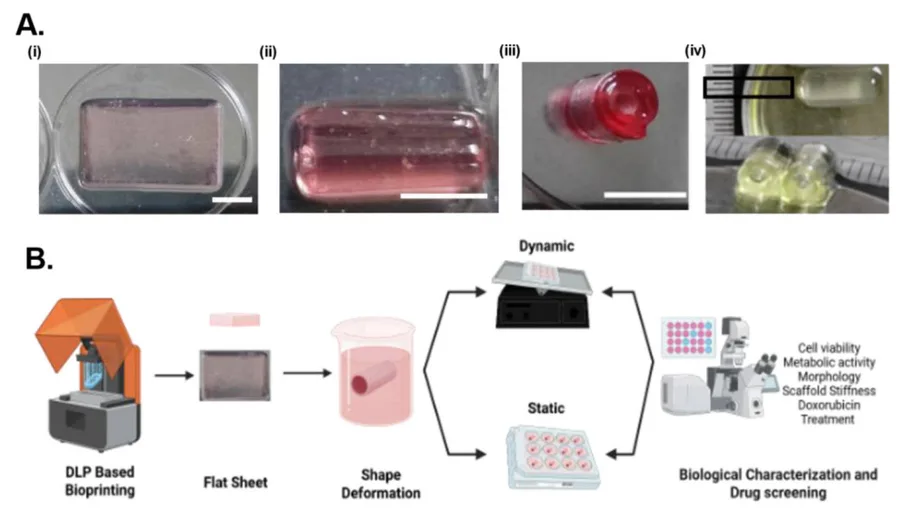
In a recent study researchers developed a visible-light 4D bioprinting platform that self-folds into duct-like, perfusable breast cancer scaffolds and shows how tissue shape, stiffness and flow-like cues influence triple-negative breast cancer cell behavior and drug response.
















 research.io