
microbiology
Nature Water, Published online: 05 May 2026; doi:10.1038/s44221-026-00646-5 Endocrine-disrupting progestogens pose risks to ecosystems through their biological activity. A chemoproteomics study shows that many phytoplankton species can transform these chemicals into forms that may be even more biologically active, potentially increasing ecological risk.
Scientific Data, Published online: 05 May 2026; doi:10.1038/s41597-026-07366-1 Chromosomal-level genome assembly of Trypanosoma carassii , the etiologic agent of a recent outbreak of trypanosomiasis in cage-cultured large yellow croaker ( Larimichthys crocea ) in China
Nature Communications, Published online: 05 May 2026; doi:10.1038/s41467-026-72058-8 Paleo-depositional history and hydrogeological evolution fundamentally dictate microbial. landscapes and groundwater quality in the Pearl River Delta. This study links ancient sedimentary processes to modern-day ammonium dynamics in global deltas.
Erwinia persicina (Ep) is recognized as an emerging pathogen of considerable threat to tomato yields. Although Stenotrophomonas rhizophila (Sr) has long been recognized as a plant growth-promoting rhizobacterium (PGPR), the use of this PGPR has sometimes been constrained by the rhizosphere stress factor in the biocontrol of the pathogen. This study investigated the potential of biogenic gold nano…
BackgroundEuschistus heros and Piezodorus guildinii are major soybean pests across the Americas. Gut-associated bacteria influence insect nutrition, detoxification, and stress tolerance, potentially enhancing adaptation to diverse hosts and management regimes. We investigated how host genetics and environment shape gut microbiome structure and functional potential in these species.ResultsWe seque…
Gut and skin microbiota impact host physiology and can be influenced by environmental changes, however, their reactions to rising environmental temperatures remain unclear. In this study, Bufo gargarizans tadpoles were exposed to 22 °C (control) and 27 °C (high-temperature) and the gut and skin microbiota were sampled at 24, 72, and 144 h to assess the effects of short-term elevated temperatures.…
Duck adenovirus 3 (DAdV-3) was firstly identified in Muscovy ducklings exhibiting slight pericardial effusion, swelling, and hemorrhaging in the kidneys, which is a poorly characterized duck virus. This study established a CRISPR/Cas12a coupled with a Lateral flow dipstick (RAA-CRISPR/Cas12a-LFD) detection platform for DAdV-3. The core mechanism of this platform involves a three-step cascade reac…
IntroductionAxillary bromhidrosis is characterized by excessive sweat gland activity and foul body odor, significantly affecting patients’ psychological well-being and social interactions.MethodsThis study recruited 30 axillary bromhidrosis patients and 30 healthy controls, collecting sweat and stool samples for microbiome analysis. Among the patients, 8 patients received microwave therapy, colle…
Researchers found that bacteria likely plays a key role in most kidney stones. Previous studies only linked bacteria with kidney stones that formed after an infection. Kidney stones are hard, pebble-like pieces that form in your kidneys. They are made of minerals that build up in urine. Most are made of calcium oxalate. Others form […] The post Bacteria linked to kidney stone formation appeared f…
Scientific Reports, Published online: 05 May 2026; doi:10.1038/s41598-026-42288-3 Development and field evaluation of a rapid detection method for Babesia microti using fluorescent recombinase polymerase amplification(RPA) technology
Cloning, purification and possible use of a Bacillus nitroreductase in biotechnological applications
A team of researchers at Southern Illinois University Carbondale is using microbes to turn single-use plastics into biodegradable plastics and bioproducts, including biodegradable jet fuel, nylon and chemicals used in chemotherapy and child myopia treatments. They published their findings in Trends in Biotechnology. Common recycling practices can only use a fraction of plastic waste in… The post…
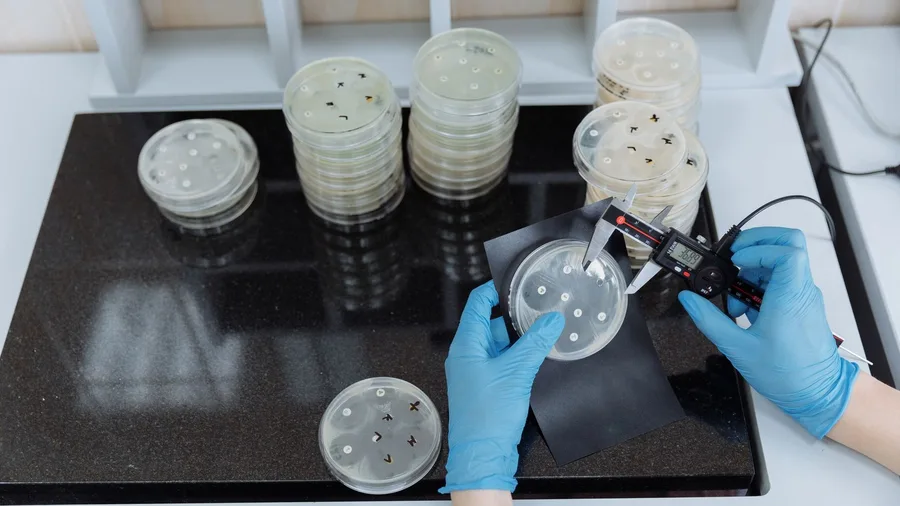
Escherichia coli enteritis causes substantial economic losses in animal husbandry, while antibiotic treatments face challenges of resistance and residue. This study investigated earthworm hydrolysate (EH) as a potential antibiotic alternative. In vitro assays demonstrated potent antibacterial activity of EH against E. coli, with an inhibition zone diameter of 12.24 ± 0.45 mm, a minimum inhibitory…
Nature Microbiology, Published online: 04 May 2026; doi:10.1038/s41564-026-02345-z We reflect on our experiences as principal investigators of two microbiome-focused citizen-science projects, offering opportunities and practical lessons as a guide for researchers considering citizen-science approaches.
research.ioSign up to keep scrolling
Create your feed subscriptions, save articles, keep scrolling.