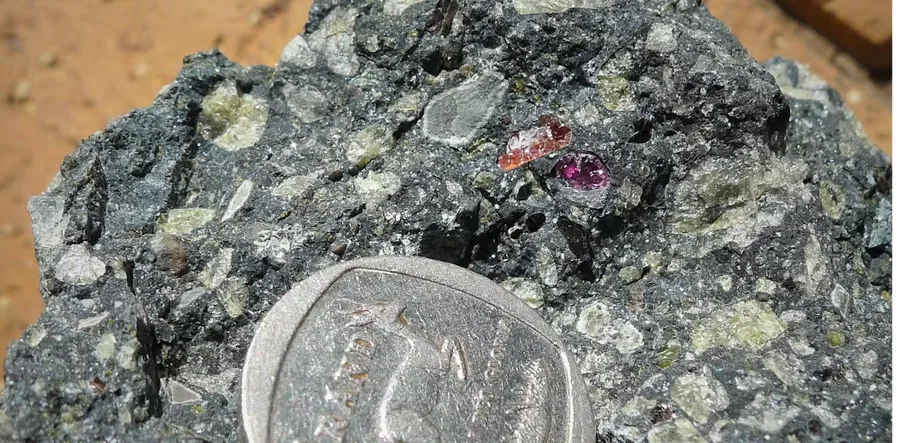
Ancient microbes appear to have used molybdenum as far back as 3.7 billion years ago, despite the metal being scarce in Earth’s early oceans. Scientists funded by NASA have found that organisms living on Earth more than 3 billion years ago were already using molybdenum, even though the metal was extremely rare in the environment […]
Detection of change is the measure of the distinct data framework and thematic change information that can direct to more tangible insights into underlying process involving land cover and landuse changes. Monitoring the locations and distributions of land cover changes is important for establishing links between policy decisions, regulatory actions and subsequent landuse activities. Change detec…
Nature Communications, Published online: 21 August 2026; doi:10.1038/s41467-026-76803-x This study shows that carbon recycled into mantle promotes davemaoite formation at the mantle transition zone, providing a mineralogical explanation for the 560-km seismic reflector and revealing how deep carbon cycling shapes Earth’s interior.
The Sinian Dengying Formation in the western Deyang-Anyue Rift Trough is a key target for deep carbonate gas exploration, yet its reservoir controls remain debated. Integrating core, thin-section, and geochemical data, this study clarifies the coupled mechanisms governing reservoir development. Results reveal that reservoirs predominantly occur in platform-margin and high-energy shoal facies, wit…
As of today, the world might have changed forever. A fundamental assumption underpinning much of modern geochemistry is that the earth has the same composition as a class of meteorites called chondrites…
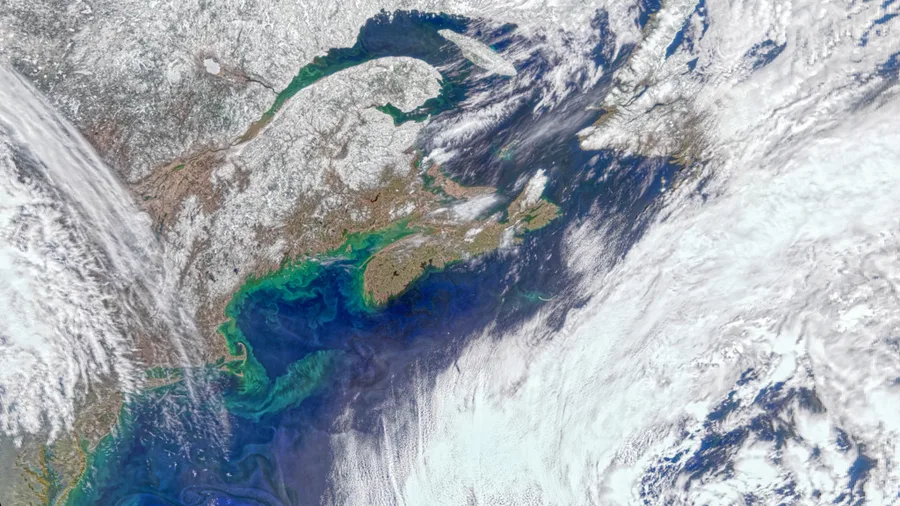
A 60-million-year reconstruction links changing shelf area to phosphate availability, ocean oxygen and organic carbon burial, with the strongest feedback appearing at an intermediate sea level.
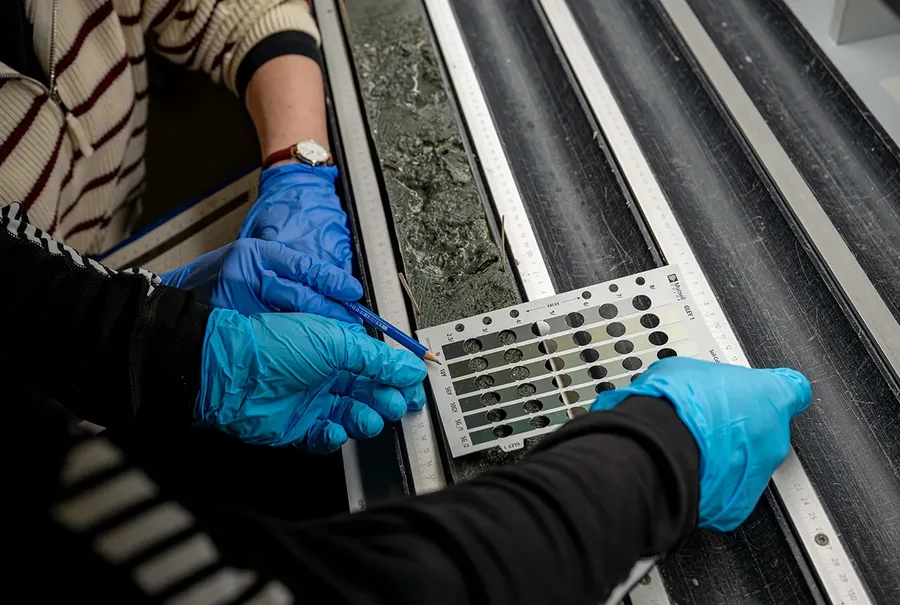
Expedition 501 directly sampled freshened groundwater beneath the New England shelf, but its age, regional continuity and sustainable recoverability remain open questions.
Nature, Published online: 19 August 2026; doi:10.1038/s41586-026-10938-1 A 2,000-year Peruvian ice core record of atmospheric CH4 concentrations contains the first historical global CH4 record from the low latitudes, and implementation of a four-box model indicates higher equatorial CH4 strength than previous estimates from polar-only records.
Incompleteness and lack of precision are common problems with geochemical data, limiting the data analysis methods that can be reliably applied and what subsets of data can be used. This study introduces a clustering method that is designed to have high robustness to significant data incompleteness. It can also be used to impute missing values and distributions. A Gaussian mixture model is define…
Scientific Data, Published online: 18 August 2026; doi:10.1038/s41597-026-08130-1 A global dataset of the landward extent of Earth’s Coastal Critical Zone
Resolving the origin and flowpaths of meltwaters in Arctic glacierized catchments, beyond the traditional atmospheric versus water-rock framework, is crucial for understanding how weathering processes evolve with glacier retreat and regulate solute export. We investigated the hydrochemistry and isotopic composition of glacial meltwaters and proglacial streams in the Kongsfjorden region (Svalbard)…
Deepwater pre-salt lacustrine carbonate reservoirs in the Santos Basin hold hydrocarbon potential but present exploration challenges due to supercritical CO2. The dual physical nature of supercritical CO2 and reservoir heterogeneity make conventional single-domain fluid identification ambiguous. This study presents an integrated engineering workflow coupling log-scale petrophysical characterizati…
Large-scale tidal observations challenge the textbook idea that two symmetric water bulges physically form on opposite sides of Earth. For generations, students have learned to picture Earth’s oceans forming two broad bulges on opposite sides of the planet under the Moon’s gravitational influence. Researchers led by Yongfeng Yang of the Water Resources Comprehensive Development Center [...]
Electrical resistivity is a fundamental parameter for evaluating fluid saturation and reservoir properties in shale formations. However, existing conductivity models often exhibit limited accuracy due to the highly complex, coupled conductive mechanisms inherent to shale, which involve multi-scale pore networks, mineral surface conduction, and variable wettability. To address this limitation, thi…
Scientific Reports, Published online: 16 August 2026; doi:10.1038/s41598-026-64619-0 Enhancing groundwater potential mapping in arid regions through integrated microwave remote sensing, statistical analysis, and geophysical-based modeling







 research.io