Vegetation plays a vital role in maintaining ecological stability, carbon cycling, and food security. However, vegetation dynamics are strongly influenced by large-scale climate oscillations, particularly the El Niño–Southern Oscillation (ENSO). Understanding vegetation responses to different ENSO phases is essential for assessing ecosystem resilience and supporting agricultural planning in monso…
The “Kashmir Seismic Gap” is located between the epicentral regions of the 1905 Kangra and the 2005 Kashmir earthquakes. The area corresponds to the Jhelum basin and encompasses the Kashmir Valley. The geodetic measurements indicate that the Kashmir Himalaya accommodates ∼12 mm/yr of India-Asia convergence and ∼5 mm/yr of dextral shear. However, except for the known Karakoram Fault, which is furt…
Detection of change is the measure of the distinct data framework and thematic change information that can direct to more tangible insights into underlying process involving land cover and landuse changes. Monitoring the locations and distributions of land cover changes is important for establishing links between policy decisions, regulatory actions and subsequent landuse activities. Change detec…
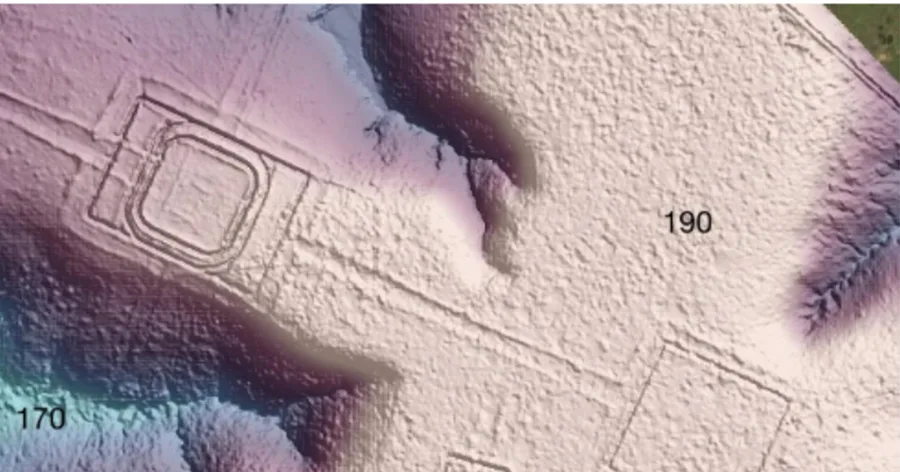
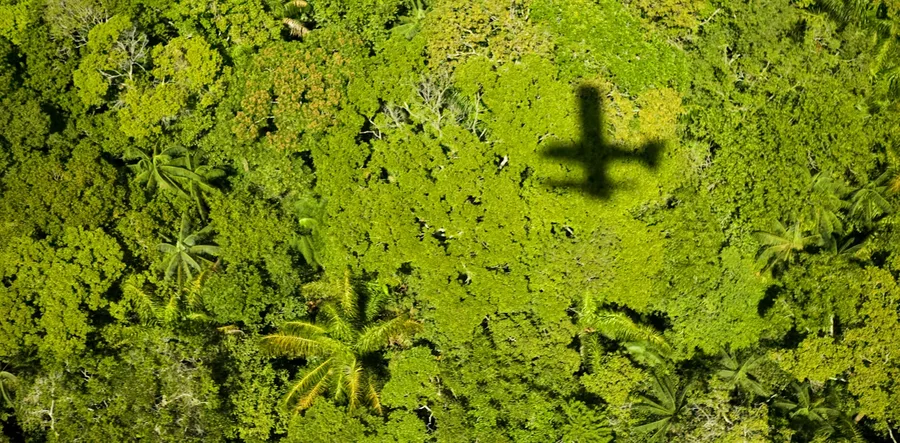
The flights covered 4,497 square kilometres in 2024, and on already deforested ground along the same lines the laser picked up five times as many structures as the team’s own satellite work had found along those lines.
Modern land surveys rely on three core technologies — LiDAR, GIS, and GPS — that work together to collect precise location data, turn it into usable maps, and support everything from road design to property boundaries. LiDAR captures millions of elevation points using laser pulses, GPS pins those points to exact coordinates on Earth, and… Read More » LiDAR, GIS, and GPS: How Modern Survey Data Is…
Researchers have developed a lightweight transfer learning framework that could make remote sensing image classification more accessible and efficient, particularly in agriculture where labeled data and computational resources are often scarce.
Sepe
Farmers battling cloudy skies to monitor their crops may soon have a powerful ally in radar technology, according to new research from the European Commission’s Joint Research Centre in Italy. In a pilot study published in Acta Agriculturae Scandinav
Christopher Hernandez·...·Loyola University Chicago
3d ago
Aerial lidar raises ethical questions because it can collect data remotely without the knowledge or consent of Indigenous and descendant populations that are on the ground.
Satellite remote sensing allows rapid, detailed disaster response and planning. But the rules governing who controls and has access to the data aren’t keeping up.
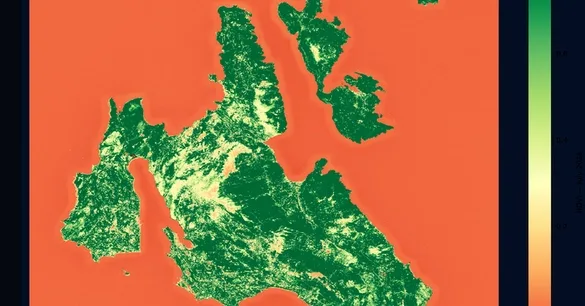
48 hours and moderate sleep later, ARGOS just processed its first Sentinel-2 pass over Kefalonia. This is what that looks like. What I was trying to do I wanted a baseline vegetation map of the entire island. Not from a government PDF, not from a paid dataset- from the European Space Agency's Sentinel-2 satellite, freely available, updated every 5 days. The goal was simple: download the latest cl…



 research.io