
geology
Between 2.4 and 0.6 Gy ago, our planet underwent several episodes of global glaciations, including the “Snowball Earth” case that ended 635 My ago. Causes of this last Snowball event presumably included a decreased greenhouse gas concentration and high continental albedo, both associated with the passage of the super-continent Rodinia at equatorial latitudes. When large continental masses are in …
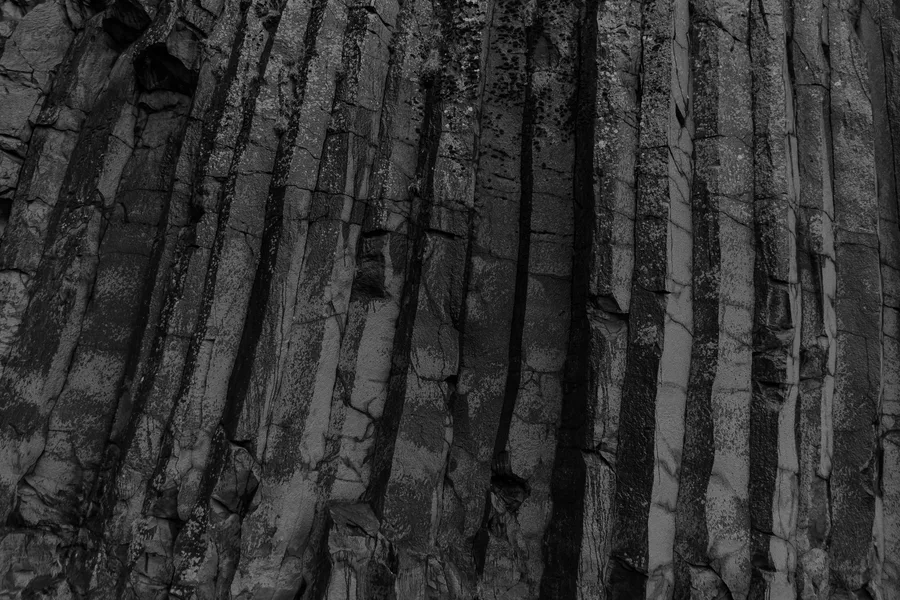
The Egersund dike system in Norway formed more than 600 million years ago, during the Ediacaran period. In new work, researchers drilled rock samples from the dike seen here to learn more about the history of Earth’s magnetic field. Credit: Yi Xue, CC BY 3.0

A pair of satellite photos reveals the drastic transformation of Canada's Lake Rouge, which was fully drained after the sudden collapse of one of its banks. A multitude of factors led to the demise of the shocked-emoji-like lake, experts say.
From a geothermal hotspot to the one-time “Lighthouse of the Pacific,” the heat is on beneath the volcanic landscape of western El Salvador.
Kaplan studies the ways ice sheets, mountain glaciers, climates and landscapes changed in the past.
Over time, rivers naturally curve and meander. As water accelerates around a river bend’s curve, it creates a secondary flow that carves sediment away from the outer bank and deposits it on the inner one. That, in turn, makes the river bend sharper until it eventually cuts part of the river off into an oxbow […]

After decades of mystery, scientists explain how stones moved across the desert, leaving trails without human or animal interaction.
The Mapimí Zone of Silence, located in Mexico’s Chihuahuan Desert, has long been the eerie setting of unexplainable phenomenon that just might be a bit more fiction than fact.
_Frontier Energy System and Power Engineering_ 8 (1):1-12. 2026Water is an essential resource for domestic, agricultural and industrial activities, especially in areas where surface water supply is scarce. But growing population, climate change and inadequate subsurface information has resulted in borehole failures and ineHicient use of groundwater resources in places like Obukpa watershed, Enugu…
The NASA estimates are based on measurements taken between October 2025 and January 2026 by the NISAR satellite
An unconformity is a gap in the recording of earth's history, similar to missing pages in a book. These breaks are more common than is realized. Stratigraphers, who organize geologic history, estimate that the time spans of non deposition exceed that of episodes of deposition. These gaps could be fleeting, as in a river meandering away and then reoccupying the old channel, or they could indicate …
Yellowstone eruptions may be driven by shifts in Earth's crust, rather than a deep well of magma, study finds.
Mexico City is sinking nearly 10 inches every year, making it one of the world’s fastest-sinking metropolitan areas
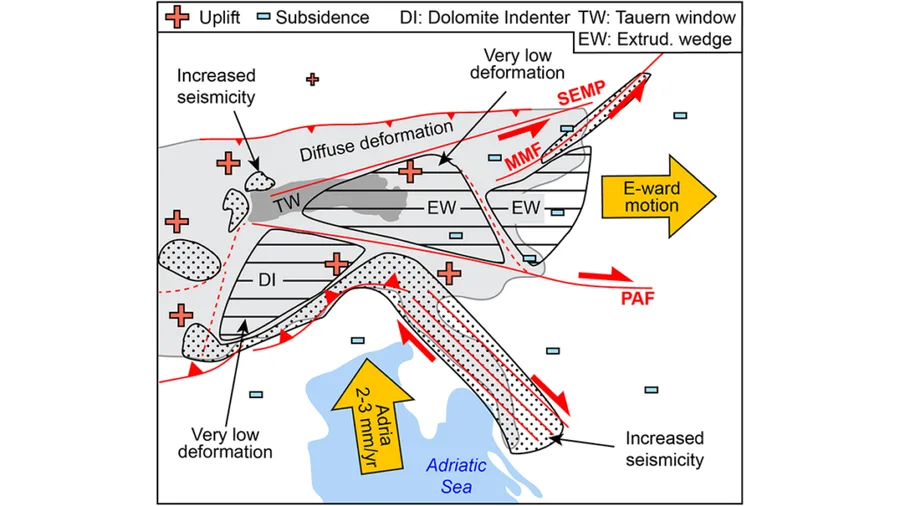
We may use terms like "grounded" and terra firma to mean stability and consistency but geology laughs at that notion. The next time you go on vacation, a new tool can show you how many places your vacation destination has been. Paleolatitude.org can do that, right down to the movements of small tectonic and ‘lost continents’ now called Greater Adria, the Tethys Himalayas or Argoland, which we kno…
Nature Geoscience, Published online: 01 May 2026; doi:10.1038/s41561-026-01968-5 Geological maps are integral to understanding the Earth and other rocky planetary bodies. As technological advances enable the geological mapping of extreme terrestrial and planetary environments, we must strengthen collaboration, standardization and data accessibility to ensure that the knowledge gained is cohesive,…
Ever wondered where in the world your backyard was, within the ancient supercontinent of Pangaea?...
A new study in PNAS shows how changes in Nile dynamics shaped the landscape and settlement of ancient Nubia. By reconstructing 12,500 years of river behaviour near Jebel Barkal in Sudan, we found that a stable floodplain helped sustain the Kushite capital of Napata for more than a millennium.
Rapid population growth has driven higher rates of groundwater usage, leading to more sinking in these areas.
The Late Oligocene Huagang Formation in the Xihu Depression, East China Sea Shelf Basin, records typical braided river delta deposits. However, the influence of astronomical forcing on sand-body distribution remains unclear. Based on core, logging, and seismic data, subaqueous distributary channels of braided river deltas were identified and multi-scale lake-level fluctuations were reconstructed.…
research.ioSign up to keep scrolling
Create your feed subscriptions, save articles, keep scrolling.