neurogenetics


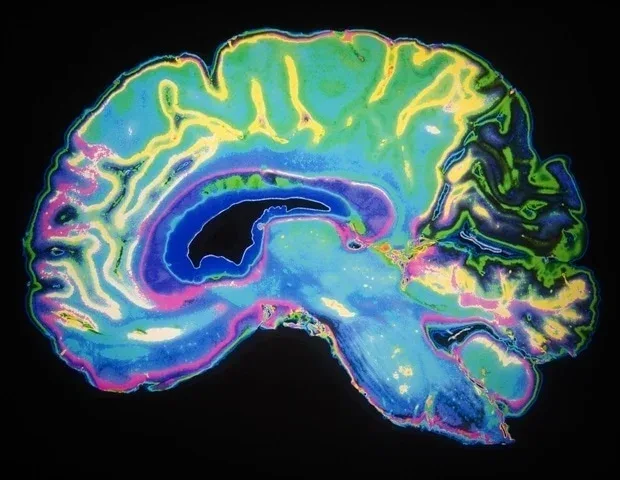
A massive genetic analysis has revealed how the physical size of brain folds and the organization of deep nerve fibers directly influence the risk of developing neurodevelopmental conditions like autism and attention deficit hyperactivity disorder.

A common recessive NDD caused by RNU2-2 mutations disrupts brain development and opens paths for diagnosis and therapy. Scientists at the Icahn School of Medicine at Mount Sinai in New York have identified a newly recognized recessive neurodevelopmental disorder (NDD) that may be the most common of its kind discovered so far. The condition is [...]
A new study has found evidence of a brain link that could explain why Tourette...

Traumatic experiences can cause memory problems, and estrogen may be a key factor that shapes the brain's resilience against such stressors, a mouse study finds.
By the time researchers had catalogued 102 genes linked to autism in a single landmark paper five years ago, a quietly uncomfortable question had settled over the field. How could so many genes, doing such different jobs, produce something that looks so much like the same disorder? Some govern how chromosomes are packaged. Others regulate the junctions between neurons. Still others keep brain cel…
We introduce IMCollider — a formal collision engine for identity masses (IMs) in psychological phase space, grounded in the Substrate-Neutral Structural Foundation Theory (SNSFT) corpus: the largest 0-sorry Lean 4 formal library in existence, comprising 5,000+ files and 2 million+ lines of formally verified proof. Unlike prior physics-inspired psychological models, IMCollider operates directly on…

The brain’s memory center may begin life more like a crowded web than an empty canvas. Researchers discovered that early neural networks in the hippocampus are dense and seemingly random, then become more organized by shedding connections over time. This pruning process creates a faster, more efficient system for linking experiences and forming memories. It challenges the idea that the brain star…

The emergence of neuropsychiatric disorders, conditions that affect various brain functions and behaviors, is known to be driven by an intricate combination of factors. These can include both a genetic predisposition and exposure to traumatic events or other external circumstances. Over the past decades, many neuroscience studies have tried to shed light on the origins […]
Nature Neuroscience, Published online: 01 May 2026; doi:10.1038/s41593-026-02290-4 Context-dependent behavior selects actions according to task demands. Using direct brain recordings in humans, Binish et al. uncover how coordinated population activity efficiently channels information from prefrontal to motor cortex.
Marker selection precision in neuronal studies is critical for reliable neuron identification. However, it largely depends on the experimental context. Variations in neuronal marker specificity across experimental models, neuronal maturation stages, and neurotransmitter phenotypes have highlighted the vitality of implementing “context-tuned” strategies in marker selection. Neuronal markers arise …
Wynnie Nguyen was awarded a grant from the Cure Alzheimer’s Fund for studies aiming to stimulate growth of new brain cells and, ultimately, reverse the course of dementia. The post USC Stem Cell doctoral student aims to shift paradigms in Alzheimer’s research appeared first on USC .
Nature Neuroscience, Published online: 30 April 2026; doi:10.1038/s41593-026-02263-7 The authors identify glucose-derived conversion of citrate to acetyl-CoA upstream of histone acetylation as modulating the regional dynamics of oligodendrocyte progenitors, with extranuclear acetyl-CoA from other sources being used for myelination.
We are excited to host Inés García-Ortiz who will spend a month with us as visiting scholar. Ines is a PhD student in the Psychiatric Genomics Group led by Dr Claudio Toma at the Molecular Biology Center “Severo Ochoa” in Madrid. Inés will be investigating the role of brain lateralization in psychiatric conditions, with a […]
IntroductionHuman space exploration is progressing into an unprecedented era characterized by extended-duration missions, the establishment of permanent lunar bases, and planned crewed voyages to Mars. These activities introduce important physiological challenges, primarily driven by exposure to altered gravity environments. Microgravity disrupts vestibular input, generating sensory conflicts tha…
Nature Communications, Published online: 30 April 2026; doi:10.1038/s41467-026-72477-7 Research on the genetic links between cognition and psychopathology has largely treated cognitive function as unitary. Here, the authors demonstrate that specific cognitive domains have unique genetic associations with neuropsychiatric disorders.
Scientists have finally cracked one of the biggest mysteries in the senses: how smell is organized. By mapping millions of neurons in mice, researchers discovered that smell receptors in the nose aren’t random at all—they’re arranged in neat, overlapping stripes based on receptor type, forming a hidden structure scientists never knew existed. Even more striking, this layout mirrors how smell info…

Circular Genomics, the precision neurology leader pioneering circular RNA (circRNA)-based molecular diagnostics, today announced a strategic alliance with Vitazi.ai, an innovator in AI-powered retinal imaging and oculomics, to jointly develop a next-generation multimodal workflow for the early detection and risk stratification of Alzheimer's disease (AD).
Nature Neuroscience, Published online: 29 April 2026; doi:10.1038/s41593-026-02280-6 How the brain organizes the retrieval of old and new memories remains unknown. Kim et al. identify a septo−entorhinal GABAergic pathway that controls flexible switching between episodic memories during memory retrieval to enable memory updating.
research.ioSign up to keep scrolling
Create your feed subscriptions, save articles, keep scrolling.