structural-biology
Nature Communications, Published online: 05 May 2026; doi:10.1038/s41467-026-72730-z Bacterial DNA deaminase toxins are valuable tools in genome engineering. Here, authors reveal the mechanism of cytosine deamination in double-stranded DNA by BaDTF3/DddB, which is sequence context-nonselective and potentially useful for mitochondrial base editing.
Nature Communications, Published online: 05 May 2026; doi:10.1038/s41467-026-71205-5 Using time-resolved cryo-EM, this study captures fibrillar collagen assembly as it matures from a metastable to a stable state, shedding light on tissue maintenance and disease-linked defects.
Whether DNA-PKcs is necessary for non-homologous end joining has been biochemically obscure. Through optimization of reaction conditions, Fujii and Modesti show that DNA-PKcs plays a constructive role, which leads to indistinguishable repair efficiencies between cohesive-end and blunt-end DNA substrates.

A pioneering project has revealed the human body like never before, from entire organs down...
New evidence suggests axons may not be uniform tubes but dynamic, pearl-like structures. Johns Hopkins Medicine researchers say one of biology’s most familiar textbook images may be wrong, challenging a view of neuron structure that has persisted for more than a century. Axons, the long extensions neurons use to send signals, may not be smooth, [...]
Nature Communications, Published online: 02 May 2026; doi:10.1038/s41467-026-72729-6 Invasive fungal pathogens have become a significant concern in healthcare systems worldwide. Here, authors demonstrate that nanobodies targeting the GDPmannose transporter can arrest fungal cell growth. The structures also reveal the complete transport cycle for an SLC35 nucleotide sugar transporter.
Nature Communications, Published online: 02 May 2026; doi:10.1038/s41467-026-72534-1 This study uses single-molecule approaches to detect changes in functional sub-states during enzyme evolution and highlights that coordinated shifts in conformational heterogeneity, and the underlying functional sub-states are key to enzyme function.
Nature Communications, Published online: 01 May 2026; doi:10.1038/s41467-026-72598-z Genetic variants can lead to variable outcomes in neurodevelopmental disorders. Here, the authors show that the 16p12.1 deletion and genetic background jointly shape chromatin regulation and neurodevelopmental phenotypes, explaining variable disease expressivity.
Over the course of a half-century career in science, Brenda Bass helped unlock some of the deepest mysteries of ribonucleic acid, or RNA. RNA had primarily been defined as a carrier of instructions for DNA to synthesize proteins in all living cells. But her pioneering research at the University of Utah transformed our understanding of RNA, uncovering new roles as an active, powerful player in bio…
The enzyme RNA polymerase (RNAP) carries out transcription, copying DNA into RNA. It's the first step in gene expression, and a process fundamental to all life.
Nature Physics, Published online: 30 April 2026; doi:10.1038/s41567-026-03242-2 The mechanical stability of proteins affects their import into the nucleus. Now it is shown that protein transport in and out of the nucleus depends on the local mechanostability of the protein cargo.
Nature, Published online: 29 April 2026; doi:10.1038/s41586-026-10328-7 A Review of de novo protein design highlights key methodological advances and achievements, current challenges and future applications.
Nature Communications, Published online: 29 April 2026; doi:10.1038/s41467-026-71840-y The plant natural product (-)-englerin A (EA) is a potent, selective agonist of TRPC1/4/5 channels. Here, key structural determinants of EA-mediated channel activation are revealed through single-particle cryo-electron microscopy and mutagenesis studies.
Nature Communications, Published online: 29 April 2026; doi:10.1038/s41467-026-72519-0 The cryo-EM study of RSV polymerase during early-stage RNA elongation reveals four key nucleotide addition states, providing the first comprehensive insights into orchestrated macrodomain rearrangements and micro-motif changes that drive catalysis.
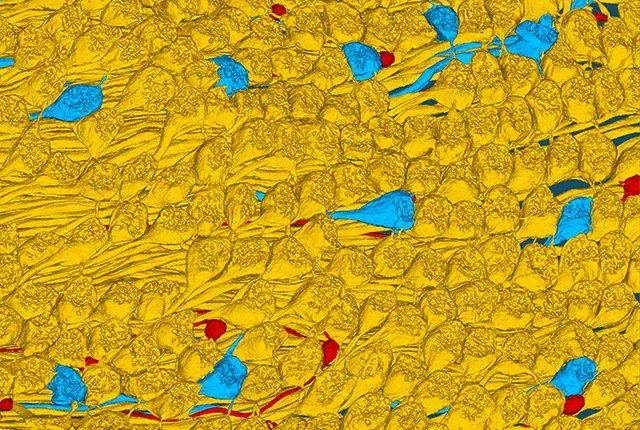
● Scientists have created the first detailed map of smell receptors in the nose, catching up with similar achievements in sight, hearing, and touch. ● The map reveals that smell receptors are highly organized into tight bands based on type. ● The findings provide foundational knowledge needed to develop better therapies for loss of smell.
Nature Communications, Published online: 28 April 2026; doi:10.1038/s41467-026-72566-7 Coiled animal excreta have fascinated naturalists since Darwin’s observations of earthworm castings, yet the physics are poorly understood. Authors study lugworm feces to provide a mechanical framework for fecal shape and how waste disposal in animals creates distinct buckling regimes.
Nature Communications, Published online: 28 April 2026; doi:10.1038/s41467-026-72515-4 Authors solve structures of in vitro Aβ40:medin mixtures to show three fibril populations and association within co-assemblies. Results support two non-exclusive mechanisms: transient interactions redirecting Aβ folding or partial medin incorporation into fibril assembly.
research.ioSign up to keep scrolling
Create your feed subscriptions, save articles, keep scrolling.