Scientists found that the 3D organization of DNA is disrupted in several types of brain cells affected by Alzheimer’s disease, altering how important genes are switched on and off. The discovery reveals a previously underexplored layer of the disease that could open new paths for understanding and eventually treating Alzheimer’s.
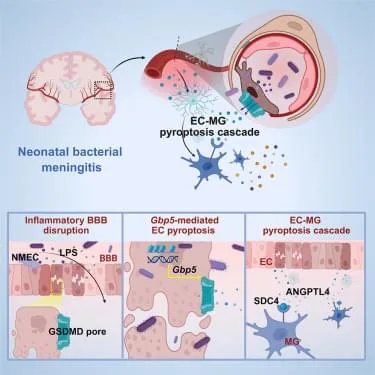
Zheng et al. reveal a pyroptosis cascade of interactions between endothelial cells and microglia, providing insights into the molecular mechanisms underlying inflammatory BBB disruption caused by neonatal meningitis-causing Escherichia coli (NMEC).
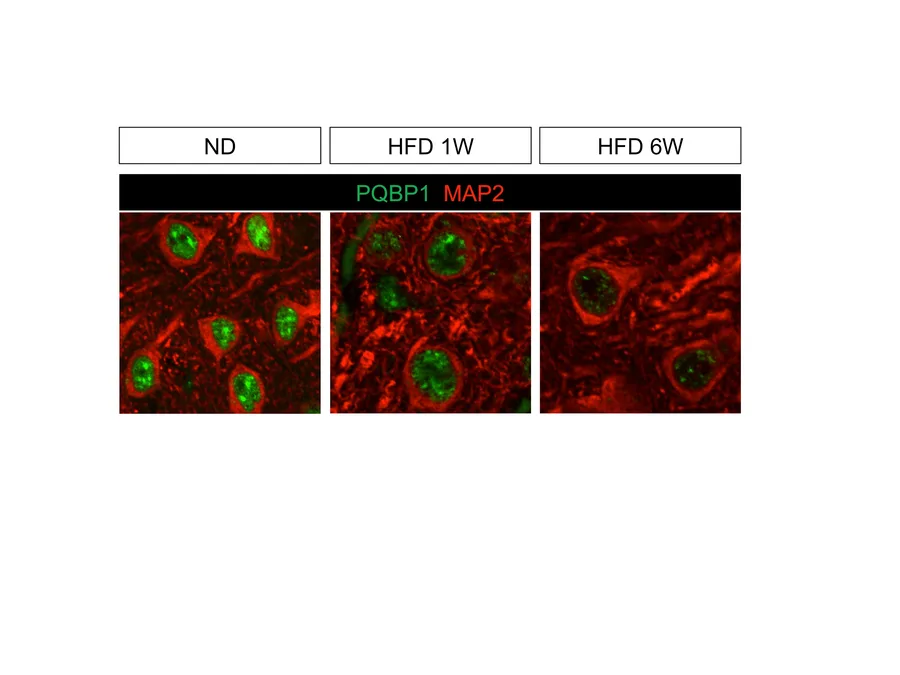
The study revealed that the high-calorie-diet-induced decrease of PQBP1 inhibits the RNA splicing of synapse-related molecules to cause abnormalities in synapse-related proteins and ultimately leading to a reduction in synapse numbers and functional impairment.
Hydrocephalus causes ventricular enlargement, but its effects extend into surrounding brain tissue. We investigated neuroinflammation, oxidative stress, and neuronal injury in congenital hydrocephalus and whether TRPV4 antagonism could attenuate these changes.
A new UCLA study has found a connection between how quickly the brain ages and the bacteria and chemical byproducts found in the gut, offering a clue to what drives brain aging long before symptoms appear. Researchers have long used brain scans to estimate a person’s “brain age,” a measure that can differ from someone’s […]
BackgroundNeuroimaging studies of internet gaming disorder (IGD) have primarily focused on reward-related and executive-control networks. However, sensory processing of addiction-related cues, particularly visual processing, may also contribute to IGD. Whether the intrinsic hierarchical organization of the visual system is altered remains unclear.MethodsThe study included 35 individuals with IGD …
Dementia with Lewy bodies (DLB) is characterized by visual hallucinations. Isolated auditory hallucinations as the presenting psychiatric symptom are uncommon, and misdiagnosis as a primary psychiatric disorder with consequent inappropriate antipsychotic exposure is a substantial risk. A case of probable DLB presenting with isolated auditory hallucinations as the initial manifestation, accompanie…
Nature Neuroscience, Published online: 11 September 2026; doi:10.1038/s41593-026-02415-9 Frontal cortical tau pathology in aging humans is associated with reduced slow-wave travel during sleep. This reduced propagation is associated with poorer overnight memory retention, supporting a link between slow-wave travel and age-related memory function.
The locus coeruleus (LC) is the source of norepinephrinergic innervation in the human brain. Locus coeruleus pathology has been linked to clinical conditions such as cognitive impairment and behavioral and psychiatric symptoms of dementia (BPSD). However, phosphorylated TDP-43 (pTDP-43) pathology in the LC has been understudied, particularly in the contexts of aging and limbic predominant age-rel…
Nature Medicine, Published online: 11 September 2026; doi:10.1038/s41591-026-04635-9 A 15-year cohort study shows that Alzheimer’s dementia risk is jointly shaped by Alzheimer’s pathology and cognitive resilience, with high resilience linked to lower risk, even under greater pathology.
Nature Communications, Published online: 11 September 2026; doi:10.1038/s41467-026-77565-2 Group 3 (G3) medulloblastoma is an aggressive paediatric brain tumour with limited treatment options. Here, the authors show that CReP phosphatase maintains eIF2α activity, thereby protecting G3 MB cells from apoptosis, and that these cells are sensitive to eIF2α inactivation.
A new UCLA study has found a connection between how quickly the brain ages and the bacteria and chemical byproducts found in the gut, offering a fresh clue into what drives brain aging long before symptoms appear.
Binghamton University·State University of New York
3d ago
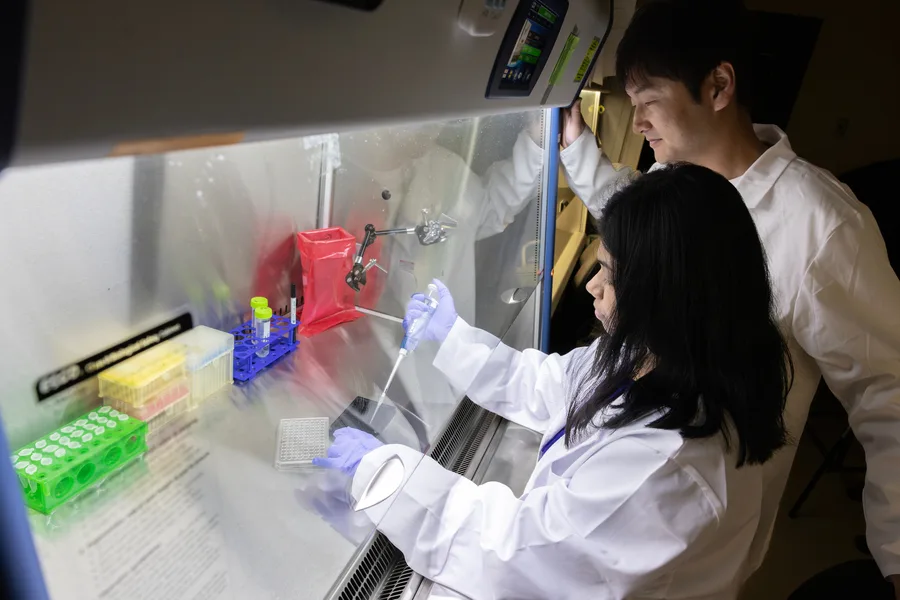
Binghamton University will receive half a million dollars from New York state for new instrumentation that will advance our understanding of dementia and neurodegenerative diseases more generally.





 research.io