Scientific Reports, Published online: 15 September 2026; doi:10.1038/s41598-026-70397-6 Correction: Ubiquitin-protein ligase E3C promotes glioma progression by mediating the ubiquitination and degrading of Annexin A7
Nature, Published online: 09 September 2026; doi:10.1038/s41586-026-11003-7 A proximity-mapping atlas defines tumour-associated proximity antigens, revealing disease-associated membrane spatial communities, and identifies EGFR–CDCP1 as a co-target pair that enhances tumour killing by multispecific therapeutics.
[Cell Death & Disease] Integrating 3D cancer spheroid models with RNA-seq analysis, the authors investigated NRF2 hyperactivation in CSCs and its role as a core mediator of CSC-associated radioresistance and stemness via the canonical WNT/β-catenin pathway.
Building a new class of immunotherapy
The journey from a VIB discovery to a clinical-stage program at Mestag Therapeutics
Few discoveries make the journey from a biological observation in the lab to a therapy tested in patients. The collaboration between the Bergers lab at VIB-KU Leuven, VIB Discovery Sciences and Mestag Therapeutics is one such example.
More than a decade ago, Prof. Gabriele Ber…
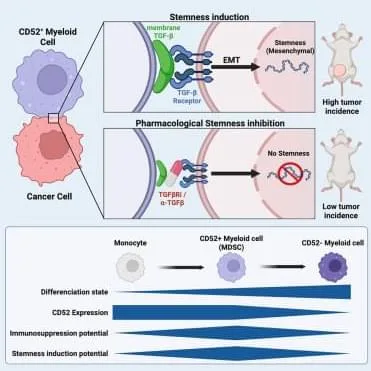
Boyer, Blaye et al. show that CD52-expressing immunosuppressive myeloid cells can shape breast tumor plasticity beyond immune evasion. They show that this myeloid subset delivers membrane-bound TGF-β1 via cell contact to generate mesenchymal-like cancer stem cells in luminal breast cancer, and TGF-β blockade prevents this stemness program.
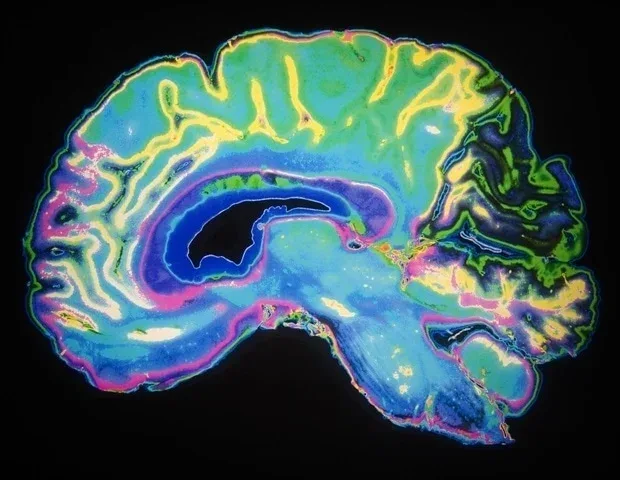
Scientists at St. Jude Children's Research Hospital have shown that specific brain cells respond differently to the H3.3 K27M, a mutation in the histone H3.3 protein that drives many cases of diffuse midline glioma (DMG), depending on the cell's location in the developing brain.
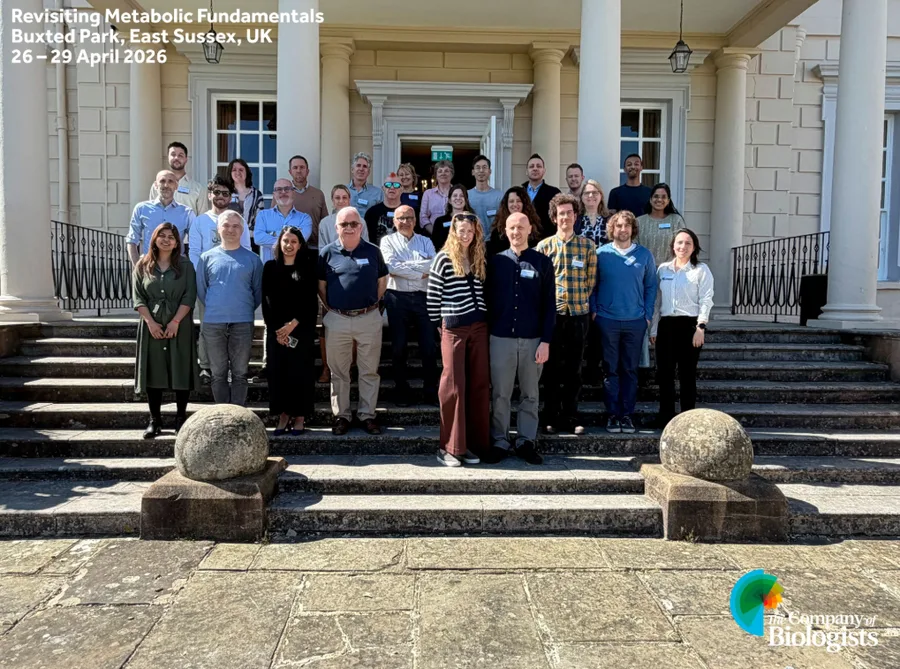
On 26 April, a sun-drenched country hotel in East Sussex set the stage for an intensive three-day workshop that brought together 30 leading metabolism researchers across cell biology, mitochondrial biology, developmental biology, cancer biology and systems biology. Organised by Lydia Finley and Wilhelm Palm, the meeting provided a forum for sharing unpublished findings, assessing the [...] The po…
Nature Cell Biology, Published online: 14 August 2026; doi:10.1038/s41556-026-02048-x Kim et al. demonstrate a non-canonical function for EZH2 in modulating cholesterol metabolism and tumour development by interacting with SREBP2, which may be targeted by PROTACs to disrupt its oncogenic activity.
Nature Cell Biology, Published online: 14 August 2026; doi:10.1038/s41556-026-02036-1 Metabolic adaptation functions as an important selective bottleneck during tumour development. A study reveals that in response to glucose starvation, a metabolite from the TCA cycle is leveraged to enhance translation of the transcription factor NRF2, providing a critical adaptive response against disulfidptosi…
A comprehensive new review article highlights the growing importance of the MYH9 gene as a central player in both cancer biology and inherited genetic conditions, offering fresh perspectives on its potential as a therapeutic target.
Nature Communications, Published online: 18 June 2026; doi:10.1038/s41467-026-74539-2 How metastatic progenitor cells emerge and persist remains to be understood. Here the authors show that in lung adenocarcinoma progenitors, the cell adhesion molecule L1CAM drives SOX2 expression via the planar cell polarity complex to sustain regenerative and metastatic capacity.
This study reports the green synthesis, characterization, and cytotoxic evaluation of zinc oxide (ZnO) nanoparticles. ZnO nanoparticles have been synthesized using 3 mL of waste peel extracted from Allium cepa (onion) and designated as O3. Comprehensive characterization has been performed using XRD, UV–Visible, FTIR, FESEM, HRTEM, DLS, and fluorescence spectroscopy. The UV–Visible spectrum exhibi…
Nature Communications, Published online: 16 June 2026; doi:10.1038/s41467-026-73467-5 The extracellular matrix provides structure to tumor tissue and can act as a barrier to anti-tumor immunity. Here, the authors demonstrate that enzymatic modification of matrix glycans shapes T cell-macrophage interactions and reduces immunosuppression within triple-negative breast cancer tumors.
Nature Communications, Published online: 15 June 2026; doi:10.1038/s41467-026-74435-9 Breast cancers with HER2 overexpression can vary in whether they also express the estrogen receptor, influencing tumor behavior and treatment response. Here, the authors show that in transgenic mouse models, the HER2Δ16 splice variant promotes the development of aggressive luminal tumors by facilitating luminal …



 research.io