Freezing the liquid core of an optical fiber produced an extreme environment where light and sound interact more than 1,000 times more strongly than in ordinary fibers. Researchers used the effect to create optoacoustic memory, potentially paving the way for lower-energy photonic computers and advanced quantum technologies.
Connecting Nanoscience. Driving Real-World Impact. InterNanoPoland 2026 returns to Katowice, Poland, on 14–15 October 2026 for its 10th Anniversary Edition, bringing together researchers, R&D managers, industry leaders, deep-tech startups and… The post Advanced Materials and Nanotechnology Conference | InterNanoPoland 2026 appeared first on Nano help .
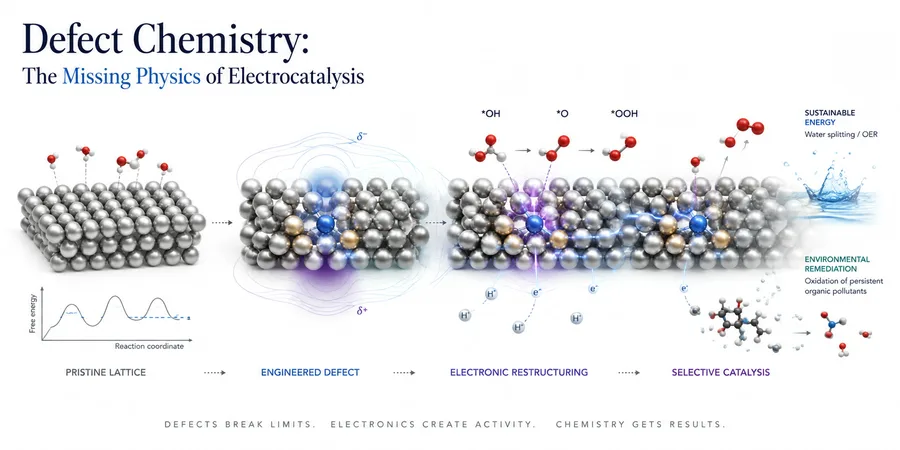
Materials science long chased perfect crystals, but in electrocatalysis, perfection is dead. To fix global energy and environmental crises, we must stop pursuing symmetry and start engineering atomic chaos.
MXenes have been widely reviewed as biomedical nanomaterials for sensing, therapy, imaging, drug delivery and tissue engineering. However, most reviews organize MXene studies by biomedical application categories rather than mechanical conditions under which MXene-containing interfaces operate. This leaves an important gap for biomechanical engineering: how MXene-based soft interfaces maintain sig…
Mechanical components such as bearings, gears, marine shafts, engine-related parts, and aluminum-alloy structures are frequently subjected to coupled wear, corrosion, humidity variation, temperature cycling, and interfacial degradation during service. MXene-dominant and MXene-containing protective coating systems have recently emerged as promising surface-engineering platforms because MXene nanos…
New multi-purpose facility showcases company’s industry-leading semiconductor and SMT inspection and metrology offerings and serves as a specialized demonstration, training and testing center. The post Nordson Test & Inspection Opens Center of Excellence appeared first on Semiconductor Digest .
Significantly expanding production capacity for post-CMP cleaners*1 to meet growing demand for AI semiconductors. The post Fujifilm Completes New Production Facility for Advanced Semiconductor Materials in Oita, Japan appeared first on Semiconductor Digest .
Scientific Reports, Published online: 21 August 2026; doi:10.1038/s41598-026-66539-5 Enhanced dielectric and optical characteristics of NiO/Co₃O₄-filled poly(vinyl alcohol)/poly(vinyl pyrrolidone) blend films for potential optoelectronic applications
Researchers achieved long-term, air-stable organic long persistent luminescence (OLPL) – with glow duration up to 7154.3 seconds – using a new amorphous system.
Lanthanide-based metal–organic coordination polymers (Ln-MOCPs) have been widely used in luminescent temperature sensing. Among them, Nd3+ has become a highly promising luminescent center due to its intense radiative transition properties in the first and second near-infrared regions. In this work, {[NdIMDC(H2O)4]Cl2.2H2O}n (NdIMDC, IMDC = C7H7N2O4) was synthesized using Brønsted acidic ionic liq…
Renewable electricity-driven water electrolysis offers a promising route to low-emission hydrogen, yet exceptional laboratory catalyst performance does not necessarily translate into efficient, durable, and scalable electrolyzer operation. This review examines nanostructured electrocatalysts across interconnected length scales, linking atomic-level electronic structure and adsorption energetics w…
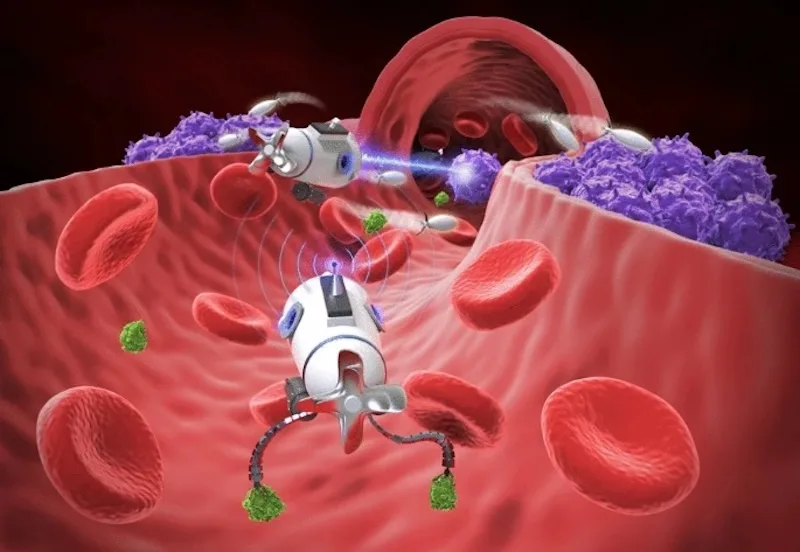
The global nanorobotics market is forecast to reach $31.44 billion by 2034, driven by growing applications in targeted drug delivery, precision medicine and regenerative medicine, according to new research from Polaris Market Research. The research firm estimates the market at approximately $9 billion in 2025 and expects it to expand at a compound annual growth […]
Nature Communications, Published online: 21 August 2026; doi:10.1038/s41467-026-76895-5 Photocontrollable luminescent molecular switches are promising for smart materials, though it is challenging to preserve photoresponse in solid matrices. Here the authors design a series of donor-acceptor Stenhouse adducts which undergo fluorescence resonance energy transfer in a shape-memory polymer network.
Nature Communications, Published online: 21 August 2026; doi:10.1038/s41467-026-77025-x CuNi/PCN with low-coordinated N3-Ni-Cu-N2 dual-atom sites achieves selective C2H6 production with a 1.15% AQE in dilute flue gas CO2. Synergistic dual sites promote C-C coupling and endow the catalyst with strong resistance to NOx and SO2 poisoning.
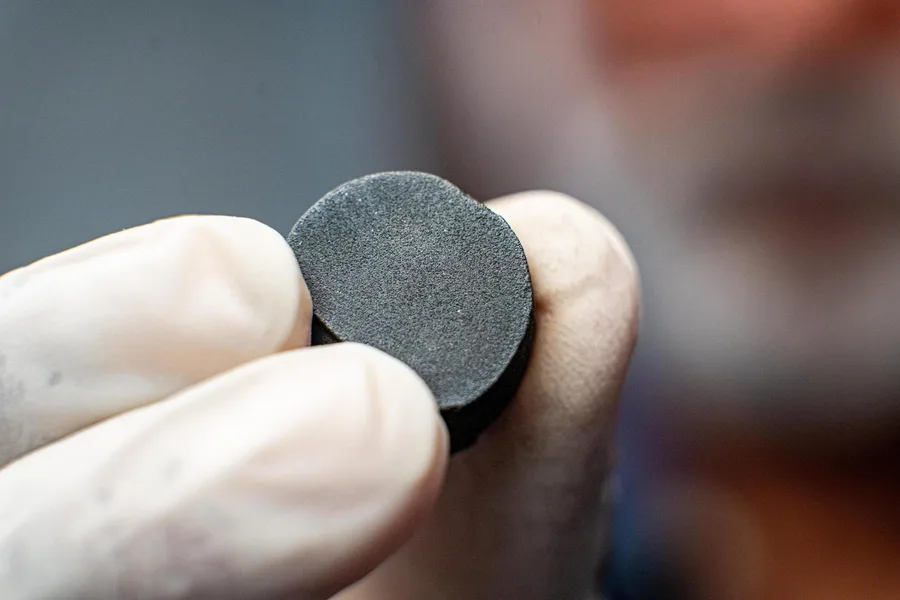
Rice University researchers have developed a way to stabilize diamond during high-temperature and low-pressure processing, creating a strong bulk composite and discovering that high-speed collisions can rapidly transform diamond into graphite. Their study is published in Materials Today. Diamond is one of the hardest known materials, with high thermal conductivity, properties that make it valuabl…





 research.io