Clinically used opioids, such as morphine, primarily act through the μ-opioid receptor (MOR), encoded by the OPRM1 gene, which undergoes extensive alternative splicing. More than 20 OPRM1 isoforms have been identified, yet functional characterization has largely focused on the canonical MOR-1 variant. With the emergence of three-dimensional human cerebral organoids (hCOs) derived from induced plu…
IntroductionCannabidiol (CBD), a major non-psychoactive constituent of Cannabis sativa, exerts pleiotropic effects, including antipsychotic, anxiolytic, and neuroprotective properties, with low toxicity and minimal euphoric effects. Previous studies have demonstrated that CBD alleviates memory impairments associated with pathological conditions such as seizures, reserpine exposure, pneumococcal m…
Traumatic brain injury (TBI) remains a major unmet clinical challenge owing to its complex pathophysiology, profound heterogeneity, and limited regenerative capacity of the adult central nervous system (CNS). Existing therapeutic interventions are largely restricted to supportive management and fail to adequately address the secondary injury cascade characterized by persistent neuroinflammation, …
Neurological disorders, including depression, cognitive impairment, and neurodegenerative diseases, are closely associated with oxidative stress, apoptotic neuronal loss, and impaired neuronal differentiation. Polyamine derivatives from natural products have emerged as potential neuroprotective agents, although their mechanisms remain incompletely understood. In this study, three polyamine compou…
BackgroundAdvanced Alzheimer’s disease (AD) is generally regarded as a stage of irreversible functional decline. Psilocybin is known to transiently alter large-scale brain network dynamics and to induce plasticity-related mechanisms in preclinical models, yet clinical data in advanced dementia remain lacking.Case presentationWe report the case of an octogenarian Japanese-American woman with a 10-…
Anxiety disorders are associated with impaired inhibitory neurotransmission mediated by γ-aminobutyric acid type A (GABA-A) receptors. Although benzodiazepines remain effective anxiolytics, their clinical utility is limited by sedation, cognitive impairment, tolerance, and dependence, prompting the search for mechanistically distinct GABAergic modulators. Among cannabinoid-related molecules, the …
BackgroundRefractory chronic cluster headache (rCCH) is a severe form of trigeminal autonomic primary headache that often resists conventional pharmacological treatment, resulting in significant impairment in patients’ quality of life. Identifying effective strategies to reduce attack frequency and shorten cluster periods remains a crucial clinical challenge.Case presentationTwo cases of rCCH who…
Streptozotocin-induced diabetic rats (STZ rats), an established animal model of type 1 diabetes mellitus, develop cognitive decline, which has been linked to impairments in hippocampal synaptic plasticity. Long-term depression (LTD) in the hippocampus may be induced by the activation of different types of G protein-coupled receptors, particularly metabotropic glutamate receptors (mGluRs) and musc…
IntroductionMorphine antinociceptive tolerance remains a critical problem in the clinical management of pain. Spinal cord glial cell activation and neuroinflammation appear to play a crucial role in the development and maintenance of this tolerance. BTP2, a potent store-operated calcium channel inhibitor, has anti-inflammatory properties in the central nervous system. This study aimed to investig…
The microbiota–gut–brain axis represents a complex bidirectional communication network linking the gastrointestinal system and the central nervous system and has been increasingly recognized as a key contributor to neurological and psychiatric disorders. Growing evidence indicates that alterations in gut microbiota composition and function can influence brain development and function through neur…
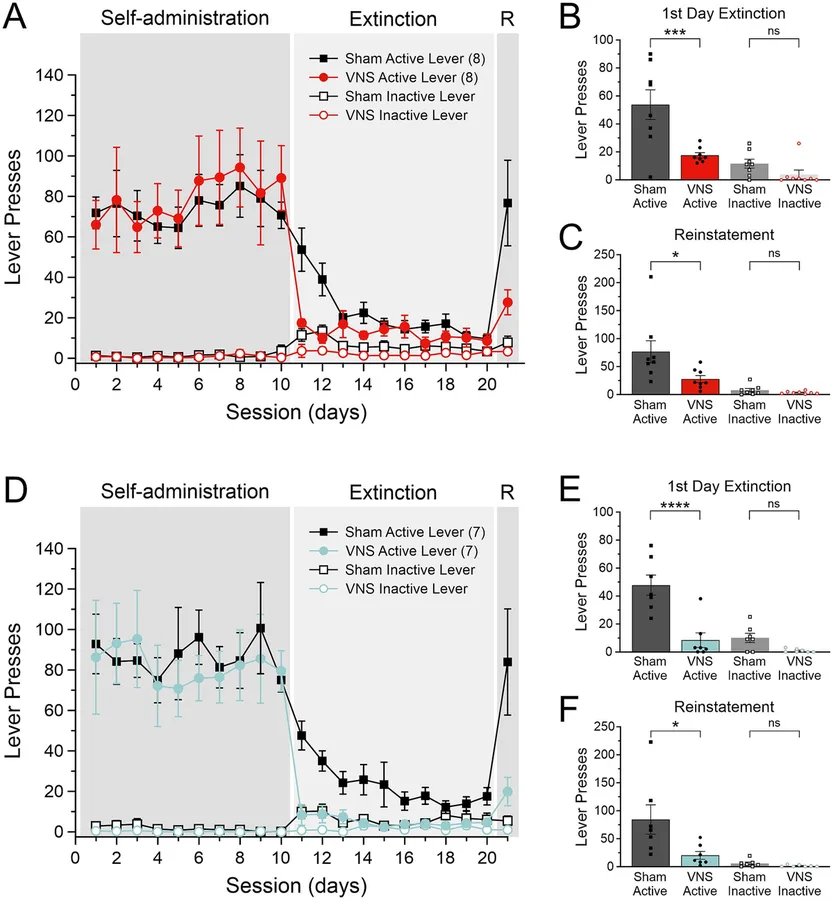
IntroductionRelapse triggered by drug-associated cues remains a major challenge in treating substance use disorders, as extinction learning is often weak and context dependent. Vagus nerve stimulation (VNS) enhances learning-related plasticity and, when paired with extinction training, reduces cue-induced reinstatement of cocaine seeking; however, the underlying circuit mechanisms remain unclear.…
BackgroundPosttraumatic stress disorder (PTSD) is associated with elevated inflammation and risk for chronic illness, yet few studies have examined inflammatory biomarker outcomes of PTSD interventions. Rapid PTSD symptom reduction has been observed following 3,4-methylenedioxymethamphetamine (MDMA)-assisted therapy, which leverages MDMA as a prosocial adjunct to psychotherapy. No studies have ev…
IntroductionDysregulation in resting-state connectivity in electroencephalogram (EEG) and dysregulation in the dopamine system have both been repeatedly observed in patients with psychotic disorders. It is unclear whether dopaminergic drugs, used to treat psychotic disorders, induce treatment-relevant connectivity changes in the brain. Investigating the effects of dopaminergic drugs in healthy pa…
Malformations of cortical development (MCD) are a common cause of epilepsy, autism spectrum disorder (ASD), and intellectual disability (ID). A unifying mechanistic etiology for epilepsy, ASD, and ID has not been found due, in part, to the heterogeneity of MCD subtypes. However, changes in brain metabolism within MCD have emerged as a possible convergent mechanism across MCD that may have therape…
Neurodegenerative diseases such as Alzheimer’s disease (AD), Parkinson’s disease (PD), and amyotrophic lateral sclerosis (ALS) have become major global causes of disability and mortality. Their complex pathogenic mechanisms remain incompletely understood, and effective disease-modifying therapies are still lacking. Traditional animal models and two-dimensional (2D) cell culture systems exhibit no…
IntroductionThe reductase domain of neuronal nitric oxide synthase (nNOS) is essential for nitric oxide (NO) production in the mammalian nervous system. Excessive NO contributes to neurological disorders, including ischemic stroke, highlighting the need to better understand the structural dynamics of this domain. The FNR- like unit within the reductase domain stabilizes the cofactors NADP(H), FAD…
Background and objectiveDesvenlafaxine (DVS), a commonly used serotonin-norepinephrine reuptake inhibitor (SNRI), is widely applied in the treatment of major depressive disorder (MDD). However, the efficacy and safety of different DVS dosages remain controversial. This study aims to systematically evaluate the efficacy and safety of various doses of DVS in treating MDD, providing evidence-based g…
AimNeuronal intranuclear inclusion disease (NIID) is a rare neurodegenerative disease. We investigated a role of nonconvulsive status epilepticus (NCSE) in cognitive dysfunction in pathologically confirmed NIID. We also analyzed distinctive factors to differentiate NIID from Alzheimer’s disease (AD).MethodsA 63-year-old man presented with transient consciousness disturbance (Day 1). For previous …
BackgroundPuerarin is a flavonoid bioactive component extracted from the Chinese herb radix puerariae, which has been reported to have anti-inflammatory and neuroprotective effects and is a potential drug for the treatment of neuroinflammatory diseases. There is increasing evidence that the gut-liver-brain axis is closely related to neurological disorders. However, studies on the use of puerarin …

 research.io