Introduction Cell proliferation assays provide crucial insight for scientists in the life sciences. They find many uses in basic research, including different scale applications in biochemistry , cell biology , metabolism , and molecular biology , as well as in large-scale screening assays for drug development.
Introduction to metabolic flux analysis Metabolism is universal to all cells and involves thousands of metabolites distributed through interconnected pathways. 1-4 This has important consequences for the viability of a cell. While the levels of metabolites are useful parameters for biochemical analysis , a more nuanced way of looking at metabolic outputs is to measure metabolic flux (r) through r…
Introduction Mitochondria are often referred to as the powerhouses of the cell since they produce most of the adenosine triphosphate (ATP) that serves as the primary energy source to support cellular function. However, the contribution of mitochondrial metabolism to cellular function is not limited to the production of ATP. Mitochondrial metabolism is essential on many fronts including crucial an…
Introduction This blog is about binding constants (association, dissociation or equilibrium constants), how to measure them, and the crucial role they play in understanding molecular interactions. By definition, a binding constant quantifies the strength of the interaction between two molecules, such as a ligand and its binding partner, under equilibrium conditions. Information on binding constan…
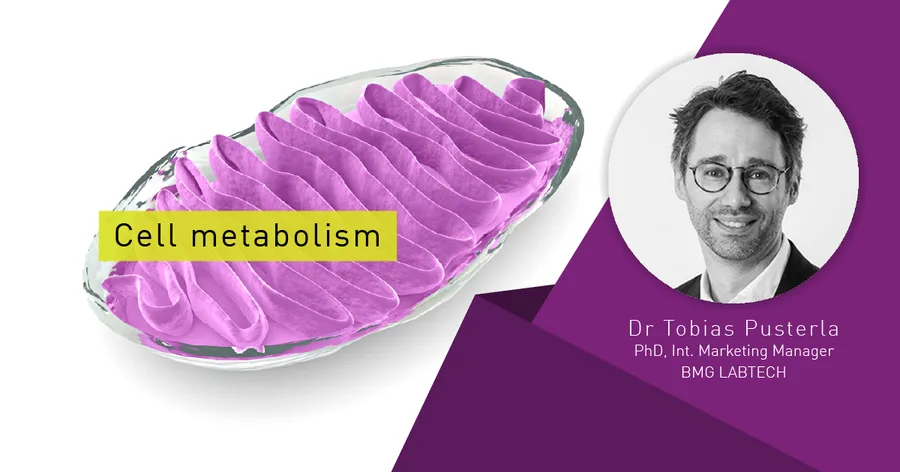
Metabolic pathways of living organisms Cell metabolism encompasses different steps and sequences of molecular conversions. This coordinated series of biochemical reactions where the product of one conversion becomes the substrate for another reaction is known as metabolic pathways. In these pathways, molecules are transformed by a series of enzymes. These metabolic pathways consist of numerous ch…
Introduction Receptor-ligand interactions are molecular binding events that alter receptor activity or trigger a response in the cell. Researchers are interested in studying receptor-ligand interactions to understand how cells communicate with their environment and how they operate in response to cell signaling . Receptor-ligand interactions are also an important target for drug discovery (Fig. 1…
Introduction A receptor-ligand interaction involves the binding of a molecule (ligand) to a site on a receptor. Receptors are detection and cell signaling molecules inextricably linked to the activities of cells 1 . Ligands are diverse molecules with the ability to interact with receptors. They may be endogenous (naturally occurring) molecules or synthetic ligands such as drugs.
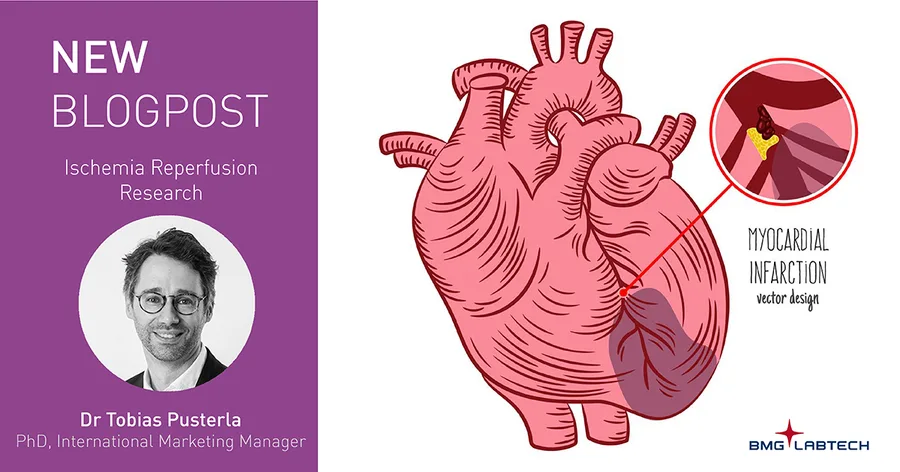
Ischemia-reperfusion (I/R) research studies the mechanisms underlying tissue and cellular damage caused by a period of ischemia, followed by the re-establishment of blood supply (reperfusion) in an infarcted organ or tissue.
In the cell, several biological processes involve changes of the reduction-oxidation (redox) state, a misbalance of which can result in the production of free radicals and/or other Reactive Oxygen Species (ROS) . Although, cells physiologically produce a certain amount of ROS (e.g.: respiratory chain in mitochondria), excessive production has the potential to significantly damage cell homeostasis…
- Company/University: Cancer Research Horizons, UK
- Interviewee: Charlotte Walsh-Tripp
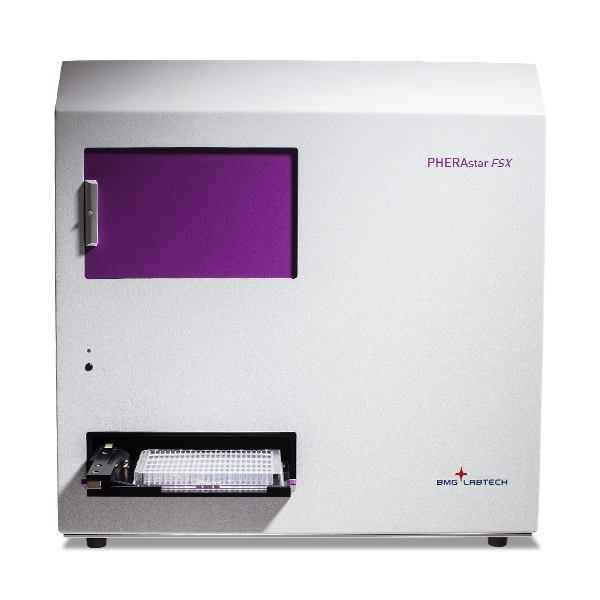
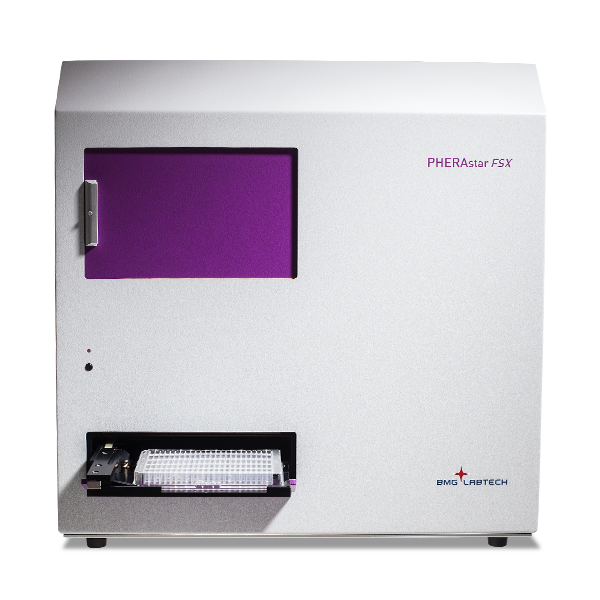
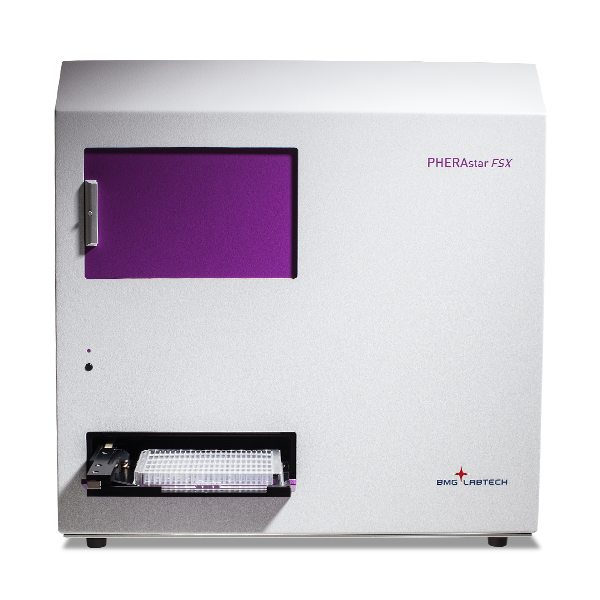
- Products used: PHERAstar FSX, VANTAstar
- Method: fluorescence intensity, luminescence, absorbance, AlphaScreen, TR-FRET, kinetic assays, cell-based assays
Charlotte Walsh-Tripp, a senior scientist at Cancer Research Horizons, elaborates on their mission to cure cancer by focusing on targets that are often n…
Helen Harrison, Director of Screening at Amphista Therapeutics, discusses targeted protein degradation (TPD) and the discovery of drugs in this area.
Amphista focuses on the development of novel TPD approaches. How do these targets differ from more traditional
‘druggable’ targets and what are the benefits of this approach?
TPD approaches can completely remove pathogenic proteins, rather than just…
The G protein-coupled receptor (GPCR) family is comprised of hundreds of receptors that respond to a variety of stimuli to modulate cellular activity. Their ubiquitous expression and cell membrane localization make them attractive. In fact, GPCR represents the most highly targeted protein family by FDA-approved drugs.
Biased agonism, the concept whereby ligands select for and stabilise receptor s…
How the PHERAstar FSX and its software support drug discovery in neuroscience
The PHERAstar® FSX offers versatile detection options to advance drug discovery in neuroscience. Learn how its capabilities and software enhance neuroscience-related drug research.
Steven van Helden, Chief Technology Officer at Pivot Park Screening Centre (PPSC), relies on efficient microplate readers for effective hit discovery. Here he discusses innovation in drug discovery and the future of screening technology.
In what way is the drug discovery environment changing and how does it affect your work?
Open innovation and knowledge exchange have become topics of great relev…
- Company/University: lifeArc, UK
- Interviewee: Joao Pisco
- Products used: CLARIOstar Plus and PHERAstar FSX
- Method: enzyme activity, absorbance, fluorescence intensity, luminescence, compound screening, assay development
Joao works for lifeArc, a medical research charity involved in translational sciences and specifically focussing on unmet medical problems. Recently, Joao has been involved …
Receptor function is multifaceted and it is therefore highly advantageous to monitor multiple aspects in live cells and in real-time. This includes ligand binding, secondary messenger coupling, recruitment of scaffolding proteins such as arrestins, internalization and trafficking. This scientific talk will detail the latest advances in microplate reader-based technologies to monitor receptor phar…
Malaria is a parasitic disease caused by the species Plasmodium which infects red blood cells and is transmitted from human to human by the mosquito. This disease impacts many millions of people every year, resulting in approximately half a million deaths, mainly in children (WHO).
Antimalarial drugs have been the main method to treat malaria, though the ever-evolving Plasmodium parasites have be…





 research.io