A paediatric patient presented with periorbital oedema and fever. Initially, there was low suspicion for cavernous sinus thrombosis and orbital cellulitis due to the presence of full extraocular movements. However, given worsening bilateral periorbital oedema, lethargy and sepsis, neuroimaging was performed demonstrating inflammation and enhancement of the leptomeninges and left cavernous sinus, …
For adults with attention-deficit/hyperactivity disorder (ADHD) who also have children with ADHD, pairing a stimulant medication with a parenting intervention can lead to significant reductions in their child’s ADHD severity. The findings were published in the Journal of Child Psychology and Psychiatry .
BackgroundAcute pharyngitis and tonsillitis are common in children. Xiao’er Fengreqing Oral Liquid (XFQOL) shows potential benefits in previous studies of pediatric acute upper respiratory tract infections and influenza, but high-quality clinical evidence for pediatric acute pharyngitis/tonsillitis remains limited.MethodsThis multicenter, block-randomized, double-blind, double-dummy, active-contr…
Ann and Robert H. Lurie Children's Hospital of Chicago
1d ago
Pediatric Emergency Care Applied Research Network (PECARN) finds doctors may not always agree when identifying common signs of pneumoniaWhen a child has symptoms that could be pneumonia, doctors often listen to the child's lungs with a stethoscope to help make a diagnosis. But a new national study led by physician-scientists at Ann Robert H.
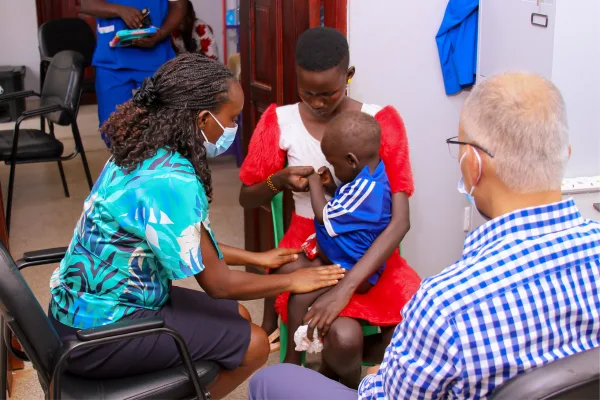
A pilot study co-led by IU found that a daily 20 mg dose of zinc reduced infections by 38% in young Ugandan children with sickle cell anemia. The researchers believe this affordable solution can be rapidly deployed to save children's lives worldwide.
enata Medical, a privately held medical technology company dedicated to transforming care for children with congenital heart disease (CHD), today announced the close of a $25 million Series D financing round. The round was led by ARCHIMED, a global investment firm focused exclusively on healthcare, with participation from existing investors.
Children's Hospital Los Angeles developed a clinical decision tool that uses genetic test results to help clinicians personalize thiopurine dosing and reduce toxicity risk for children with leukemia.
Infectious diseases specialists including Anna Sick-Samuels and Aaron Milstone from Johns Hopkins Children's Center, report results of a new federally funded study of EAC culture ordering that suggests it is safe to test less under certain conditions in pediatric intensive care units.
Background and objectivesLacosamide (LCM) is a third-generation concomitant antiseizure medication (ASM) that is widely used in epilepsy treatment. Reported data on the predictors of efficacy of LCM in children with epilepsy are scarce. This study aimed to explore the predictors of LCM efficacy in pediatric patients with epilepsy.MethodsThis single-center retrospective cohort study was conducted …
Cavities in young children are often treated only after they become painful, but a new study suggests there may be a much simpler solution. Researchers led by the University of Michigan have shown that a quick paint-on liquid can stop tooth decay without drills, needles, or sedation. The findings were published in JAMA Pediatrics. Untreated […] The post Scientists Find Fast, Needle-Free Way to St…
(CBS News) – A baby with a rare heart defect was born to a surrogate in Texas on Wednesday, one day after state Attorney General Ken Paxton intervened in the case to ensure the child received lifesaving medical care after … Read More
Treating carbapenem-resistant Klebsiella pneumoniae (CRKP) is challenging, particularly when resistance is mediated by New Delhi metallo-β-lactamase (NDM). Clinical experience with fixed-combination aztreonam–avibactam (ATM–AVI) in young infants remains extremely limited. Here, we report a case of a 2-month-old boy who underwent emergency laparotomy for intestinal obstruction owing to small bowel…
A new study conducted at Boston Medical Center (BMC), New England's largest essential hospital, found that a trauma-informed clinical guideline can help reduce reflexive Child Protective Services (CPS) reporting without compromising child safety.
Objective To examine the utilization and effectiveness of safety checklists in pediatric clinical care. Methods A comprehensive literature search was conducted using Medline to identify studies related to the development and/or implementation of patient safety checklists in pediatrics. All study designs were included for citations published through September 2023. Results Following abstract and f…
Background Critical care advanced practice providers (APPs) are frontline providers in many pediatric intensive care units (PICUs). From 2020 to 2022, there was a significant downward shift in nursing experience level in the PICU at the authors’ institution. APPs may help provide additional in situ education. Methods Data were collected using role-specific needs assessment of PICU nursing staff a…








 research.io