TGS has launched Gemini X, the operational combination of its Gemini Enhanced Frequency Source and Apparition encoding technology, enabling coordinated multi-source acquisition.Gemini X delivers a step change in operational efficiency, sharper subsurface imaging…
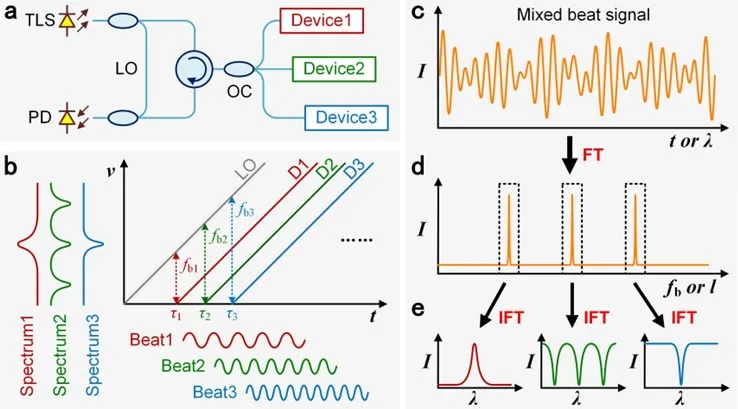
A multifunctional frequency modulated continuous wave (FMCW) LiDAR capable of high-precision ranging and multi-parameter sensing is proposed for the first time. By detecting the echo signals from both free space and optical fiber, 3D imaging and the measurements of diverse physical parameters, including environmental temperature, gas concentrations and liquid density can be measured simultaneousl…
When someone has a heart attack, part of the heart muscle loses its blood supply and becomes damaged. The body repairs this injury by replacing the dead muscle with scar tissue. Although this helps the heart heal, the scar cannot contract like healthy muscle and can interfere with the electrical signals that control each heartbeat. […] The post New Imaging Tech Shows How Heart Scars Trigger Dange…
VASC Seminar - Dhawal Sirikonda Newell-Simon 3305 jayvolk_19140 Wed, 08/05/2026 - 16:26 In Person
Using Sound to Steer Light and Light to Measure Sound
DHAWAL SIRIKONDA ZLight and sound are traditionally treated as distinct physical phenomena, yet their interaction provides a powerful mechanism for manipulating and sensing information across imaging, communic…
Lanthanide-based carriers have emerged as powerful platforms for next-generation biomedical imaging, combining unique optical and magnetic features to address key limitations of conventional agents. Owing to their 4f electron configuration, lanthanide ions provide sharp emission lines, long lifetimes, high photostability, and strong paramagnetism, enabling high-resolution, multiplexed, and deep-t…
In the therapeutic hypothermia era, intracranial hemorrhage is increasingly detected in term and near-term neonates with hypoxic–ischemic encephalopathy (HIE), yet its clinical significance remains heterogeneous and is often oversimplified. This review uses a pattern-based approach for venous system–related intracranial hemorrhage in neonatal HIE, with particular emphasis on cerebral sinovenous t…
Nature Communications, Published online: 03 July 2026; doi:10.1038/s41467-026-74050-8 The authors benchmark vascular segmentation in 3D HiP-CT images, revealing that no single metric captures quality. Top methods converge on pseudo-labeling and topology-aware losses, yet all struggle with microvascular connectivity breaks.
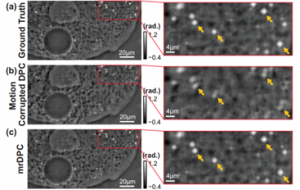
This Collection invites original research articles on phase contrast imaging, looking at the latest technological developments and the use of this technique in original applications.
ObjectivesThis study aimed to describe a case of transient neurologic deficits triggered by euglycemic diabetic ketoacidosis (DKA) in brain tissue at risk due to heavy cerebral amyloid angiopathy (CAA) microbleed burden, while demonstrating the rare imaging finding of reversible T2 fluid-attenuated inversion recovery (FLAIR) subcortical hypointensity.MethodsWe present the clinical course, laborat…
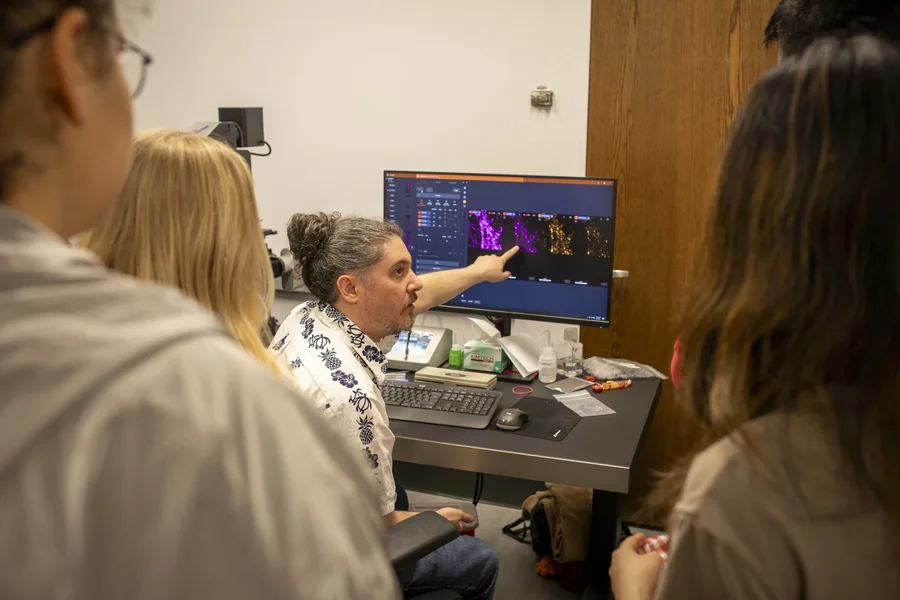
Feinberg investigators now have access to one of the most advanced super-resolution imaging systems in the world, thanks to the installation of the MIRAVA Polyscope at the Center for Advanced Microscopy. The post Nation’s First MIRAVA Polyscope Comes to Center for Advanced Microscopy appeared first on News Center .
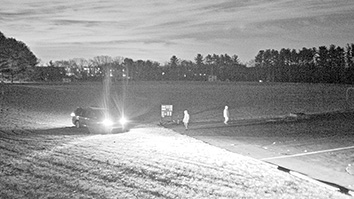
SRI - A global leader in R&D with deep roots in Silicon Valley. A new camera from SRI is poised to disrupt the decades-long dominance of analog low-light imaging. The post With DomiNite®, extreme low-light imaging goes digital appeared first on SRI .
Key Points The theme of the 2024 In Vivo Ultrasound Imaging GRC meeting, held every two years, was “Advances in Translational Applications of Imaging in Disease Diagnosis, Staging and Therapy.” The meeting presented the latest developments in both therapeutic and diagnostic ultrasound technologies and was designed to foster collaboration between scientists of all career levels. Set at .…
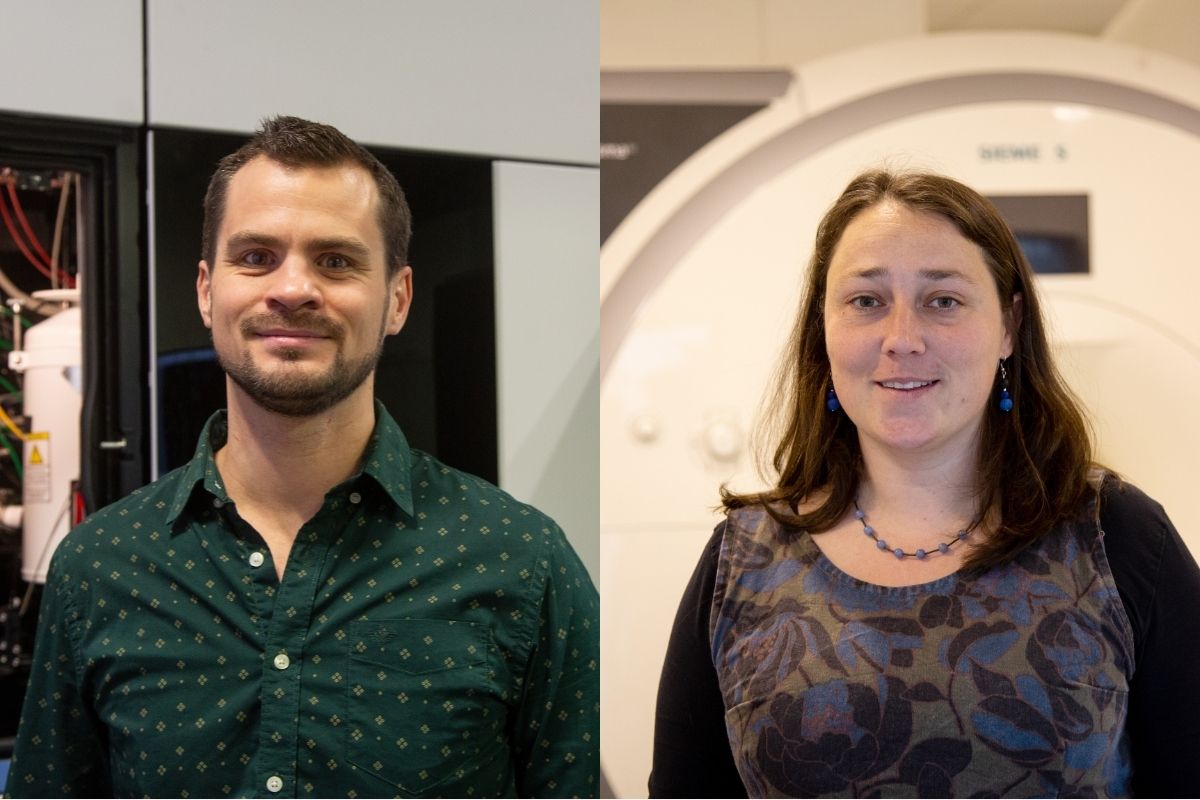
Mathematician Jana Hutter and physicist Philipp Pelz receive funding from the ERC Two researchers from Friedrich-Alexander-Universität Erlangen-Nürnberg (FAU) have been awarded the coveted Starting Grant from the European Research Council (ERC) for their work on improving imaging processes in medicine and material sciences. Prof. Dr. Jana Hutter hopes to develop innovative MRI procedures that wil…
Imaging techniques like computed tomography (CT) and positron emission tomography (PET) are now required for identifying and localizing many disorders. According to a newly developed method, PET can now be utilized particularly based on alterations in the human genome. The new genome-based imaging technology, The Imageable Genome, has the potential to aid in the earlier [..] The post The Imageabl…
Researchers have significantly improved micro-computed tomography, specifically imaging with phase contrast and high brilliance x-ray radiation. They have developed a new micro-structured optical grating and combined it with new analytical algorithms. The new approach makes it possible to depict and analyze the microstructures of samples in greater detail and investigate a broad spectrum of sampl…
Conventional optical microscopy focuses on designing optical systems to faithly replicate an image of a magnified object to reveal very small spatial features. Image quality, and thus the ability to observe small spatial features, is limited by the ability to form high quality images for widefield microscopy, or for focusing to the smallest possible spot . . .
Introduction I’ve done plenty of imaging performance testing on a variety of systems, from millimeter wave to UV. Until very recently, such testing required expensive and specialized equipment. Now, with digital imaging (at least in the visible), you can perform the same type of characterization on your camera for free. Why use an LCD? All...