Scientific Reports, Published online: 02 September 2026; doi:10.1038/s41598-026-67432-x Multimodal speckle and polarization fiber sensing for localized, broadband vibration monitoring
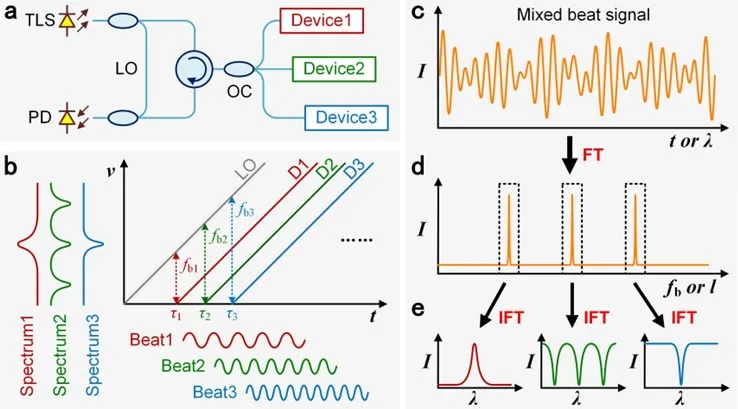
Scientists have been presenting evidence that the Earth is round for well over 2,000 years. Yet flat-Earthers remain unconvinced, with some willing to go to the end of the Earth to prove their point. They just haven't been able to find them. Pun very much intended. Earth aside, scientists have just developed a technology where flat is a clear winner over round: optical fiber sensors. Continue Rea…
A review published in Advanced Materials examines the emerging field of smelltronics, which combines advanced sensing materials, engineered interfaces, sensor arrays, and computational methods to detect and distinguish information-rich volatile organic compounds. The authors highlight how molecular recognition, device integration, machine learning, and improved sensor stability could help transla…
This paper reports synthesis and gas-sensing application of MnSiO4, MnSiO4:Al2O5, MnAl2O5 and MnAl2O5:SiO2 fabricated as thick film sensors for NH3 and H2S materials. MnSiO4:Al2O3 and MnAl2O5:SiO2 which can be used as a low cost, high performance gas sensor for real time air pollutant monitoring
Hossein Naghavi, an assistant professor of electrical and computer engineering at the UW, explores new applications for an underused segment of the electromagnetic spectrum known as the “terahertz band.” Naghavi recently received a grant from the Department of Energy to create powerful yet lightweight sensors using terahertz waves, which could aid emergency responders, autonomous vehicles, securi…
A multifunctional frequency modulated continuous wave (FMCW) LiDAR capable of high-precision ranging and multi-parameter sensing is proposed for the first time. By detecting the echo signals from both free space and optical fiber, 3D imaging and the measurements of diverse physical parameters, including environmental temperature, gas concentrations and liquid density can be measured simultaneousl…
This paper proposes an internal inspection system based on electromagnetic coupling sensing and permanent magnet magnetization, providing a theoretical study on alternating magnetic field induction and magnetic flux leakage coupling technology. Simulation analysis and experimental validation were conducted to evaluate the feasibility and reliability of the proposed magnetic rope system (MRS). Thr…
Scientific Reports, Published online: 07 August 2026; doi:10.1038/s41598-026-51761-y Fabrication and characterization of porous PDMS-heterogeneous conductive fillers composite based resistance pressure sensors for biomedical applications
Most sensors are designed to do only one thing: detect what passes through them. But what if a sensor could do more? To create a new generation of technology, researchers have looked at living systems for inspiration.
Commercial smart rings lack biochemical sensing. Here, the authors present a fully integrated ring that measures multiple chemical biomarkers from osmotically extracted sweat without iontophoresis, validated for daily analysis in both healthy and type 1 diabetic individuals.
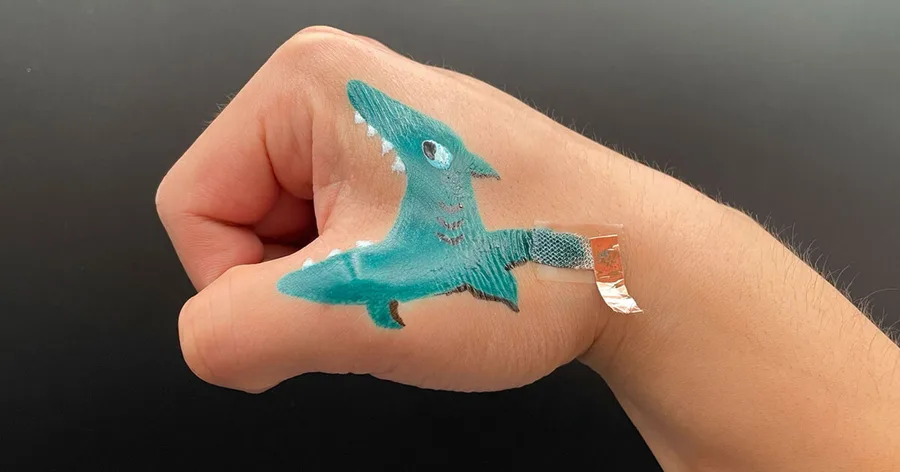
These aint your grandpa’s medical electrodes. Continue Reading Category: Materials , Engineering Tags: Pennsylvania State University , Sensors , Electroencephalography (EEG)
Nature Communications, Published online: 04 July 2026; doi:10.1038/s41467-026-75218-y A whispering gallery mode microcavity detects CO2 through a dissipative sensing mechanism, achieving sub-part-per-billion sensitivity. The approach overcomes key limitation of conventional microcavity gas sensors while remaining compact and low cost.
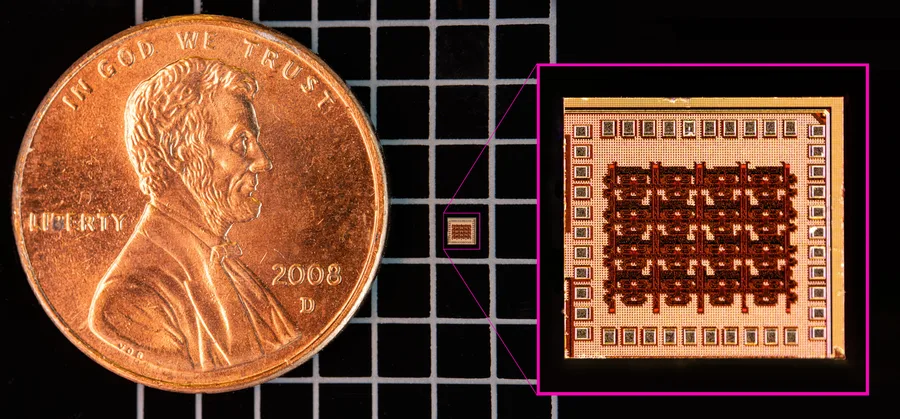
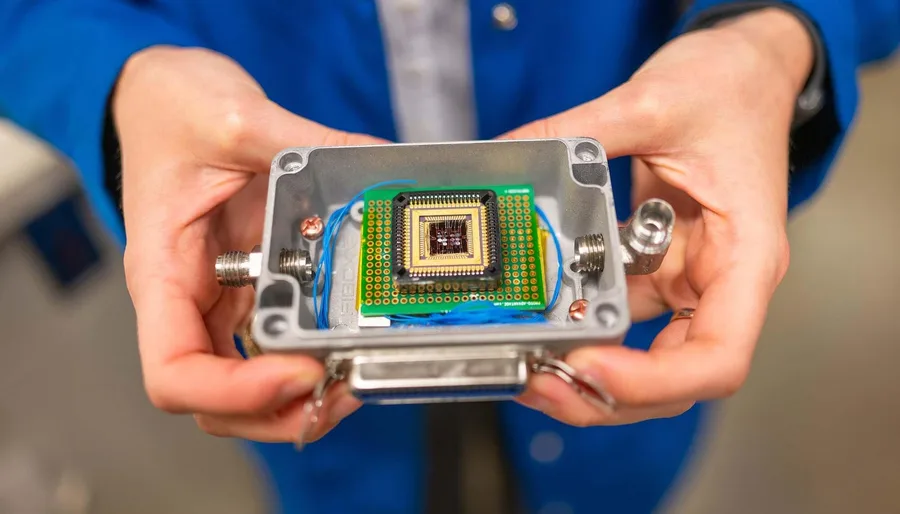
More accurate navigation systems and improved wireless communications may not come from traditional electronics, but rather from atoms. Researchers at Penn State and the National Institute of Standards and Technology (NIST) have developed a new way to build tinier, smarter glass sensors filled with highly precise and stable atoms. The team’s work, published this week […]
Scientists in Australia have created a tiny device that could transform the way we detect pollution, monitor health, and identify different materials. The new technology is an electrically adjustable infrared filter that is small enough to fit on a chip, potentially replacing much larger and more expensive sensing systems. The device was developed by researchers […] The post Tiny infrared chip co…
In this article, Patrick Schick, Product Manager for 3D Vision at IDS, explains the background and technical decisions behind Nion, puts iToF technology into context, and highlights typical areas of application.
the heading make the project look simple but it is not but it is not too hard. before heading into the problem i am facing lemme tell you the rough idea. i have some sensors which i am going to connect with whicarduino board and later get data from those sensors and use a model to recogonize the... Read more
Most of us have used the sniff test to decide whether a slightly expired bottle of milk or a week-old box of takeout is still good to eat. But while the human nose can be quite astute, it doesn’t always catch everything. Each year, millions of people in the U.S. are sickened by food-borne pathogens […]
the heading make the project look simple but it is not but it is not too hard. before heading into the problem i am facing lemme tell you the rough idea. i have some sensors which i am going to connect with whicarduino board and later get data from those sensors and use a model to recogonize the... Read more
Humanoid robots are expected to enter our homes soon, and a sense of touch is crucial for safe and capable humanoids. Homes are challenging, unstructured and highly dynamic environments.
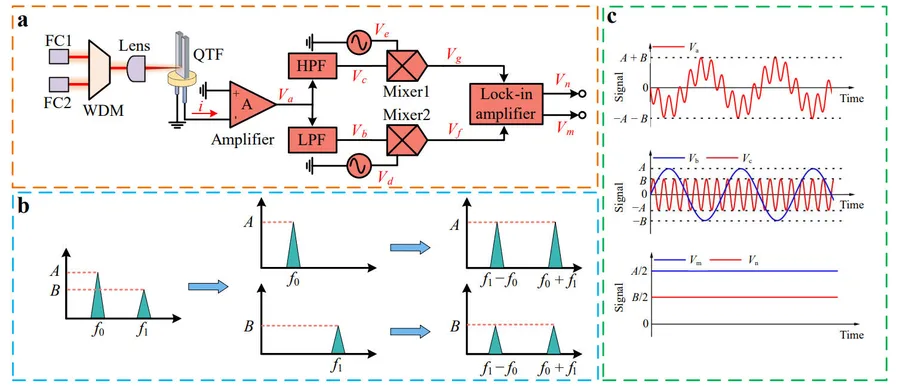
A Harbin Institute of Technology team proposes a mixed-frequency heterodyne demodulation architecture for dual-gas LITES sensing using a single quartz tuning fork. The sensor achieves low-crosstalk simultaneous detection of methane and acetylene, simplifying system design for cost-effective industrial safety and environmental monitoring.





 research.io