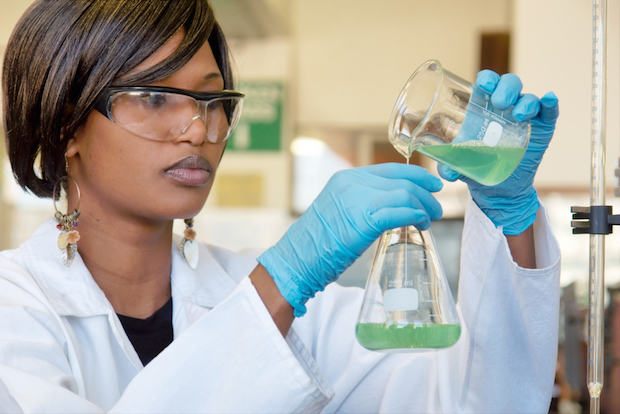
Nature Communications, Published online: 22 August 2026; doi:10.1038/s41467-026-76661-7 Here authors investigate the mechanisms underlying the synthesis and retention of metastable α-Li₃PS₄, a solid-state electrolyte with high ionic conductivity, which can be formed and quenched at low temperatures despite being a high-temperature equilibrium phase.
Nature Communications, Published online: 22 August 2026; doi:10.1038/s41467-026-76133-y Handedness in synthetic systems can be challenging to control. Here, the authors report the development of homogeneous hydrogels with programmable, handed shape morphing, including helices and twists, as a result of photoexpansion.
Scientists have been searching for ethical, high-quality alternatives to animal leather, which notoriously comes with environmental costs and ethical compromises. While synthetic alternatives solve the ethical dilemma, many of them are plastic-based and very difficult to recycle. Now, researchers are trying to find an option that checks all the boxes, and the best material for it seems to be … mu…
Freezing the liquid core of an optical fiber produced an extreme environment where light and sound interact more than 1,000 times more strongly than in ordinary fibers. Researchers used the effect to create optoacoustic memory, potentially paving the way for lower-energy photonic computers and advanced quantum technologies.
Connecting Nanoscience. Driving Real-World Impact. InterNanoPoland 2026 returns to Katowice, Poland, on 14–15 October 2026 for its 10th Anniversary Edition, bringing together researchers, R&D managers, industry leaders, deep-tech startups and… The post Advanced Materials and Nanotechnology Conference | InterNanoPoland 2026 appeared first on Nano help .
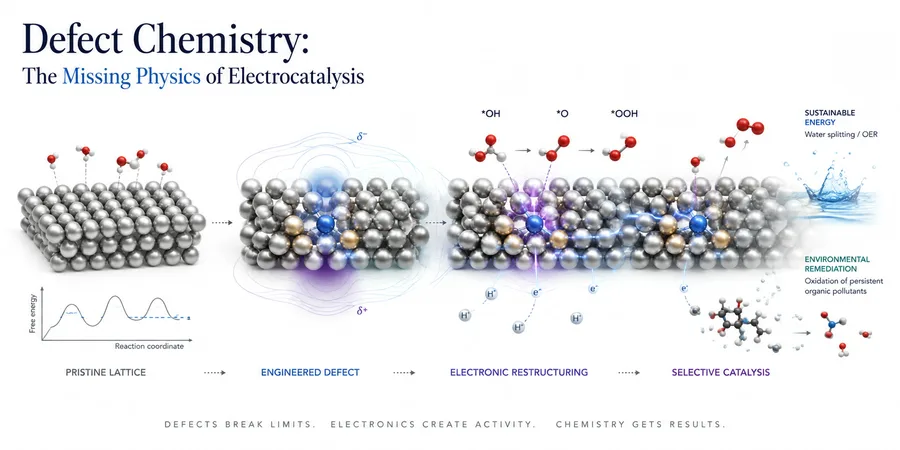
Materials science long chased perfect crystals, but in electrocatalysis, perfection is dead. To fix global energy and environmental crises, we must stop pursuing symmetry and start engineering atomic chaos.
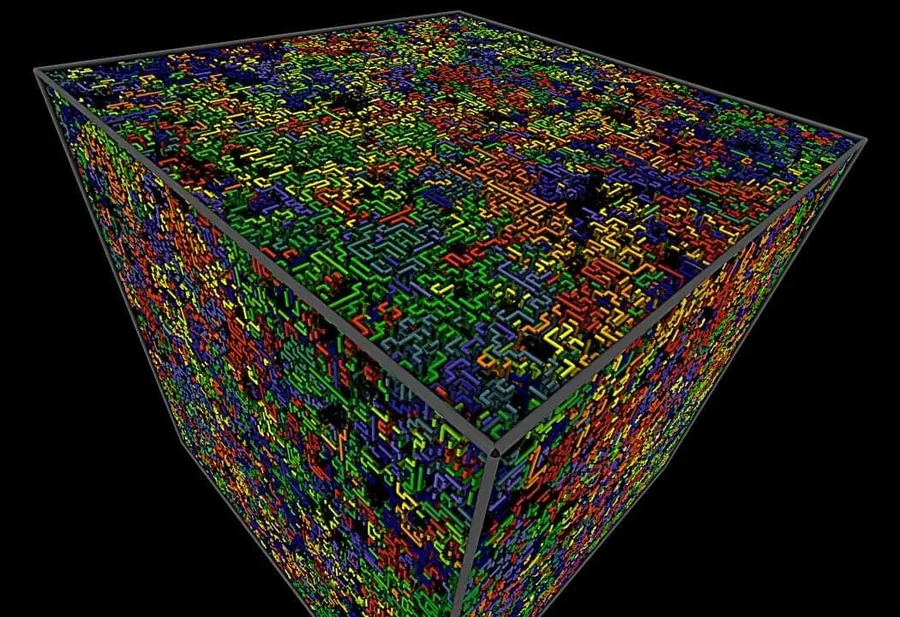
Long polymer chains are everywhere: in synthetic materials, soft matter, biological systems such as chromosomes, and mathematical models of filaments and knots. When many such chains are densely packed, they form what physicists call a polymer melt. In this crowded environment, each chain is constrained by the others around it. These entanglements are central to […]
MXenes have been widely reviewed as biomedical nanomaterials for sensing, therapy, imaging, drug delivery and tissue engineering. However, most reviews organize MXene studies by biomedical application categories rather than mechanical conditions under which MXene-containing interfaces operate. This leaves an important gap for biomechanical engineering: how MXene-based soft interfaces maintain sig…
Nature Communications, Published online: 22 August 2026; doi:10.1038/s41467-026-77045-7 Point-contact spectroscopy under pressure reveals Andreev bound states on UTe2’s (001) surface, indicating an odd-kz pz component of the superconducting order parameter. The relative weights of pz- and px/y-wave pairing distinguish its multiple pressure-tuned superconducting phases.
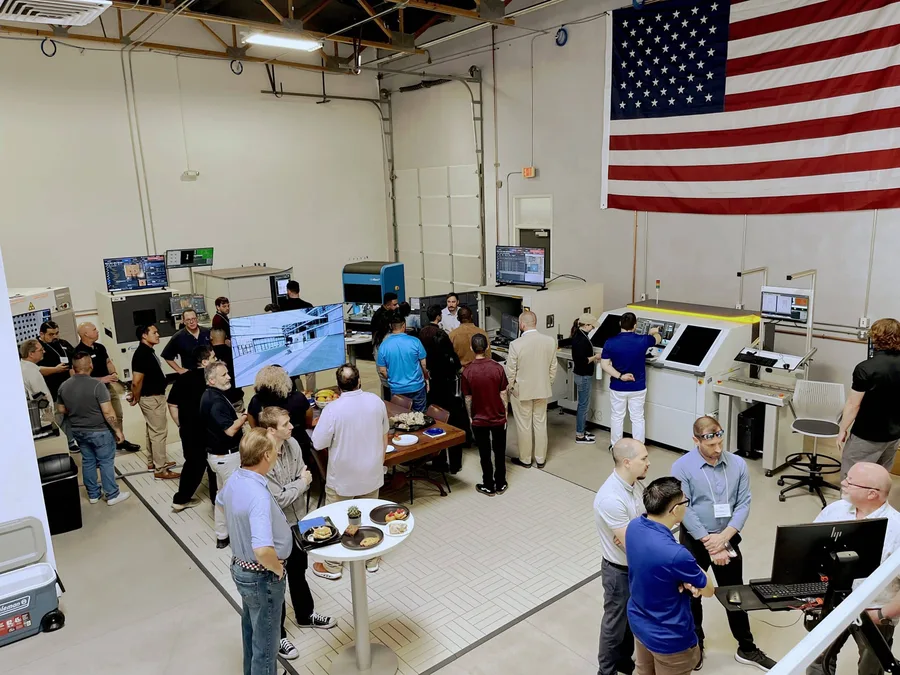
New multi-purpose facility showcases company’s industry-leading semiconductor and SMT inspection and metrology offerings and serves as a specialized demonstration, training and testing center. The post Nordson Test & Inspection Opens Center of Excellence appeared first on Semiconductor Digest .
Scientific Reports, Published online: 21 August 2026; doi:10.1038/s41598-026-66539-5 Enhanced dielectric and optical characteristics of NiO/Co₃O₄-filled poly(vinyl alcohol)/poly(vinyl pyrrolidone) blend films for potential optoelectronic applications
Scientific Reports, Published online: 21 August 2026; doi:10.1038/s41598-026-61981-x Biotemplate-assisted medium-entropy spinel ferrite: structure-property correlation of magnetic, electrical, and dielectric behaviour
Fujifilm Corp. (Tokyo, Japan) has announced the completion of a new production facility for post-CMP cleaners at the Oita Factory of FUJIFILM Electronic Materials Co., Ltd. (FFEM), the core company leading Fujifilm’s semiconductor materials business. The facility began operations in August 2026. This investment will significantly expand production capacity for post-CMP cleaners used in the […] Th…
Hitachi High-Tech Corp. (Tokyo, Japan) and Powrex Corp. (Itami, Japan) have completed a joint demonstration to investigate optimal coating conditions for the surfaces of cathode active materials used in all-solid-state battery manufacturing — a process designed to prevent output degradation and battery deterioration. The two companies will now accelerate collaborative efforts toward commercializa…
The UK Government has launched a £28M competition to accelerate the development of energy storage technologies capable of supplying electricity for 100 hours or more. The post £28M in grants for battery technologies with more than 100 hours capacity appeared first on New Civil Engineer .




 research.io