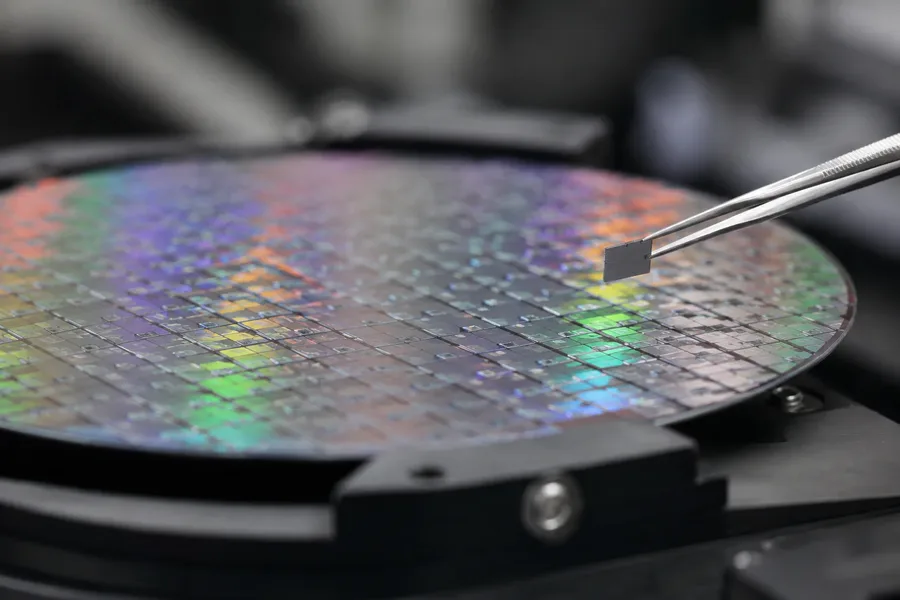
As AI chips continue to grow in size, the shift in advanced packaging from 300 mm wafers to square panels is becoming clearer, driving parallel development of new packaging technologies including FOPLP, CoPoS, and Glass Core. Manz Asia general manager Robert Lin said yield will determine whether Glass Core can move into mass production.
Fujifilm Corp. (Tokyo, Japan) has announced the completion of a new production facility for post-CMP cleaners at the Oita Factory of FUJIFILM Electronic Materials Co., Ltd. (FFEM), the core company leading Fujifilm’s semiconductor materials business. The facility began operations in August 2026. This investment will significantly expand production capacity for post-CMP cleaners used in the […] Th…
19 years ago the chip industry was facing a similar problem to today – the need for, and rising cost of, exotic materials. ‘Semiconductor firms are facing critical pricing choices […] The post Exotic Materials Adding Cost To Semis appeared first on Electronics Weekly .
So, that’s 48 GB of “domestically produced”, ie, Chinese, DDR5 RAM hitting 9,000 MT/s. Admittedly, we’re far beyond that with Western memory, having hit over 8,700 MT/s all the way back in 2021 and 10,000 MT/s the following year. Now, we’re at over 13,000 MT/s. Still, 9,000 is an achievement for Chinese memory and shows […]
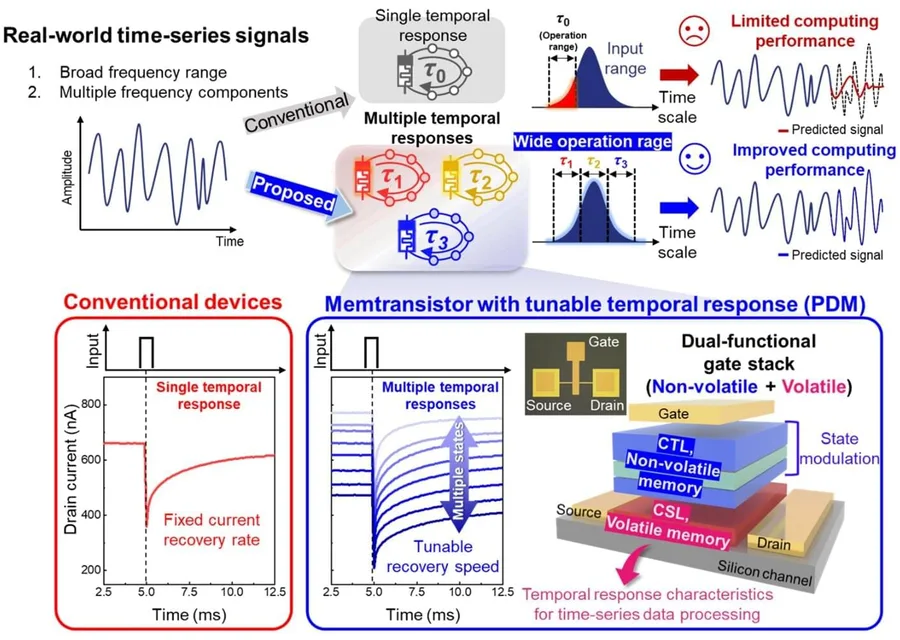
A research team led by Chair Professor Shinhyun Choi from the School of Electrical Engineering and the Graduate School of Semiconductor Technology has developed a programmable dynamic memtransistor (PDM), a semiconductor device whose time-response characteristics can be set to and retain multiple states, as well as an integrated array based on the device. The research […]
Samsung Electronics has achieved a monumental milestone in nanotechnology by unveiling a world-first technology designed to slash electrical resistance in […]
A certified 35.5% perovskite-silicon tandem result shows why stacking absorbers can beat silicon's single-junction limit, while leaving durability and scale as the harder commercial tests.
Deep-blue phosphorescent organic light-emitting diodes (Ph-OLEDs) are essential for advanced full-color displays, yet developing efficient and stable deep-blue emitters remains a formidable challenge. The post High-Efficiency and Stable Deep-Blue Iridium Phosphorescent OLEDs with Enhanced Charge Transfer Dynamics appeared first on Semiconductor Digest .
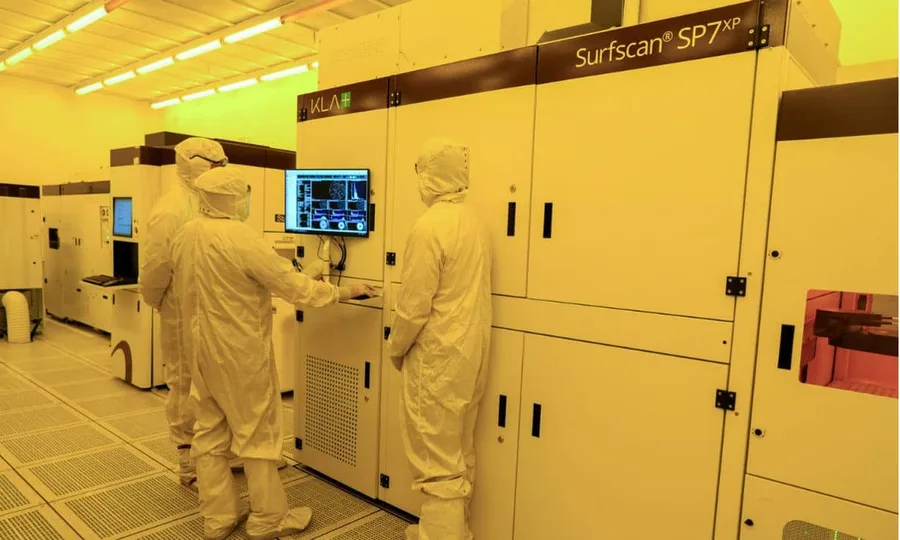
Investment sharpens process control from materials development through manufacturing. The post Qnity Accelerates Advanced Node Materials Innovation with Next-Generation KLA Inspection Capabilities appeared first on Semiconductor Digest .
Mitsubishi Chemical Corp. (Tokyo, Japan) has announced plans to commercialize ultra-high-purity colloidal silica for use as a raw material for polishing agents in cutting-edge semiconductors. The company plans to establish new production facilities at its Kyushu Plant (Fukuoka Area) in Kitakyushu City, Fukuoka Prefecture, and begin commercial operations in October 2028. Colloidal silica is used […
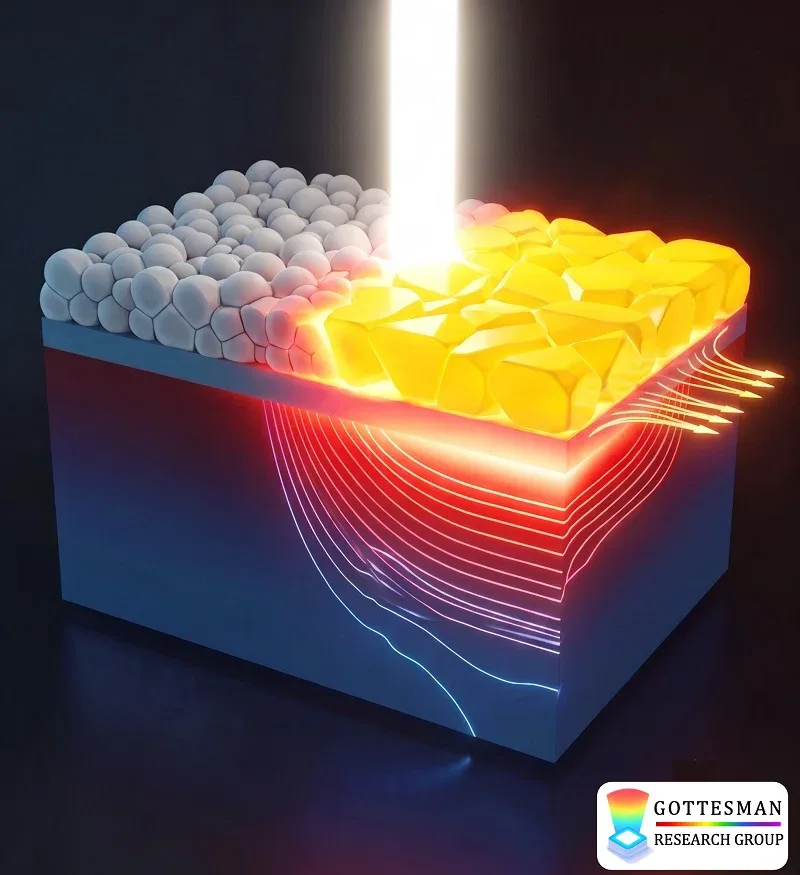
A powerful flash of light lasting less than a millisecond could offer a new way to make materials that capture solar energy much more effectively—without damaging the surface underneath. Researchers at the Hebrew University of Jerusalem have developed a technique that uses extremely short bursts of intense light to rearrange atoms inside a semiconductor material. […] The post A Millisecond Flash …
Nature Communications, Published online: 20 August 2026; doi:10.1038/s41467-026-76914-5 Efficiency roll-off in OLEDs is a challenge with multi-resonance thermally activated delayed fluorescence (MR-TADF) materials. Here, the authors add heavy-atom germanium into exciplex hosts to improve reverse intersystem crossing rates in diverse MR-TADF emitters without electronic structure changes.
Researchers developed atomically thin amorphous carbon films that combine an ultralow dielectric constant with high dielectric strength, mechanical hardness, and resistance to copper-ion diffusion. The films retain their dielectric properties down to 0.8 nm and can be grown conformally below 300 °C, highlighting their potential for highly scaled semiconductor technologies.
SK Hynix is reported to be assembling a high-bandwidth memory (HBM) design team in Silicon Valley, a move that would deepen its co-design work with major US chip customers. Analysts see it as evidence that HBM competition is shifting into a customized, jointly developed phase.
National Research Council of Science and Technology
2d ago
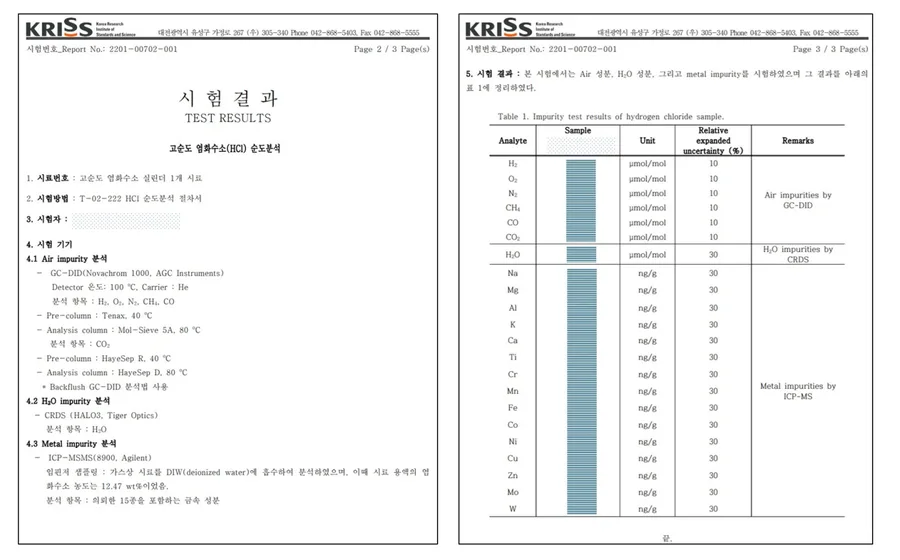
The Korea Research Institute of Standards and Science (KRISS, President Dr. Lee Ho Seong) has established purity analysis techniques and testing procedures for 15 high-purity gases used in semiconductor processes, and has developed six certified reference materials (CRMs) that verify measurement accuracy. This provides a foundation for objectively evaluating the quality of semiconductor gases dom…
Recent groundbreaking research has uncovered the microscopic physical nature behind the ultralarge elasticity found in covalent semiconductors like silicon and […]




 research.io