biomaterials
In oil-immersed transformers, cellulose insulating paper deteriorates when exposed to electric field, moisture, and high temperature for a long time, leading to decrease in mechanical strength and insulating performance, which affects the service life and operational reliability. In this paper, dielectric barrier discharge (DBD) is adopted to generate atmospheric pressure low-temperature plasma f…
Nature Electronics, Published online: 04 May 2026; doi:10.1038/s41928-026-01625-0 Bioelectronics based on a three-dimensional topological interpenetrating architecture reinforced with covalent chemical anchoring can be used for long-term electrophysiological recording, electrical stimulation and electrochemical sensing in body locations subjected to constant movement.
Nature Electronics, Published online: 04 May 2026; doi:10.1038/s41928-026-01619-y A three-dimensional topological interpenetrating architecture can be used to reinforce the interfaces of bioelectronic devices, providing chronically stable in vivo signal recording and stimulation.
Nature Communications, Published online: 04 May 2026; doi:10.1038/s41467-026-72593-4 Poor vascularization and weak regenerative signaling limit tracheal repair. Here, the authors develop a mechanically-driven expandable patch to angiogenesis tracheal repair through electromechanical stimulation.
Leipzig-based biotech start-up Primogene GmbH has secured €4.1 million in funding to bring complex bioactive molecules to market at scale. Using proprietary enzymatic platform technology, the company produces biomolecules that are identical to their natural counterparts, sustainably, cost-efficientl...
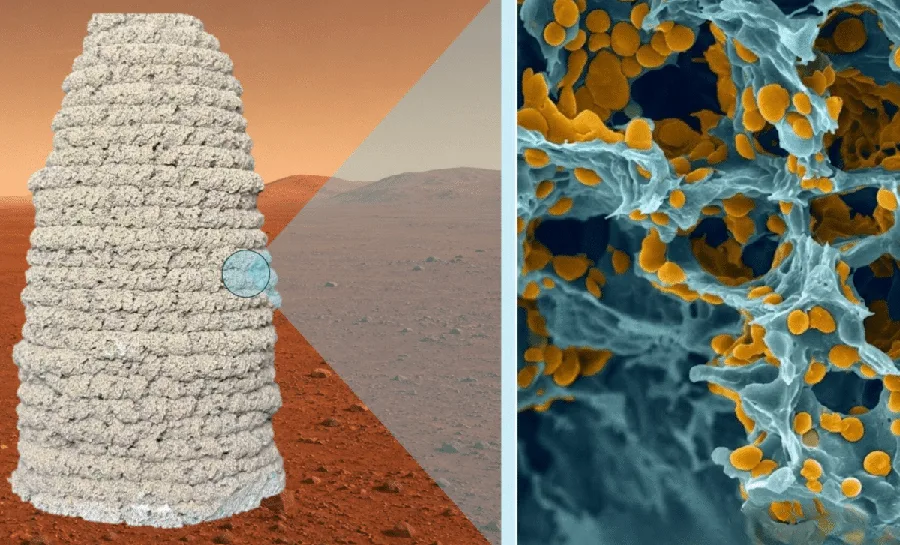
The film looks like ordinary polycaprolactone, the same polymer used in 3D-printing filaments and some dissolvable surgical sutures. Flexible, translucent, unremarkable. But sealed inside it, dormant and waiting, are two populations of engineered bacterial spores with a preprogrammed task: given the right signal, they will wake up, work together, and consume their own home entirely. Zhuojun Dai, …
In marine environments, the increased drag force on vehicles impedes their speed underwater, leading to high energy consumption and reduced vehicle efficiency. Superhydrophobic coatings have gained remarkable attention regarding drag reduction. Due to the collapse of the air plastron, the change from Cassie–Baxter to Wenzel state at high fluid impalement pressures, and various chemical conditions…

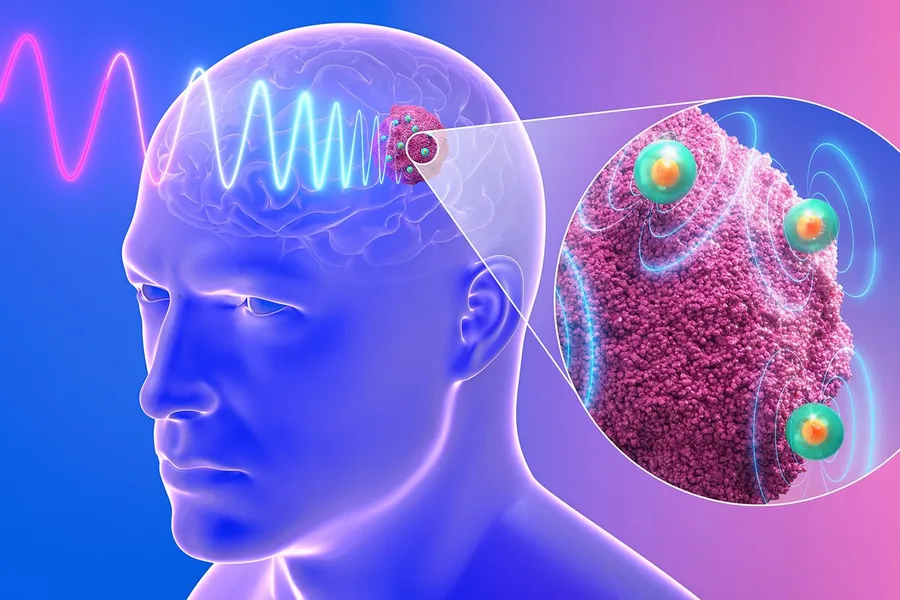
Brain tumors cannot always be successfully treated with conventional therapies. A team from Empa and the hospital network HOCH Health Ostschweiz is therefore developing nanozymes that can attack cancer cells directly in the brain during tumor surgery. The project can now be started thanks to the generous support of several foundations.
Researchers from Politecnico di Torino and Maastricht University have developed a bioinspired scaffold design approach using a custom Voronoi path generator for extrusion-based 3D printing. Published in Biomaterials Science, the study introduces a Python-based software tool that enables the fabrication of irregular, biomimetic structures through melt electrowriting (MEW) and fused deposition mode…


Harvard’s 3D-Printed Filaments Mimic Muscle, Bending and Twisting on Command April 30
Nature Communications, Published online: 30 April 2026; doi:10.1038/s41467-026-72609-z Most wood adhesives are formaldehyde-based, which is toxic, and requires energy intensive hot-pressing with long curing cycles. Here, the authors develop a cellulose-based homologous active adhesive which cures under ambient hydration, eliminating toxic emissions and reducing energy consumption.
A new research paper looks for possible ways for bio derived photopolymer resins to make resin 3D printing more sustainable while keeping print speed and part quality intact. The post Researchers Examine Circular Paths For Bio Derived 3D Resins appeared on Fabbaloo .
BackgroundPoly (1,4-bis(methacryloyl)piperazine) (poly (NBMP)) is a piperazine-based polymer with potential biomedical applications. Green clay catalysts, maghnite-H+ and maghnite-Na+; offer an eco-friendly approach for monomer (NBMP) and polymer (poly (NBMP)) synthesis with improved yields and low toxicity.AimTo synthesize poly (NBMP) via green catalysis, evaluate its structural properties, and …
A UNC research collaboration is rethinking how they can use biomaterials to boost the body's own immune system to enhance cell-based immunotherapy to fight glioblastoma — one of the most aggressive and treatment-resistant brain cancers known to medicine. The post UNC thinktank engineers immune cells to target brain cancer appeared first on Eshelman School of Pharmacy .
research.ioSign up to keep scrolling
Create your feed subscriptions, save articles, keep scrolling.