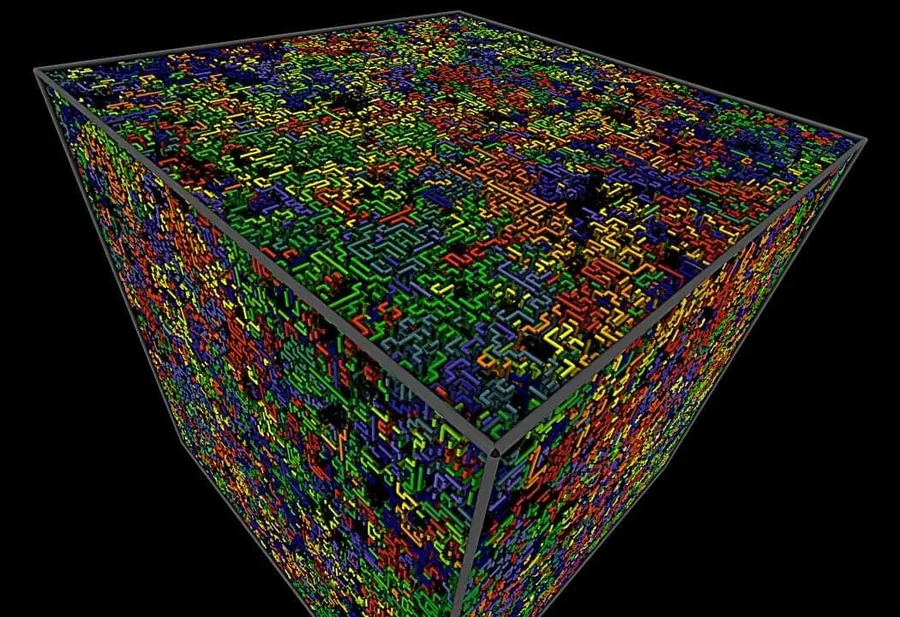
Long polymer chains are everywhere: in synthetic materials, soft matter, biological systems such as chromosomes, and mathematical models of filaments and knots. When many such chains are densely packed, they form what physicists call a polymer melt. In this crowded environment, each chain is constrained by the others around it. These entanglements are central to […]
Scientific Reports, Published online: 21 August 2026; doi:10.1038/s41598-026-66539-5 Enhanced dielectric and optical characteristics of NiO/Co₃O₄-filled poly(vinyl alcohol)/poly(vinyl pyrrolidone) blend films for potential optoelectronic applications
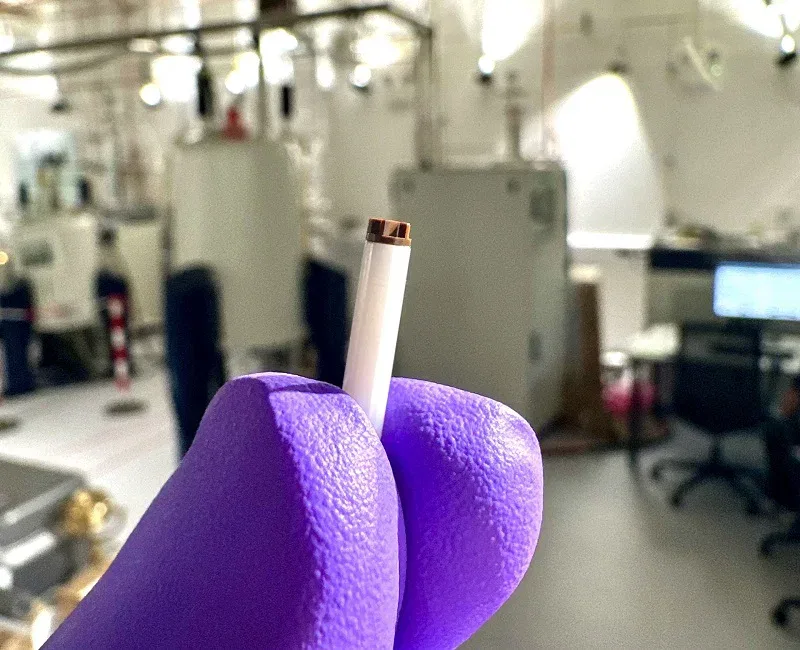
A new type of plastic that turns into a gas when heated and reforms into a solid when cooled has been developed by scientists at the University of Surrey, opening up a new approach to processing and recycling polymers.
In a study published in Macromolecules, researchers introduce a novel polymer th...
Scientists have created a “smart” gel that can change its physical state when exposed to light, heat or acid, potentially opening the door to new ways of delivering medicines and building sensitive medical sensors. Researchers at the University of Birmingham developed the material using specially designed molecules that can assemble, break apart and then come […] The post New Smart Gel Can Switch…
Nature Communications, Published online: 20 August 2026; doi:10.1038/s41467-026-76483-7 Control of surface patterns in assembled nanostructures is desirable, but challenging to achieve. Here, the authors report the development of a flow-based crystallisation-driven self-assembly method for the preparation of polymer platelets with controlled 3D surface patterns.
The Water Soluble films industry is undergoing a structural shift. Once viewed mainly as a niche materials category for applications such as detergent pods and pharmaceutical capsules, it is now becoming a proving ground for artificial intelligence in specialty polymer manufacturing. Producers are moving beyond trial-and-error methods and adopting data-driven production systems that use machine l…
University of Birmingham scientists have developed a new material that changes from a gel to a liquid-like state under UV light and can be rebuilt using heat or dismantled by […] The post Birmingham researchers create multi-responsive gel appeared first on Electronics Weekly .
A new type of plastic that turns into a gas when heated and reforms into a solid when cooled has been developed by scientists at the University of Surrey, opening up a new approach to processing and recycling polymers.
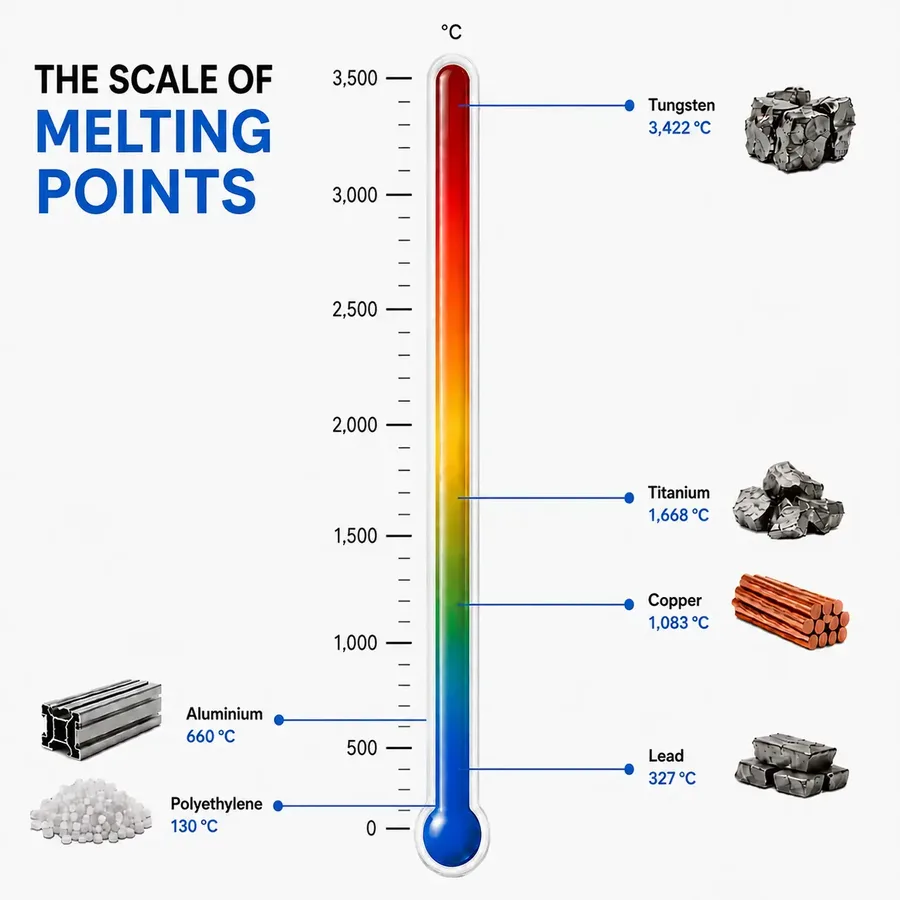
The melting point is one of the most consulted properties in the choice of a material, but also one of the most misunderstood. It's often confused with the maximum operating temperature or with softening. Furthermore, different parameters are sometimes compared, such as the melting point of metals and the HDT of polymers, as if they were equivalent. Understanding this quantity helps to choose the…
Bay-functionalization of perylene diimides (PDIs) offers a strategy for modulating electronic properties to achieve optimal n-type charge transport character, but can result in core twisting and reduced planarity, leading to compromised π-conjugation and disruption of tight π–π stacking in the solid state. Herein, we report the synthesis and characterization of two new nitrogen-bay-functionalized…
BASF SE (Ludwigshafen, Germany) has officially inaugurated its new Performance Lab for diapers and superabsorbents (SAP) in Mumbai on Aug. 18, 2026, which will provide technical and application services to superabsorbent customers globally. The new lab of BASF’s Hygiene Solutions business has been established in less than a year and is part of BASF’s Innovation […] The post BASF Hygiene Solutions…
Nature Communications, Published online: 15 August 2026; doi:10.1038/s41467-026-76532-1 Non radiative energy loss remains a challenge in non-fullerene organic solar cells. Wei et al. introduce chlorobenzene-functionalized acceptors that exhibit enhanced photoluminescence quantum yield with a distinct molecular packing mode, enabling a power conversion efficiency of 20.92%.
Nature Communications, Published online: 15 August 2026; doi:10.1038/s41467-026-76630-0 Covalent organic frameworks combine structural precision with synthetic versatility, though many systems have unfavorable photophysical properties. Here the authors unlock thermally activated delayed fluorescence, using flexible COFs
Polyvinyl chloride is one of the world’s most widely used plastics, but it is also difficult to recycle responsibly. Discarded PVC from pipes, window frames, and even credit cards could become a useful ingredient in synthetic lubricants instead of ending up in a landfill. Virginia Tech chemist and chemical engineer Guoliang “Greg” Liu and his [...]
Organic compounds that possess more than four polymorphs are rare. Herein, we report that the compound, PTZ-hexyl-NMI, with a phenothiazine (PTZ) electron donor and a 1,8-naphthalimide (NMI) electron acceptor bonded to opposite ends (α, ω-) of a flexible hexyl chain via the respective heterocyclic N atoms crystallizes from organic solvents in seven different polymorphs depending on solvent, conce…

 research.io