organic-chemistry

Artificial intelligence is transforming scientific research, but science may also help build better AI. Researchers at the University of Notre Dame say organic chemistry is pushing developers to create AI systems that are more reliable, understandable and honest about uncertainty. Their article, published in Chemical Reviews, examines how the difficult problems found in organic chemistry […] The …

Nature Communications, Published online: 04 September 2026; doi:10.1038/s41467-026-77468-2 A visible-light-mediated Alder-ene reaction between cyclohexynes and bicyclobutanes is presented, bypassing harsh conditions to couple two highly strained systems. This strategy provides efficient access to C(sp3)-rich skipped dienes and skeletally remodeled tetralins.

Nature Communications, Published online: 04 September 2026; doi:10.1038/s41467-026-77482-4 Herein the authors report the development of a class of phosphites featuring an N–O–P linkage, namely dialkyl phthalimidyl phosphites, which serve as efficient radical trapping reagents. These are applied in the cobalt-catalyzed Markovnikov hydrophosphonylations of unactivated alkenes.

A fluorinated carbon dot transport layer helps organic solar cells reach a certified efficiency of 19.78 per cent while retaining 85 per cent of their performance after 1,800 hours at 80 per cent humidity. Researchers led by the University of Hong Kong, working with collaborators from Shandong University of Technology, the Shanghai Institute of Optics […]

Nature Communications, Published online: 02 September 2026; doi:10.1038/s41467-026-77301-w Cyclopeptides are promising candidates for developing bioactive molecules and drugs, but due to the scarcity of efficient cyclization strategies for natural peptides, the development of novel cyclopeptides remains challenging. Here, the authors report the development of a variety of macrocyclic peptides fea…

The Division of Organic Chemistry has won two ACS ChemLuminary Awards for activities that were initiated in 2025. The citations for the awards are: The Divisions of Analytical Chemistry, Organic Chemistry, and Professional Relations won Most Unique Project as Funded by a Division Innovative Project Grant for launching the Future Pharma Innovators program, which recognized … Read More The post The…

Nature Chemistry, Published online: 01 September 2026; doi:10.1038/s41557-026-02242-2 The programmable assembly of regio- and stereoisomeric alkenes and conjugated homologues has long been regarded as a formidable synthetic challenge. Now a switchable radical and organometallic sorting paradigm has been established through the nickel-catalysed sequential coupling of alkynes, organohalides and a d…

Nature Communications, Published online: 01 September 2026; doi:10.1038/s41467-026-77224-6 Simultaneously enhancing product specificity and catalytic performance remains a major challenge in terpene synthase engineering. Here, the authors elucidate the regio- and stereoselectivity of a fungal germacrene A synthase, which catalyses the 1,10-cyclization of farnesyl diphosphate to form a central ses…

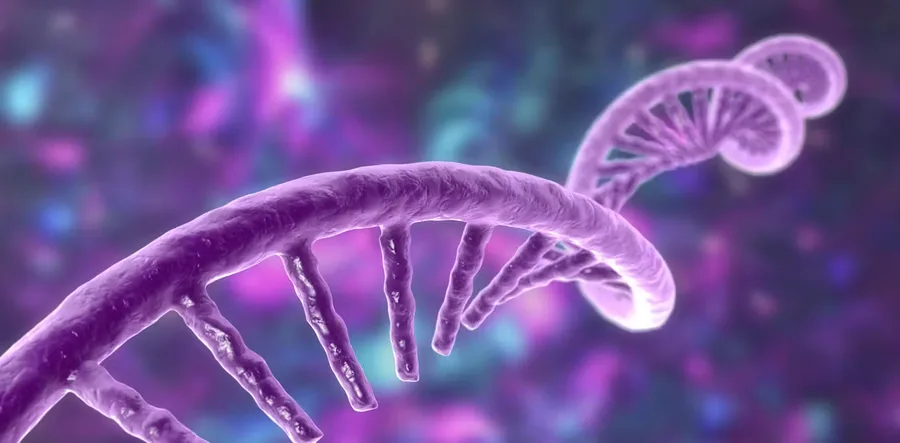
A tiny chemical difference makes RNA better than DNA at forming liquid-like droplets under high temperatures and acidic conditions. One of the biggest puzzles in origin of life research comes before the first cells even existed: How could RNA molecules gather in one place, interact, and help produce early life without cellular compartments to hold [...]

Nature Catalysis, Published online: 28 August 2026; doi:10.1038/s41929-026-01597-6 Mizoroki–Heck reactivity has mostly been confined to the coupling of aryl (pseudo)halides with olefins. Now, the exploitation of ketenes generated in situ has unlocked direct access to α,β-unsaturated carbonyl compounds and divinyl ketones via a Heck-type pathway.

Nature Chemistry, Published online: 28 August 2026; doi:10.1038/s41557-026-02227-1 Spatiotemporal control over bioorthogonal reactions remains challenging. Now cyclopropanol has been shown to act as a functional moity that is inert under physiological conditions but can be selectively activated by mild electrochemical stimuli to preferentially modify acidic amino acids, such as glutamate and aspa…

Nature Chemistry, Published online: 27 August 2026; doi:10.1038/s41557-026-02238-y The kinetic preference for 5-exo-trig over 6-endo-trig pathways in the intramolecular radical [2 + 2] cycloaddition of 1,5-dienes governs selectivity, a phenomenon dubbed the rule of five. Now it has been shown that subtle electronic tuning can enable programmable regiodivergence under visible-light energy-transfer…

research.ioresearch.io

Sign up to keep scrolling

Create your feed subscriptions, save articles, keep scrolling.

Already have an account?