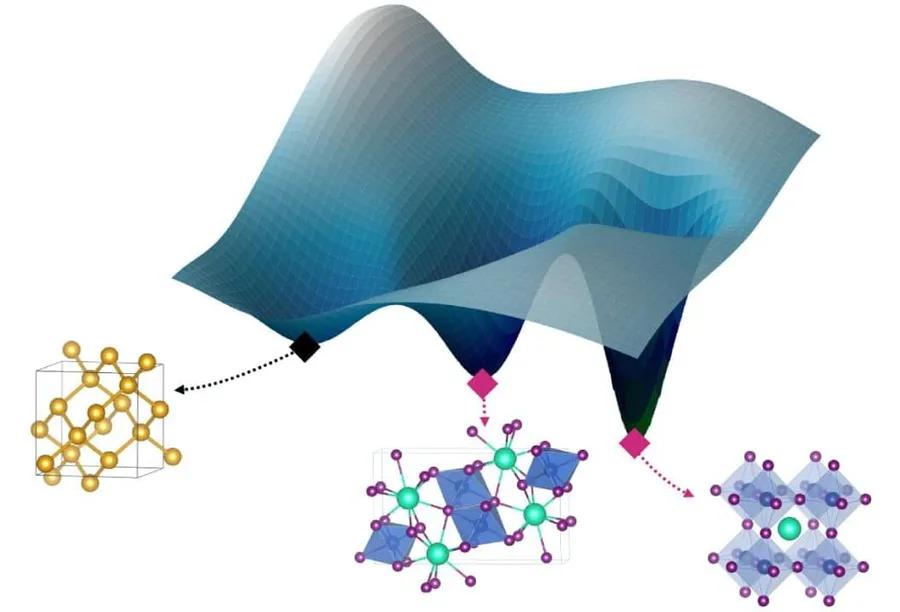
Material properties such as sound insulation, resistance to extreme heat and thermal expansion originate from how the zillions of microscopic building blocks (nuclei and electrons) interact at equilibrium and respond to perturbations. Atoms are typically about one ten-billionth of a meter across, so there can be a lot of parts to keep track of—a task […]
Qedma & HQC2 achieved a 30–50x improvement in results for quantum chemistry calculations, demonstrating enhanced reliability on IBM’s Aachen processor.
Fibroblast activation protein (FAP) is a highly specific biomarker overexpressed in cancer-associated fibroblasts, making it a promising diagnostic target. Developing novel high-affinity molecular probes for FAP-targeted diagnostics remains an active area of research. In this study, an integrated computational pipeline combining generative artificial intelligence, molecular docking, molecular dyn…
Pushing the accelerator and the brake at the same time is rarely a good idea. But researchers at the University of Gothenburg are using this approach to treat leukemia.
Scientific Reports, Published online: 09 September 2026; doi:10.1038/s41598-026-68752-8 A simulation of hierarchical self organizing maps to predict the compressive strength of fly ash-based geopolymers
Scientists have successfully linked machine learning to quantum chemistry calculations; this promises more accurate modelling of molecules without demanding excessive computing power. However, the researchers acknowledge their current implementation shines less brightly when applied beyond smaller molecular systems or extended solid materials, a limitation inherent in focusing initially on stream…
Molecular simulations promise to revolutionise materials science and pharmaceutical design by accurately predicting chemical behaviour; however, the researchers at Northwestern Polytechnical University highlight a critical tension between theoretical elegance and practical implementation within these emerging techniques. While hybrid quantum-classical methods offer an incremental path forward, bu…
TeraShapeSearch: MedChemica’s Contribution to Ultra Fast Shape Searching Over the last thirty years using the shape and colour similarity of molecules has been an important tool in lead discovery chemistry. The overarching concept that molecules with similar shape and electronic profile will bind similarly to proteins is a foundational concept in medicinal chemistry and could
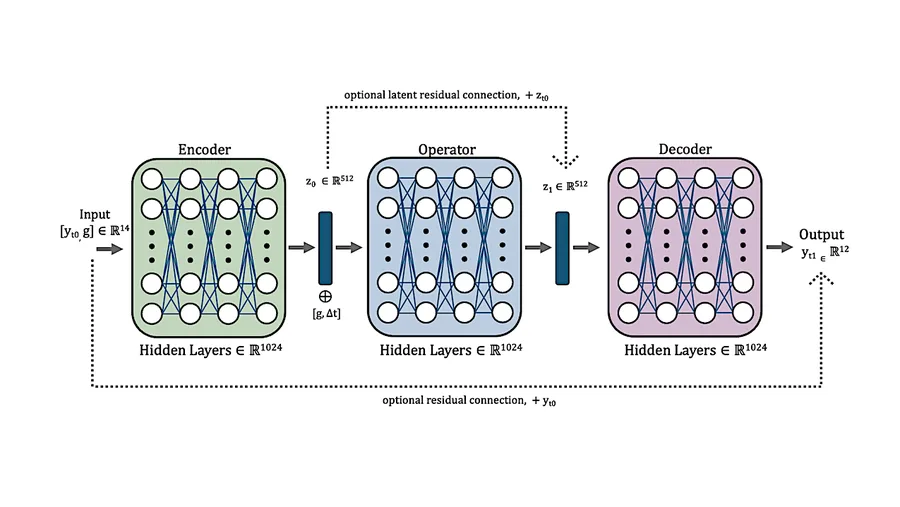
Michele Simoncelli’s group introduces a new benchmark to evaluate how well machine learning models for atomic interactions translate quantum characteristics into macroscopic physical properties
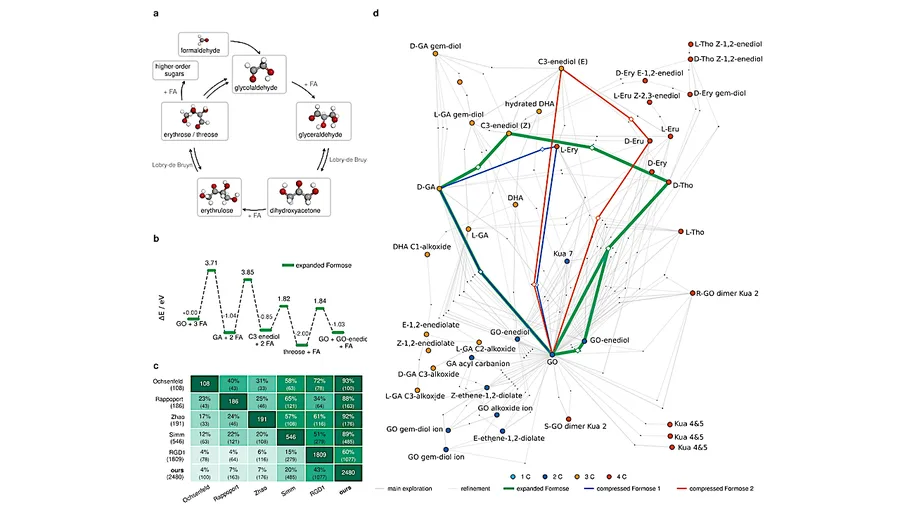
[cs.LG] Mapping a chemical reaction network, the graph of minima and transition states (TS) and the elementary reactions connecting them, is the natural language of chemistry, from catalysis to combustion […] The post ReactionAtlas: Ab Origine Exploration Of Chemical Reaction Networks With Machine Learning appeared first on Astrobiology .
Scientific Reports, Published online: 05 September 2026; doi:10.1038/s41598-026-68990-w A fuzzy graph-based Kulli–Basava descriptor for isomer discrimination and physicochemical property prediction
[astro-ph.EP] Observations increasingly reveal the coupled radiative, chemical, and dynamical processes that shape exoplanet atmospheres. Interpreting these atmospheres requires models that can capture this complexity. However, multidimensional models remain fundamentally […] The post Accelerating Chemical Kinetics For Exoplanet Atmospheres Using Neural Networks appeared first on Astrobiology .
[NiFe] hydrogenases reversibly catalyze hydrogen oxidation and proton reduction at a Ni–Fe active site coordinated by four cysteine (Cys) residues in two CXXC motifs within the catalytic large subunit. A subset of these enzymes contains selenocysteine (Sec) in place of Cys in the C-terminal CXXC motif, forming [NiFeSe] hydrogenases with enhanced oxygen tolerance and hydrogen production activity. …
Develop and benchmark quantum algorithms for solving Chemical Reaction Networks (CRNs), focusing on annealing-based optimisation methods and graph-based encodings for neutral atom quantum computers. Conduct numerical simulations of quantum and hybrid quantum-classical approaches, and contribute to publications and coll...
Stefano Polla joined QuSoft April 1, 2026, to lead research developing quantum algorithms for chemistry, bridging computational chemistry & quantum simulation.





 research.io