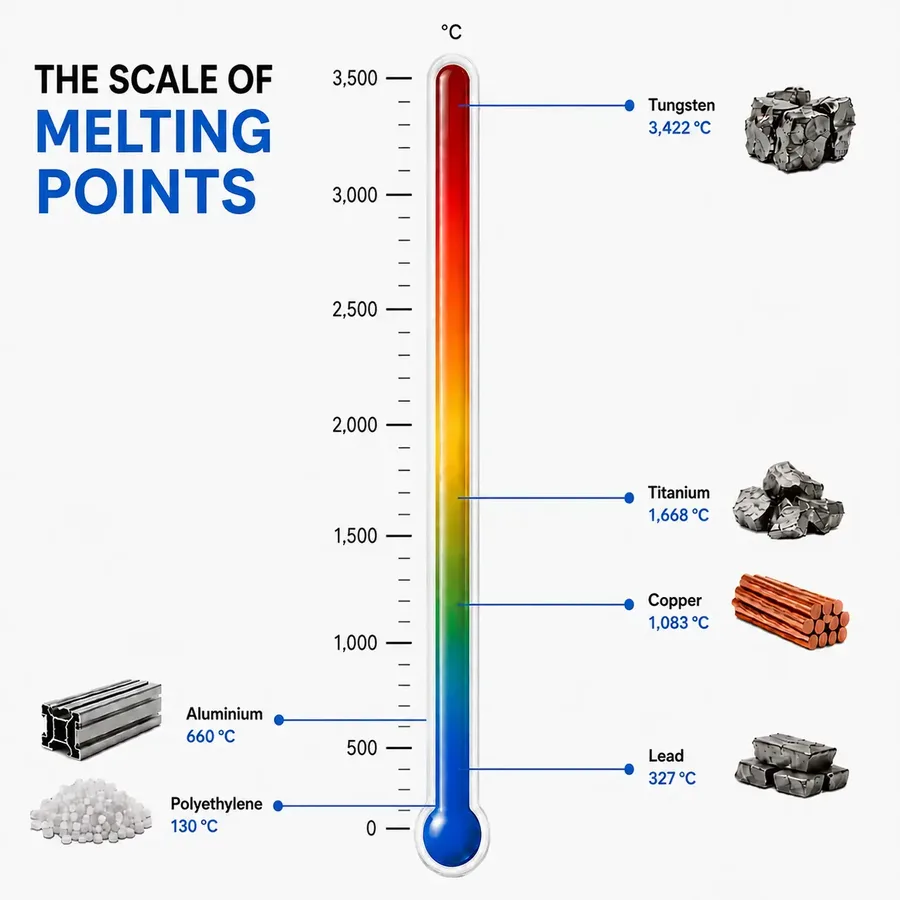
The melting point is one of the most consulted properties in the choice of a material, but also one of the most misunderstood. It's often confused with the maximum operating temperature or with softening. Furthermore, different parameters are sometimes compared, such as the melting point of metals and the HDT of polymers, as if they were equivalent. Understanding this quantity helps to choose the…
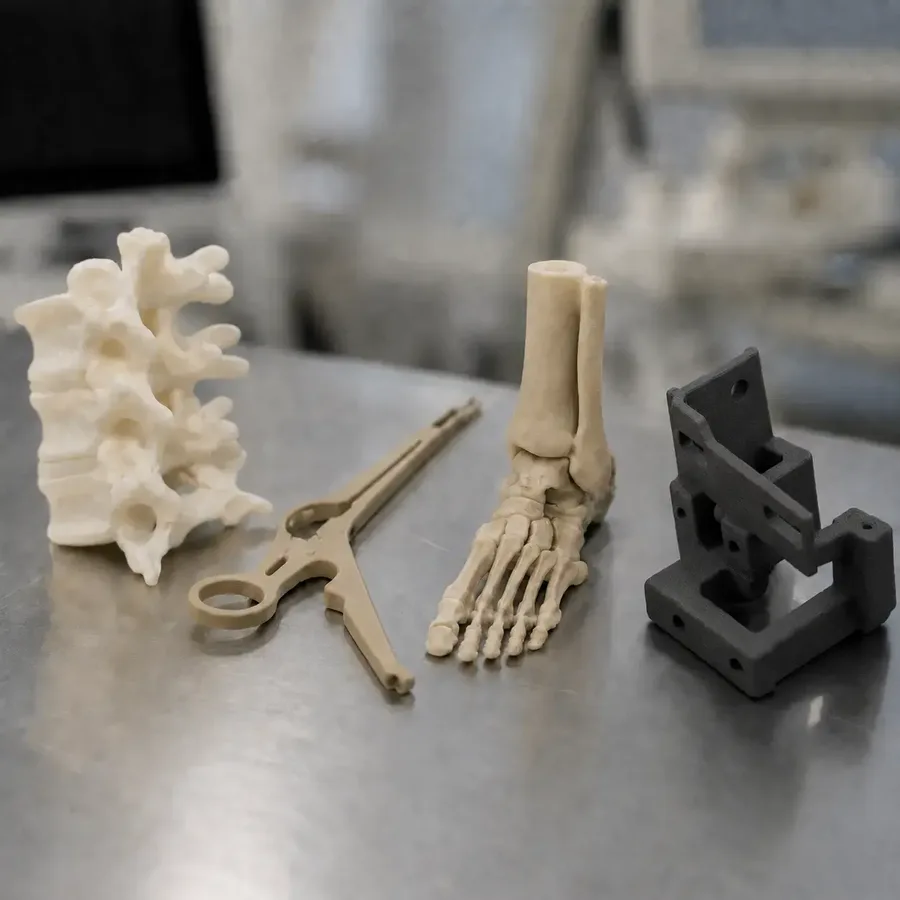
PA12 nylon, Medical ABS, PEEK or resin? For those developing a 3D printed medical device, it's the question that immediately follows the one about geometry: which material guarantees biocompatibility , resists the intended sterilisation method, offers the necessary mechanical properties and remains economically sustainable in relation to the project volumes? The four materials meet different appl…
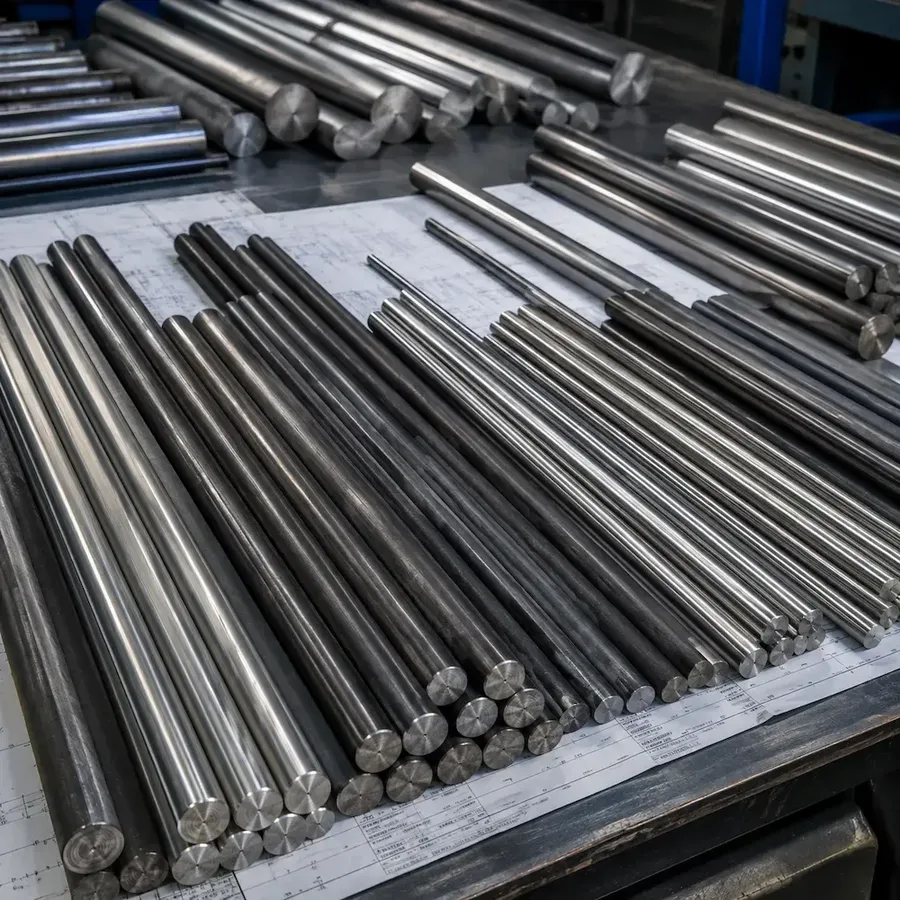
What is steel made of? The short answer is: iron and carbon . The complete one opens up a whole world. Steel is a metal alloy composed of over 95% iron, but it's the remaining elements that determine its characteristics. Understanding the composition of steel means understanding why an S355 behaves differently from a 42CrMo4, why an AISI 304 resists corrosion while a C40 doesn't, and how to inter…
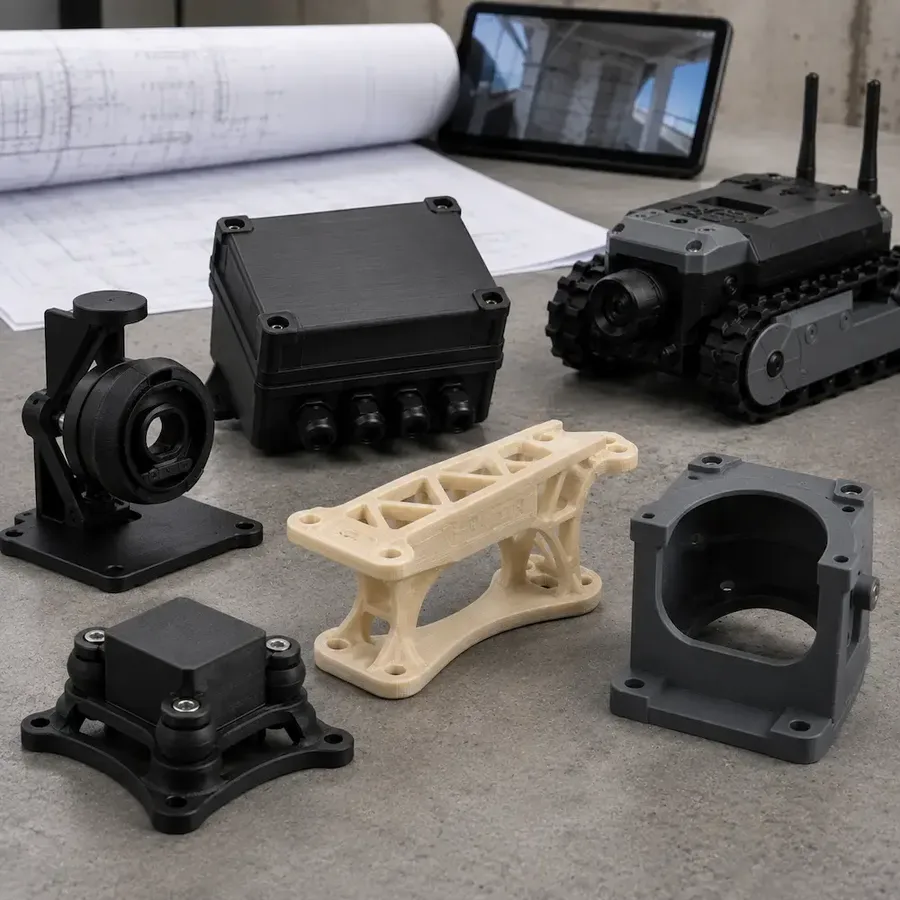
Civil inspection and monitoring systems , from drones to crawler robots to sensors for infrastructure and plants, often require custom technical components not available off the shelf. Industrial 3D printing makes it possible to produce them quickly, even in series, with materials suited to requirements such as lightness, vibration resistance, electrical insulation and flame-retardant behaviour. …
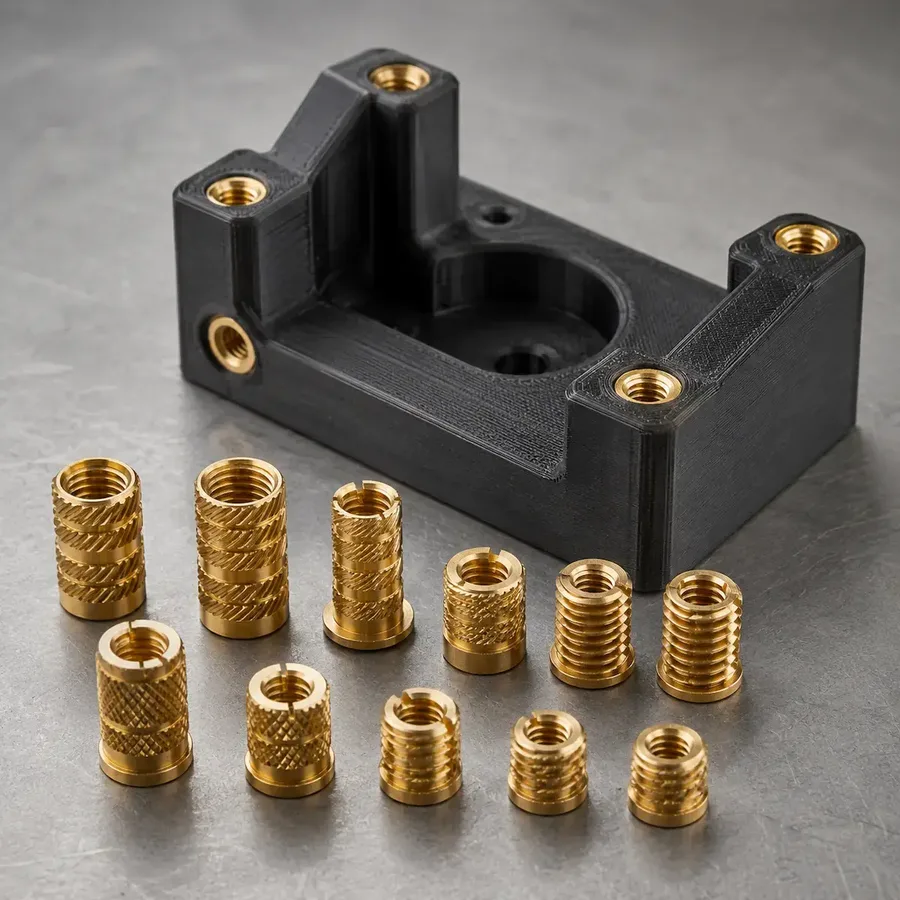
When a 3D printed component has to be assembled with screws , especially if it's intended to be opened and closed several times during its operational life, the problem of thread durability quickly emerges. The polyamides and polymers used in 3D printing don't, in fact, offer the same threading resistance as metals . A screw inserted directly into the hole of a PA12 component can withstand a few …
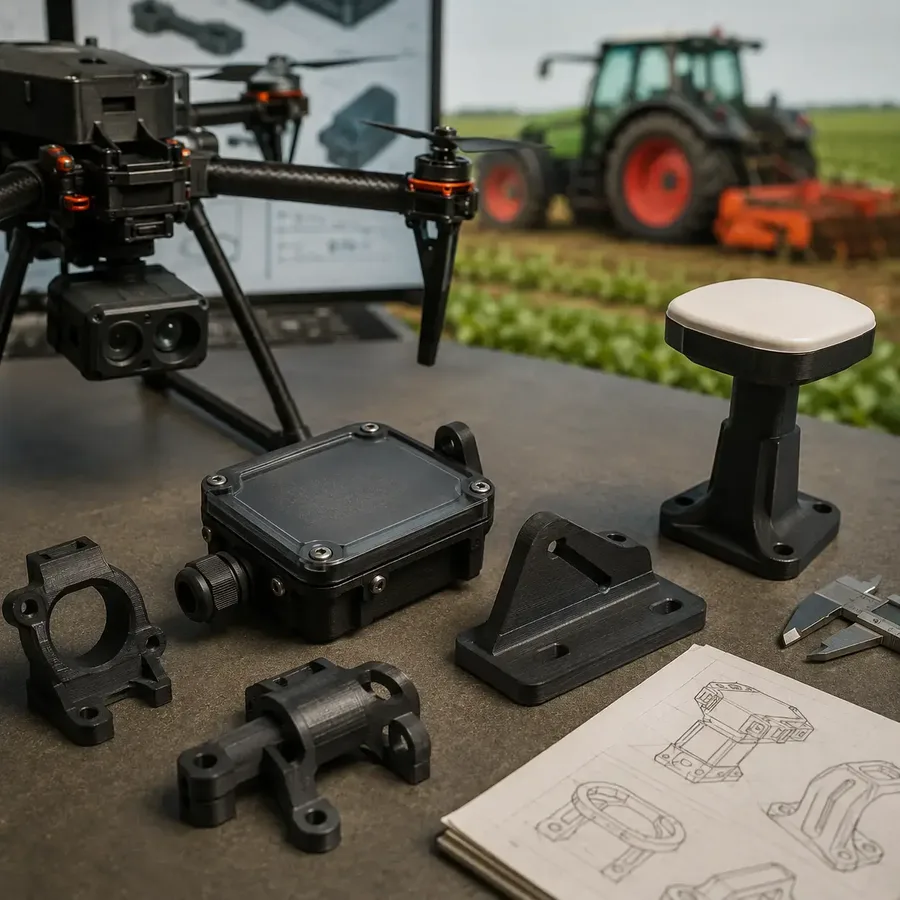
Precision agriculture is today one of the fastest-growing segments in the civil sector. Multispectral drones, IoT control units installed in fields, satellite guidance systems for tractors, sensors for monitoring soil moisture and automated irrigation systems are transforming the way agricultural activities are managed. However, many agritech projects face a common difficulty: much of the custom …
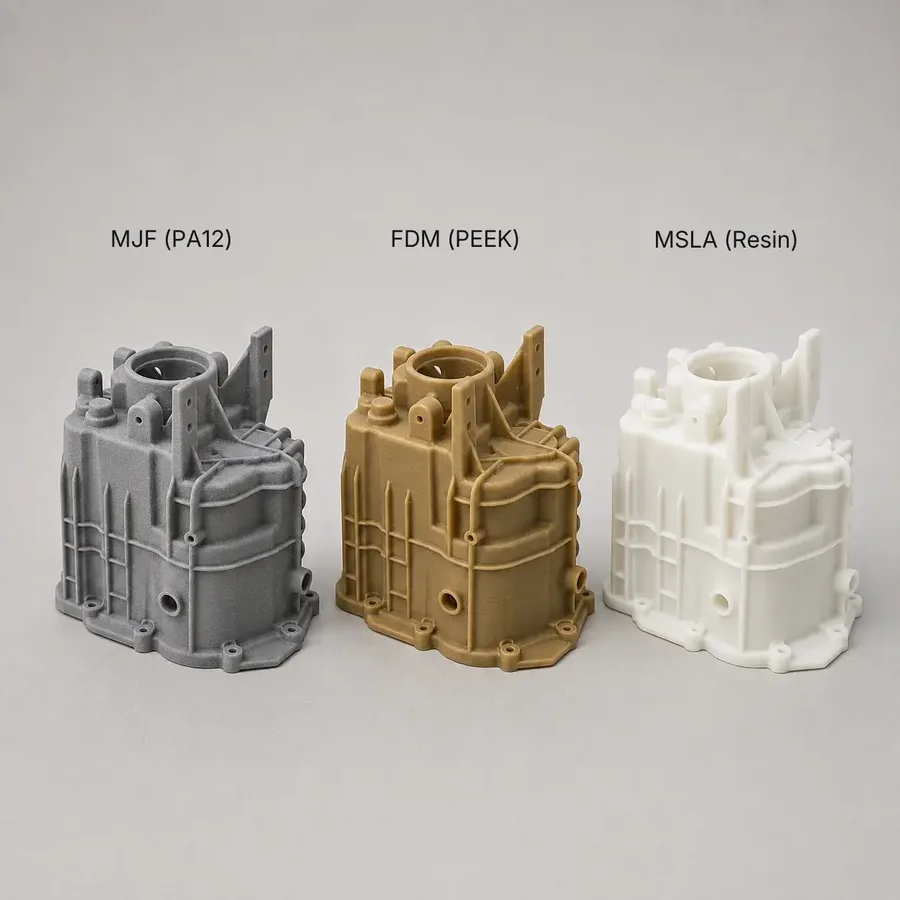
MJF, FDM or resin? It's the first question anyone with a 3D file to produce asks themselves. Each technology offers different performance, materials, tolerances and costs; choosing the most suitable one directly affects production times, budget and the final result of the project. A wrong choice can lead to rework, reprints or technical compromises that could have been avoided with an informed de…
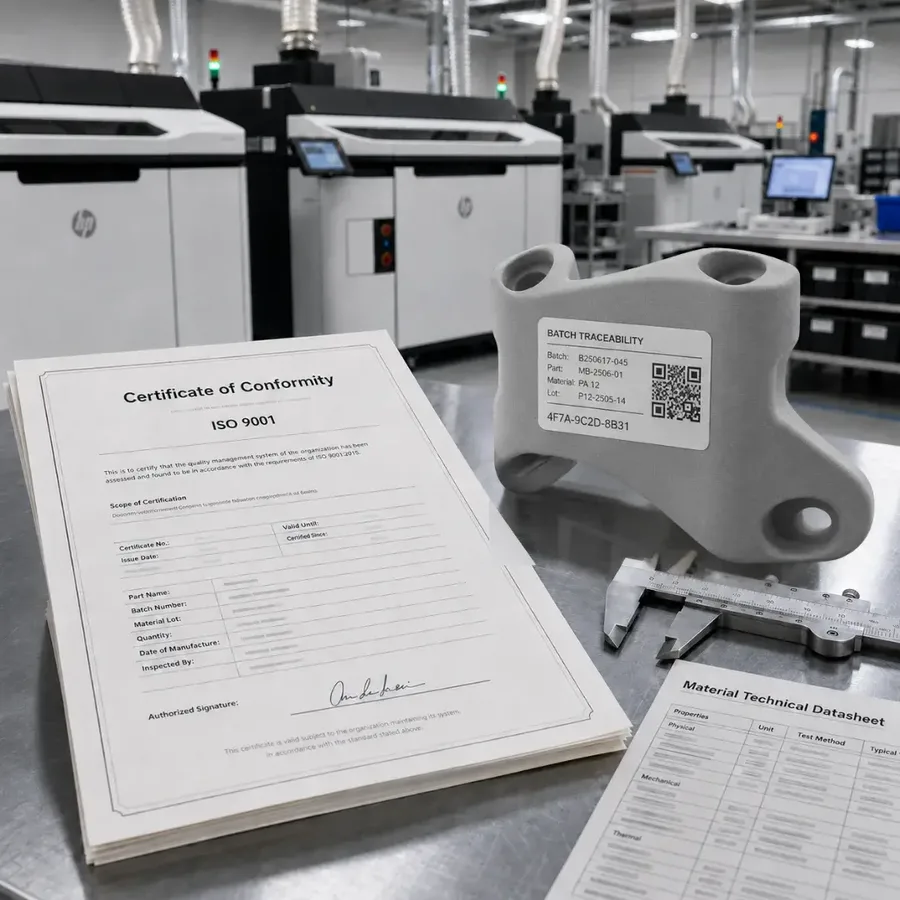
For a quality manager in the medtech sector, choosing a 3D printing supplier isn't simply a technical assessment, but a decision linked to risk management. Every component produced can enter the medical device's technical file. Every non-conformity can generate a CAPA. Every MDR or FDA audit, sooner or later, can extend to the supply chain as well. The operational question, therefore, isn't: "Can…
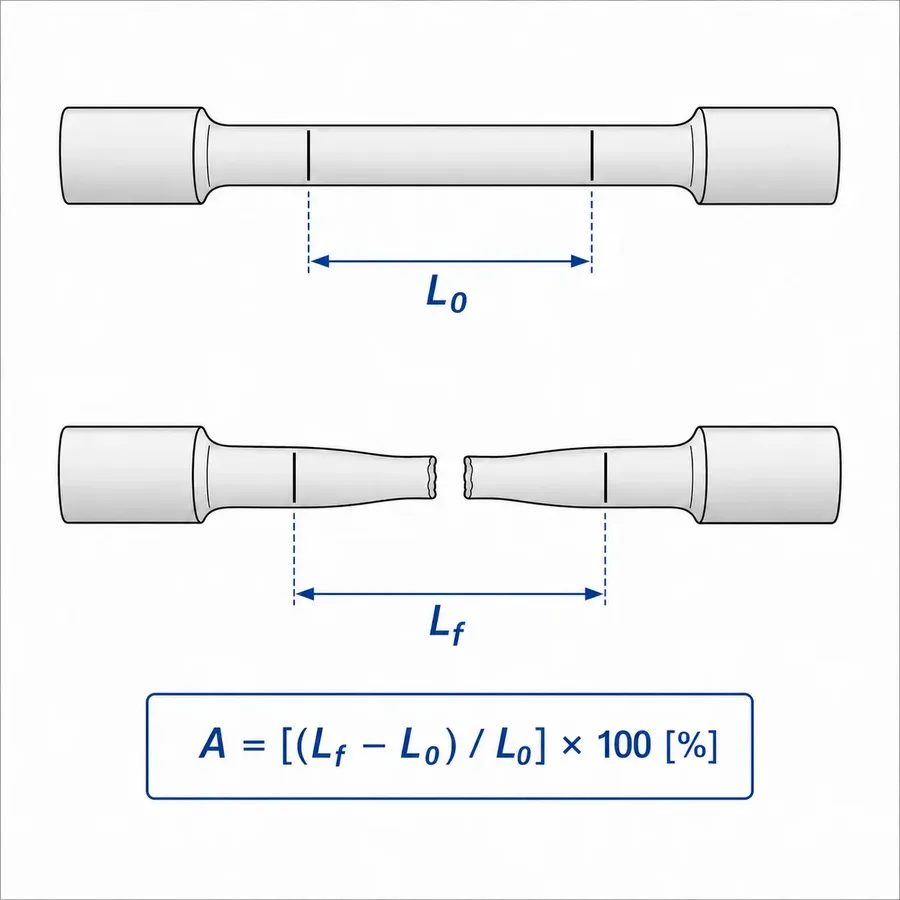
Elongation at break is one of the main parameters on material test certificates. It indicates how much a material deforms plastically before breaking under load and is a fundamental parameter for assessing its ductility . For the designer it's an essential piece of data: it makes it possible to distinguish materials that fail progressively, with visible deformation before breaking, from those tha…
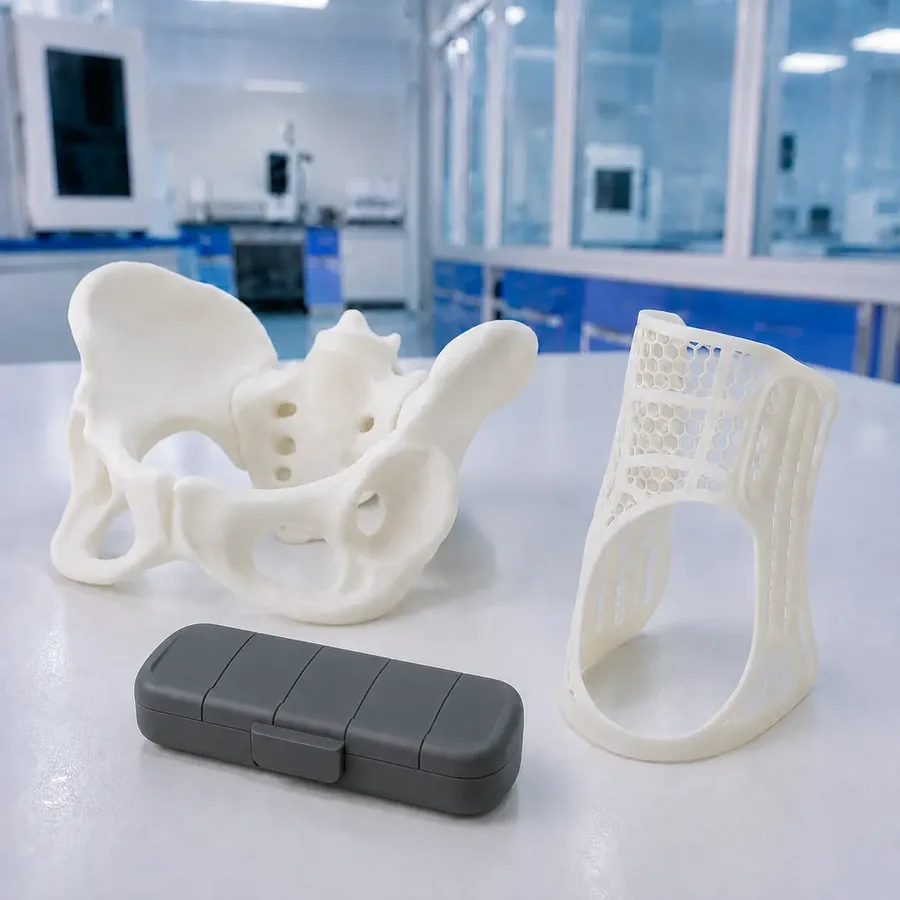
Medical 3D printing has gone, in just a few years, from an experimental laboratory technology to a well-established production solution. Custom surgical instruments, orthopaedic guides, personalised prostheses, diagnostic components and single-use devices are today increasingly often made through additive manufacturing. However, when a component is intended for contact with the patient or the hea…