


Precision agriculture is today one of the fastest-growing segments in the civil sector. Multispectral drones, IoT control units installed in fields, satellite guidance systems for tractors, sensors for monitoring soil moisture and automated irrigation systems are transforming the way agricultural activities are managed. However, many agritech projects face a common difficulty: much of the custom components needed aren't available off the shelf . You may need brackets designed to mount a sensor on a specific drone model, watertight housings for IoT control units exposed to the elements, mounts resistant to plant protection products and UV rays, or spare parts for older agricultural machines that are no longer available in stock. Industrial 3D printing offers a concrete answer to these needs. It makes it possible to produce technical components for the agritech sector , even in small runs, using materials resistant to the environmental conditions typical of agriculture. All this with reduced production times, wide design freedom and a high level of customisation. On this page, we analyse the most requested components, the most suitable materials and the main operational advantages of 3D printing applied to agritech.
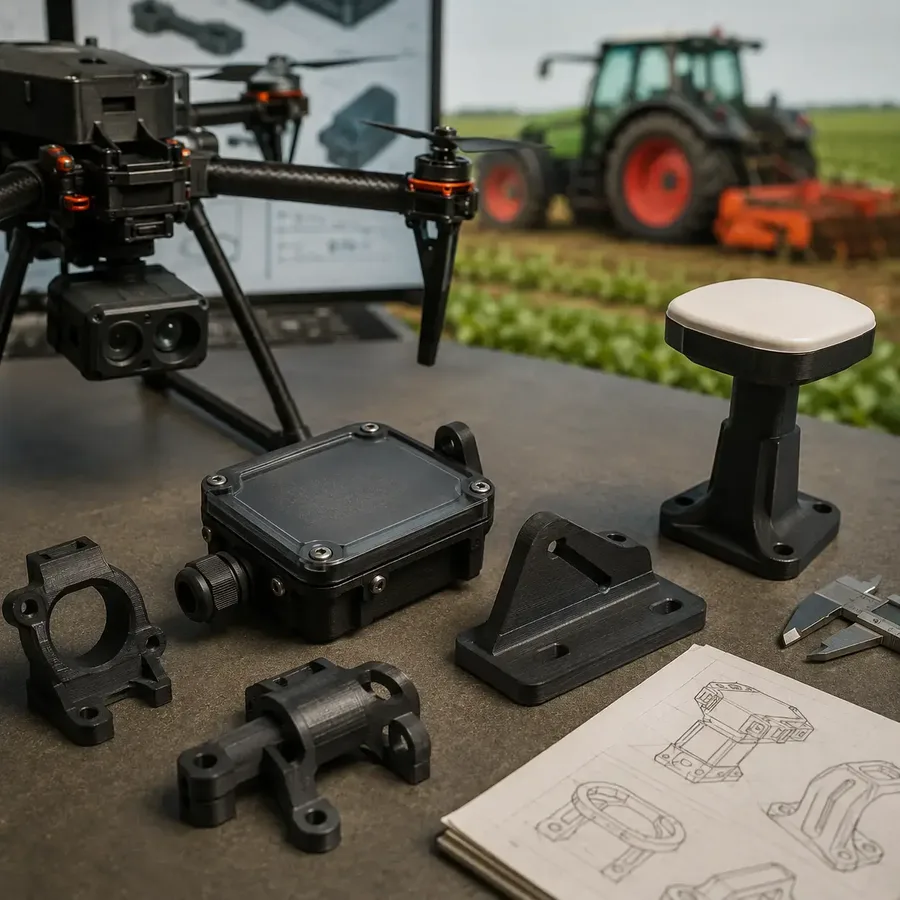
Agritech components in 3D printing: 2026 guide to custom parts
Weerg staff