


Elongation at break is one of the main parameters on material test certificates. It indicates how much a material deforms plastically before breaking under load and is a fundamental parameter for assessing its ductility . For the designer it's an essential piece of data: it makes it possible to distinguish materials that fail progressively, with visible deformation before breaking, from those that fracture suddenly. This value influences many design choices, from selecting a structural steel to assessing the formability of a sheet metal. In this guide, we'll look at what elongation at break is, how it's measured according to the standards, what the difference is between the main symbols used (A5, A10, A80mm, Agt) and what the typical values are for the most common materials.
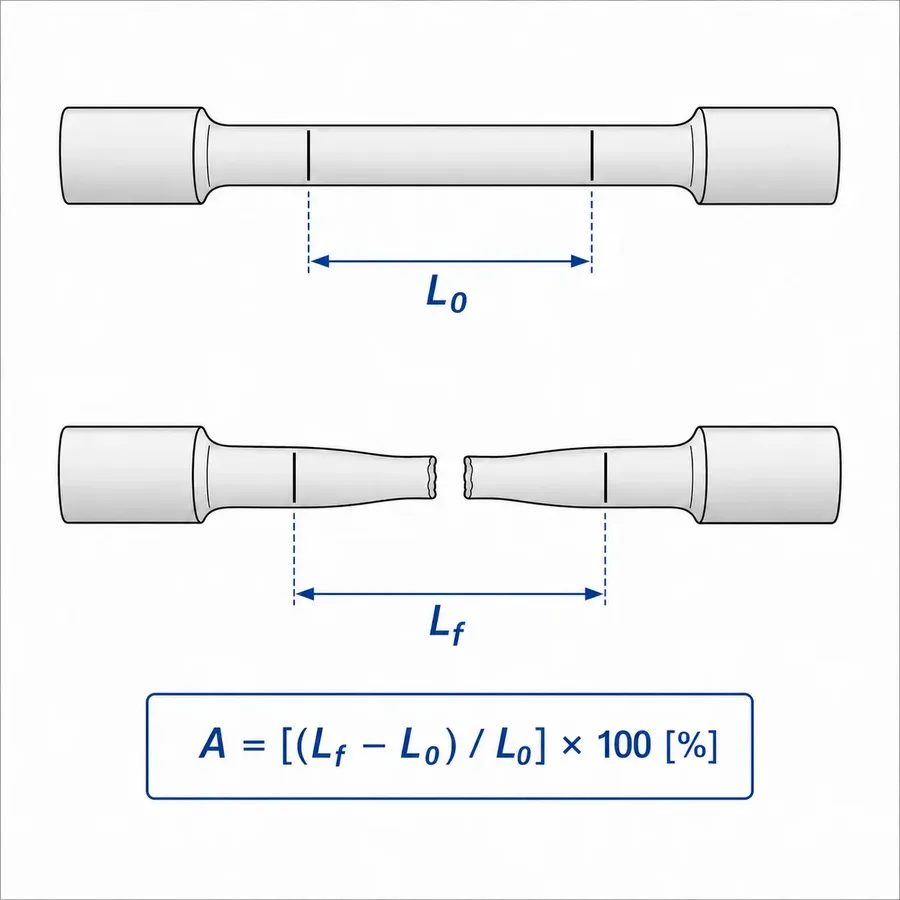
Elongation at break (A%): what it is, how it's measured | 2026 guide
Weerg staff