

manufacturing
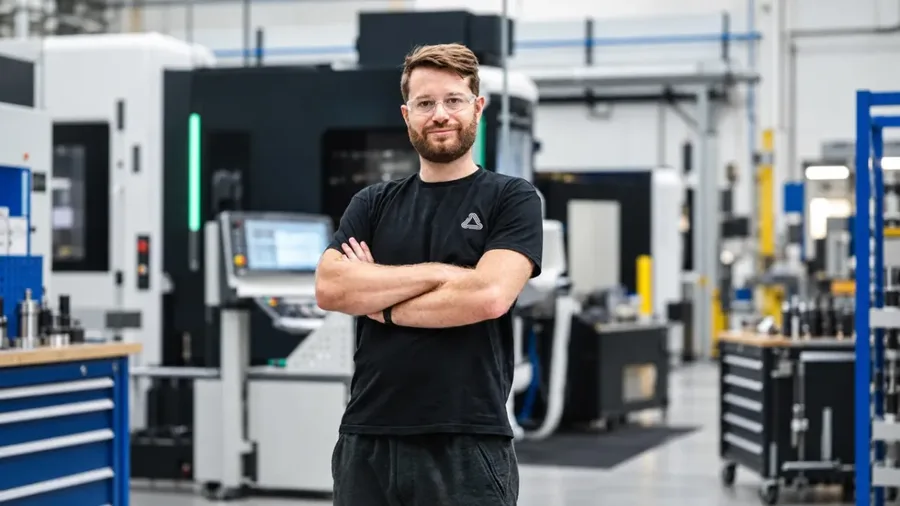
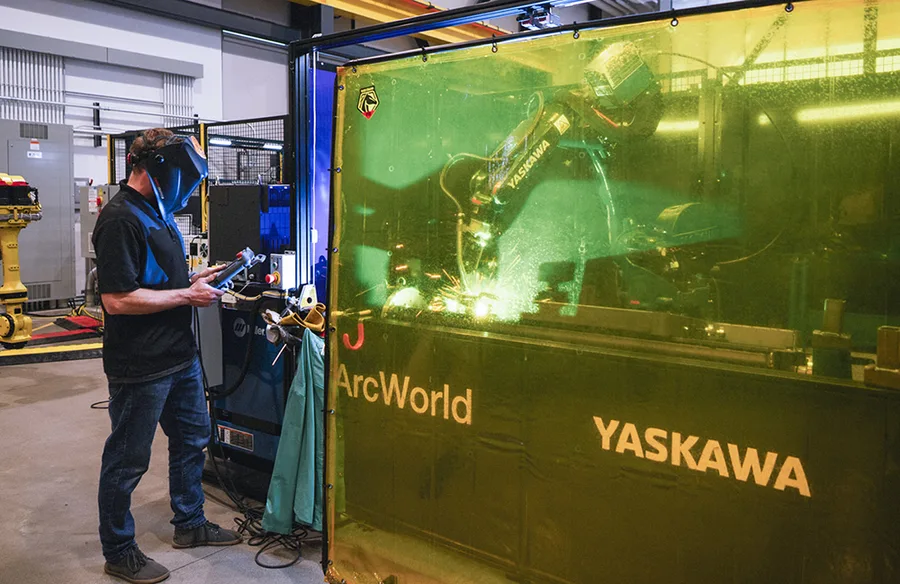
LTU PhD student Rohith Rao Yannamaneni’s automation company aims to make manufacturing smarter without leaving people behind SOUTHFIELD, Mich. – The first time Rohith Rao Yannamaneni really watched a production floor, he did not see machines first. He saw people. They were doing the same motions over and over, through heat, noise and long shifts. […] The post Rethinking the Factory Floor appeared…
This February I became the proud owner of an old Hermle UWF 851 vertical machining center. An industrial CNC mill with tool changer and everything. I already had a FoxAlien Masuter Pro (which seems laughable in comparison) and a lot of 3D-printing experience so I knew GCode. The workflow I was used to was to draw things up in CAD, do CAM (or slicing for 3d-printing) post-process them somehow and …
Elmet Technologies, the Lewiston, Maine-based subsidiary of The Elmet Group Co. has received $4.3 million in strategic funding tied to a contract from the United States Department of War. The award is intended to grow the company’s ability to produce molybdenum-based products and other refractory metal components destined for defense applications, with a particular emphasis…

Scientific Reports, Published online: 12 June 2026; doi:10.1038/s41598-026-54138-3 Hybrid RSM–SF-AHP–fuzzy MARCOS approach for multi-response optimization of WAAM-fabricated Ni–SS bimetallics in face milling
DEEP Manufacturing, a specialist in wire arc additive manufacturing (WAAM) for safety-critical structures, has partnered with Colorado-based Fortius Metals to print a complex, multi-material metal cylinder using large-format metal 3D printing. Announced on June 4, 2026, the project will combine DEEP’s synchronized multi-robot WAAM system with Fortius’ expertise in simulation, toolpath design, and…

A new neural field-based optimization method aims to reshape parts to reduce overhangs and, in turn, minimize the need for 3D printing support structures. The post Neural Shape Optimization Could Cut 3D Print Supports appeared on Fabbaloo .

A new Argonne-led collaborative supported by DOE's Office of Critical Materials and Energy Innovation will accelerate the development and scale-up of U.S. critical materials and chemical manufacturing technologies through partnerships with industry.
KNOXVILLE, Tenn. (June 11, 2026) – IACMI–The Composites Institute®, today announced the winners of its inaugural Rising Star Awards, a nationwide initiative aimed at highlighting emerging talent in the manufacturing […] The post IACMI Announces Inaugural Rising Star Award Winners appeared first on IACMI .

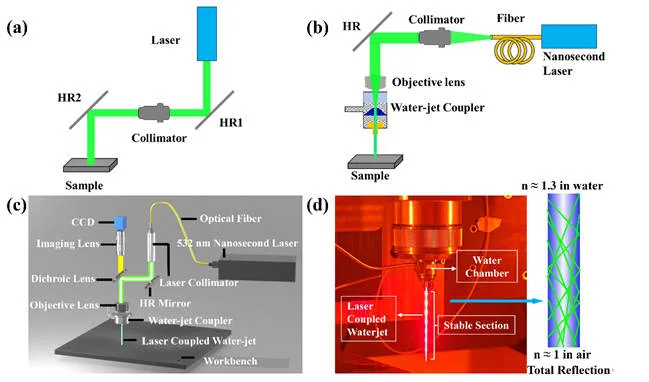
University of Florida researchers are exploring how lasers could help astronauts build structures on the moon using materials already available there, including lunar soil transformed into glass. The work, led by Victoria M. Miller, Ph.D., an associate professor in the Herbert Wertheim College of Engineering and researcher with the UF Astraeus Space Institute, recently completed a research phase …

Three-dimensional (3D) vision is undergoing a profound transformation. Recently, Zhoujie Wu and Qican Zhang from Sichuan University, together with Gunther Notni from the Fraunhofer Institute for Applied Optics and Precision Engineering IOF, published a review paper in Light: Advanced Manufacturing to systematically summarize over four decades of development in fringe projection profilometry (FPP)…
Manufacturing-driven construction — applying industrialized, off-site methods to fab delivery — is emerging as a way to meet the speed, precision, and reliability demands of the U.S. semiconductor reshoring boom. The post Building at High Speeds: How Manufacturing-Driven Construction is Reshaping Semiconductor Fabs appeared first on Semiconductor Digest .
Hidden flaws can sit inside castings, welds, batteries, or printed parts long before a surface mark appears. Traditional checks may miss buried changes or require sectioning that ruins the sample. Industrial computed tomography gives engineers a non-destructive path to internal evidence. One scan can reveal geometry, material loss, voids, and wall variation while keeping the...
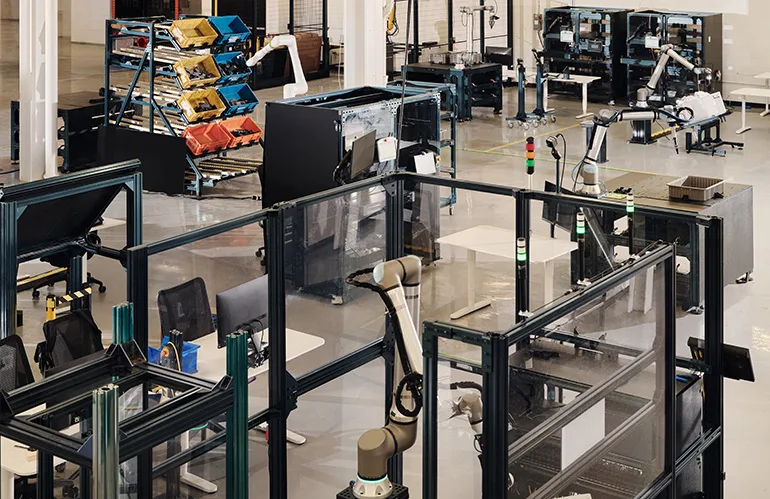
A tour of Hyundai's Georgia Metaplant reveals how robotics, AI, and flexible manufacturing could change the way products are built in the decades ahead. The post Inside Hyundai’s Metaplant and the Future of Manufacturing appeared first on TechNewsWorld .
Researchers show friction stir welding can join LPBF CuNiSiCr copper alloy while nearly eliminating porosity and lifting strength, hinting at a workable path to larger, higher performing thermal hardware. The post Friction Stir Welding Boosts LPBF Copper Performance appeared on Fabbaloo .

Take a look at almost any modern electronic device. Whether it's a smartphone, laptop, router, or smartwatch, you'll find dozens—or even hundreds—of tiny rectangular components soldered onto the circuit board. Many of those components are SMD resistors . Despite their small size and low cost, SMD resistors are the result of a highly controlled manufacturing process that combines ceramic engineeri…
University of Florida scientists demonstrate laser-bending of lunar glass, paving the way for off-world construction and on-demand manufacturing.
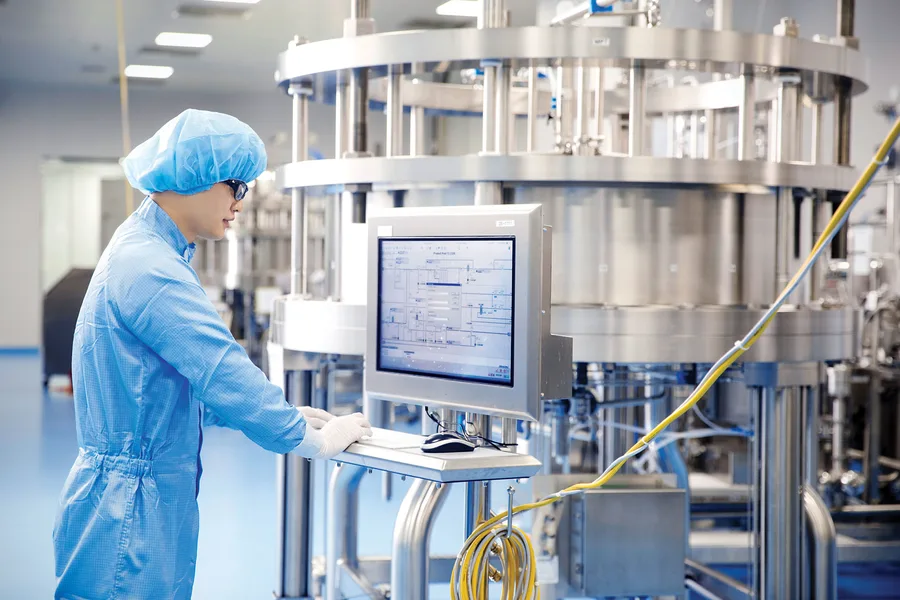
Scaling from pilot to high-volume manufacturing is one of the most complex transitions in the semiconductor lifecycle, where variability, fluid behavior, and contamination control determine whether a validated process can survive real-world production. The post Scaling Semiconductor Manufacturing from Pilot Lines to High-Volume Execution appeared first on Semiconductor Digest .

The Nordic Additive Manufacturing Alliance (NAMA) marks the first time Finland, Sweden, Norway, and Denmark have formally united their expertise in additive manufacturing under a single cooperative framework.  Backed by Nordic Innovation through the Nordic Forward: Competitiveness and Resilience for 2050 program, the initiative runs from 2026 to 2028 and brings together four national pillars…

A team of engineers at the National Manufacturing Institute Scotland (NMIS) has demonstrated a manufacturing pathway for copper rocket nozzles using high-pressure cold spray (HPCS) technology. The results point to the technique’s potential as a faster, more scalable alternative to conventional production methods, one that could reduce costs and lead times for high-performance aerospace comp…

research.ioSign up to keep scrolling
Create your feed subscriptions, save articles, keep scrolling.