Source: United Nations News Across agencies, the United Nations is implementing artificial intelligence tools to help promote peace, security, and human rights. The U.N. is also using AI to detect land mines, assess disaster damage, identify suspicious financial transactions, and monitor radioactive contamination. But as technology advances, the U.N. is emphasizing equity, human rights, and ethic…
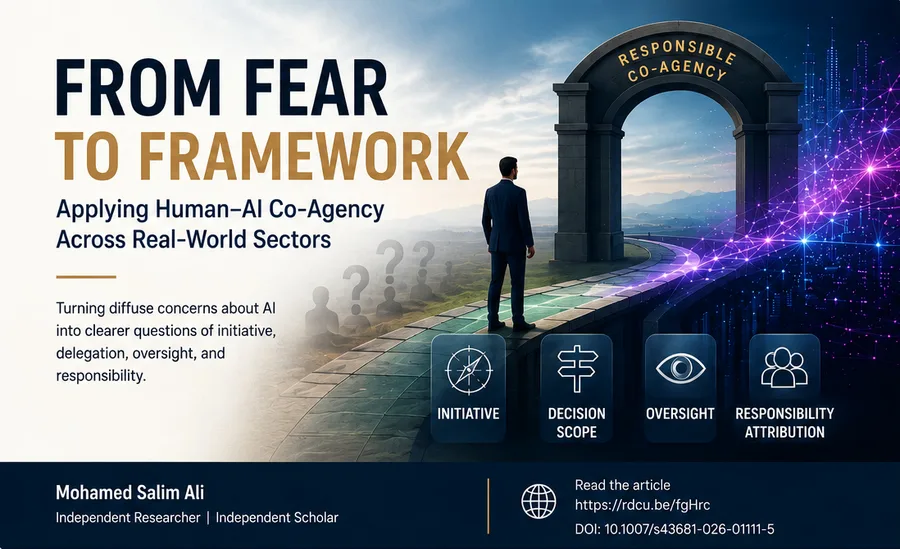
Public discussion about AI often begins with fear: the future of the classroom, job displacement, opaque government decisions, or responsibility in high-stakes systems. The framework I proposed in From Assistants to Agents offers a different way to approach these concerns.
Originally published on tamiz.pro . The promise of autonomous AI agents transforming software development is tantalizing. Imagine agents drafting code, refactoring modules, or even deploying applications with minimal human intervention. Yet, many early attempts at integrating AI agents into complex engineering workflows fall short, often exhibiting unpredictable behavior, security vulnerabilities…
An incident happens, a vendor ships a fix, and everyone calls it "proactive security." It isn't. Let's just say that out loud. When a frontier AI lab has to bolt on guardrails after a model already went outside its intended boundaries, that's not a feature launch. That's an incident report with a marketing team attached. Context This isn't new territory, it's the same pattern we've watched play o…
The rapid adoption of artificial intelligence (AI) technologies is creating new cyber liability challenges for organisations, with emerging risks developing faster than many existing insurance policies and risk management frameworks can address. As businesses increasingly integrate AI into operations, concerns Read More ... The post AI Cyber Liability Risk Is Outpacing Existing Insurance Coverage…
As AI agents become more capable and operate over longer horizons, building security and trust into the applications they power becomes increasingly important....
Why AI ROI depends on an AI-ready org chart: outcome-owning, agent-augmented teams that move value faster than traditional departments. The post Your Board Wants an AI Strategy. Give Them an AI-Ready Org Chart Instead. appeared first on .
Design used to be about simplifying how people navigate systems. Agentic AI changes the deal: people state intent, the agent does the doing. AXD is Codewave's framework for designing the trust moment instead of the journey. The post Agentic Experience Design: Users Don’t Want a Better Journey, They Want to Skip It appeared first on .
Organisations are increasingly excited by the potential of agentic AI, but many overlook the legacy obstacles that stand in the way. In this post, I explore why successful AI adoption depends on tackling fragmented data, brittle processes and outdated architectures, and why modernisation is often the most important step towards unlocking value from intelligent agents.
(RAND) – The convergence of artificial intelligence (AI) and biology offers great promise for medicine and public health, including the potential to yield transformative societal benefits. Yet this same convergence could introduce serious global health and national security risks. As … Read More
Anthropic is poised to debut on the stock market at a time when the public is increasingly upset about data centers and is fearful about AI taking jobs.
By Sangyeon Park — creator of Cencurity , an open-source security gateway for LLM coding agents In March 2026, Veracode published its Spring GenAI Code Security Update. The team ran more than 150 large language models through 80 code-generation tasks in Java, JavaScript, C#, and Python, then tested every output against four common weakness categories. The syntax was excellent. Over 95% of the gen…
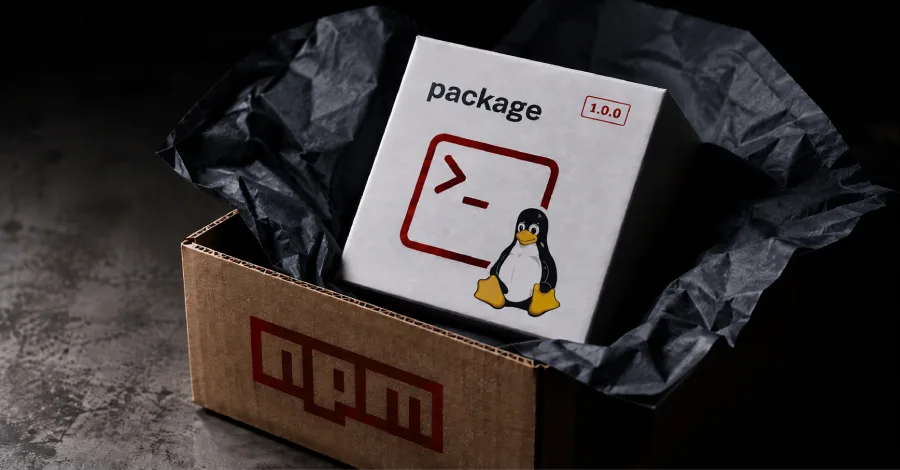
Cybersecurity researchers have discovered a set of trojanized npm packages that masquerade as working calendar and streak utilities but are engineered to stealthily deliver an artificial intelligence (AI)-powered Linux implant dubbed RedC2 4.0.
"When the module loads, it locates the bundled binary, marks it executable, and launches it as a detached background process," TrendAI, Trend Micro's
_Phenomenlogy and the Cognitive Sciences_. forthcomingIn romantic love, partners come together as a “we”. They share their projects, plans, lives, and love. As consumer AI chatbots like Claude, ChatGPT, and Gemini find wider adoption, a growing number of users report falling in love with them. Is it possible to experience a loving “we” with an AI bot? In considering this question, we bracket ques…
_Zenodo_ 1. 2026New paper published. This paper is part of my ongoing research in philosophy, AI, technology, and the transformation of human and non-human agency under computational systems. Rather than treating AI merely as a technical tool, my work examines the conceptual, institutional, biological, and material conditions through which intelligence, responsibility, evaluation, and forms of ag…
AI Agent Observability, Evaluation, Governance & Policy Enforcement
Enforce, not just observe.
How many AI agents are running right now?
Which agent generated the most LLM cost?
Did any agent expose customer data?
Did any agent use a restricted LLM model?
Is this prompt better than production?
Can you prove compliance?
$ traccia.init()
one init call — trace, cost, and govern every agent
One Dashb…
The key is identifying where AI can provide meaningful support without adding unnecessary complexity or diminishing essential human judgment and relationships.






 research.io