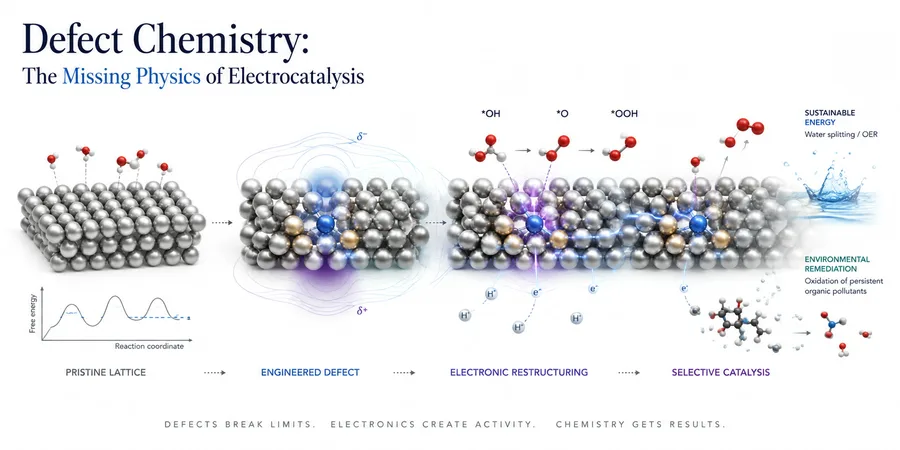
Materials science long chased perfect crystals, but in electrocatalysis, perfection is dead. To fix global energy and environmental crises, we must stop pursuing symmetry and start engineering atomic chaos.
Mechanical components such as bearings, gears, marine shafts, engine-related parts, and aluminum-alloy structures are frequently subjected to coupled wear, corrosion, humidity variation, temperature cycling, and interfacial degradation during service. MXene-dominant and MXene-containing protective coating systems have recently emerged as promising surface-engineering platforms because MXene nanos…
Scientific Reports, Published online: 21 August 2026; doi:10.1038/s41598-026-66539-5 Enhanced dielectric and optical characteristics of NiO/Co₃O₄-filled poly(vinyl alcohol)/poly(vinyl pyrrolidone) blend films for potential optoelectronic applications
Nature Communications, Published online: 20 August 2026; doi:10.1038/s41467-026-76483-7 Control of surface patterns in assembled nanostructures is desirable, but challenging to achieve. Here, the authors report the development of a flow-based crystallisation-driven self-assembly method for the preparation of polymer platelets with controlled 3D surface patterns.
Nature Communications, Published online: 20 August 2026; doi:10.1038/s41467-026-76848-y Perovskite solar cells need uniform self-assembled molecule layers, but symmetric molecules can clump and weaken interfaces. Luo et a. paired two molecules to break symmetry, improving coverage, efficiency and long-term stability.
Mitsubishi Chemical Corp. (Tokyo, Japan) has announced plans to commercialize ultra-high-purity colloidal silica for use as a raw material for polishing agents in cutting-edge semiconductors. The company plans to establish new production facilities at its Kyushu Plant (Fukuoka Area) in Kitakyushu City, Fukuoka Prefecture, and begin commercial operations in October 2028. Colloidal silica is used […
National Research Council of Science and Technology
2d ago
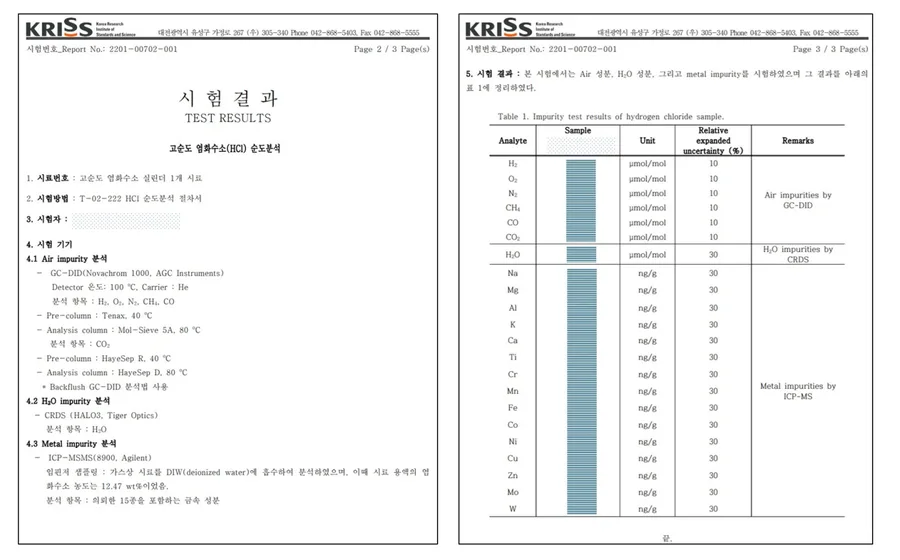
The Korea Research Institute of Standards and Science (KRISS, President Dr. Lee Ho Seong) has established purity analysis techniques and testing procedures for 15 high-purity gases used in semiconductor processes, and has developed six certified reference materials (CRMs) that verify measurement accuracy. This provides a foundation for objectively evaluating the quality of semiconductor gases dom…
The working mechanism of an acoustic metamaterial (AM) for broadband elastic vibration suppression with non-independent local resonators is presented in this paper along with the general formulas for the effective mass (EM), dispersion relation, and transmission spectrum (TR) of this metamaterial unit. A kind of flexible metamaterial sticker that is lightweight and skillfully uses flexible materi…
Nature Communications, Published online: 19 August 2026; doi:10.1038/s41467-026-76888-4 In luminescent materials, excitation-time-dependent spectral evolution mechanism is often poorly understood. Here, the authors demonstrate coupled trapping and de-trapping processes govern spectral evolution in CsCdCl3:Sb3+ multi-emitter systems.
MXenes are commonly described by the compact formula Mn+1XnTx, yet this notation hides the variables that most strongly determine their behavior: precursor ordering, extraction pathway, vacancies, termination identity and distribution, interlayer ions and water, stacking, and transformation history. This mini review develops a solid-state chemistry framework in which MXenes are treated as chemica…
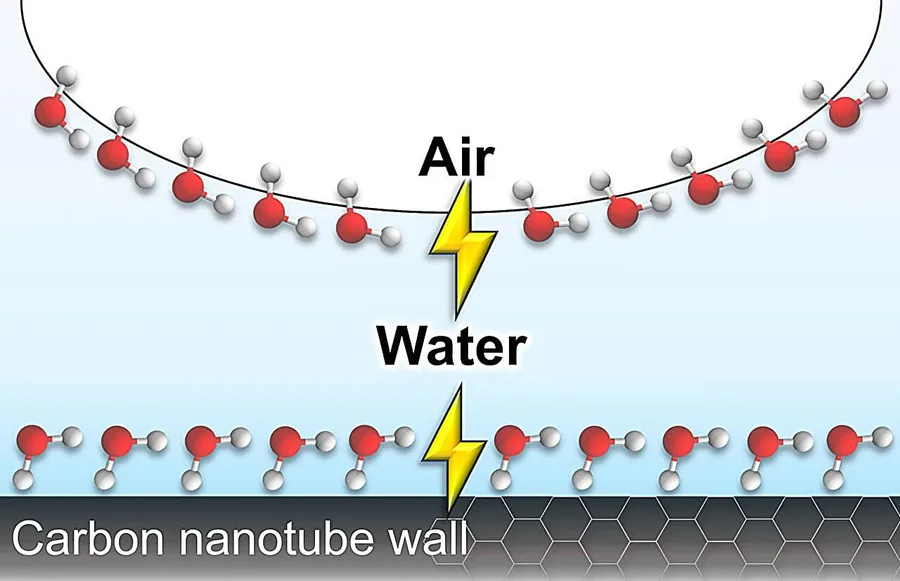
Bubbles are round, and we know surface tension does that. But squeeze that gas-liquid boundary into a space only a few tens of nanometers wide—could other forces be at work? Now, an international team from Kyushu University, Nankai University, Stanford University and the University of Alberta has taken a direct look. Publishing on July 14 […]
Compare upright vs inverted microscopes: optical geometry, resolution, working distance, illumination, ergonomics, and when to choose each design. The post Upright vs Inverted Microscopes: Design and Use Cases first appeared on .
From a skin patch that changes colour to flag abnormal blood sugar, to a diver’s sleeve display that stays readable underwater, the need for bright, flexible screens is growing, but no existing technology delivers the combination of simplicity, low power and robustness these applications need. The post The Ultimate Glow Up: NUS CDE Researchers Push Flexible Display Brightness to New Records appea…
Discrete-molecule hybrid perovskites with different organic and inorganic molecules can provide a wide array of tunable optoelectronic and piezoelectronic properties. In this study, we report the elastic modulus and hardness, obtained from instrumented indentation measurements, of three new and three known discrete-molecule single crystal halide metalates, with an aim towards understanding the re…
My research focuses on the rational design of supported nanoparticles for sustainable catalysis. By combining nanoscience, surface chemistry and synchrotron techniques, I aim to understand and control catalytic active sites for efficient chemical processes.
Nature Communications, Published online: 18 August 2026; doi:10.1038/s41467-026-76352-3 Direct pore-pressure measurements show that tensile cracks in water-saturated cement generate local underpressure, increasing fracture resistance and reducing the size of the damage zone as crack speed rises.
Learn Köhler illumination fundamentals—how to align, set condenser and aperture NA, improve contrast and resolution, and troubleshoot common issues. The post Mastering Köhler Illumination: Setup, NA, and Contrast first appeared on .
A water drop can create an extra burst of charge when its advancing edge catches on a microscopic defect and tears free. The strongest runs approached ten times the study's ordinary wet-to-dry signal, but the real insight is how surface roughness controls the effect.


 research.io