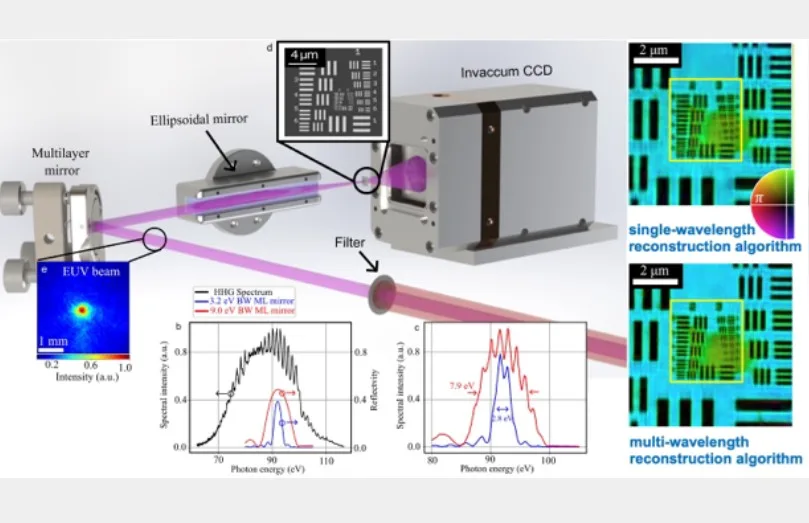
Ptychography implemented with coherent high-harmonic (HHG) sources enables high-resolution, high-fidelity imaging of nanostructures and biosystems. However, when driven by mid-infrared lasers to generate light at higher photon energies, HHG inherently produces a broadband quasi-continuum, which is less suited for coherent imaging compared with a single harmonic order. Consequently, experiments ty…
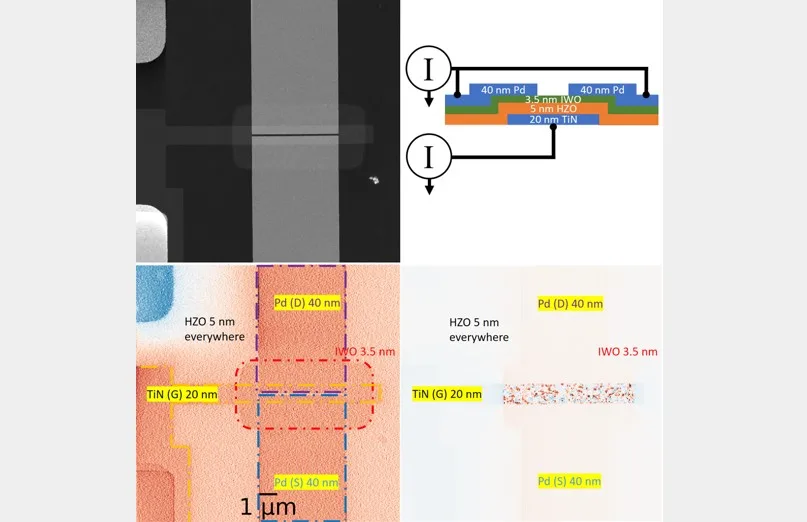
Ferroelectric materials such as hafnium zirconium oxide (HZO) are likely to form the basis of a next-generation memory technology. For instance, replacing the conventional gate dielectric in a field-effect transistor (FET) with HZO can form a ferroelectric FET, or FeFET. Chris Regan’s group at UCLA has been working with Suman Datta’s group at Georgia Tech . . .
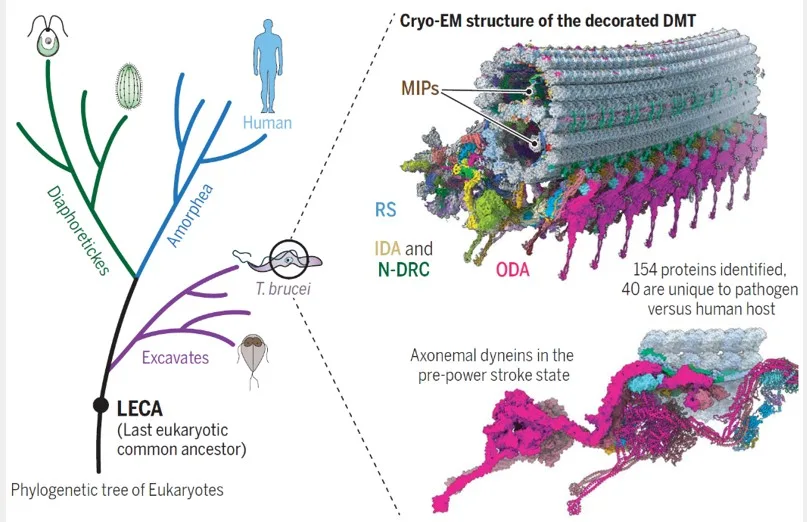
Integrated cryogenic electron microscopy (cryoEM) and cryogenic electron tomography (cryoET) approach, advanced through NSF’s STROBE, a National Science Foundation Science and Technology Center, enables unparalleled resolution for complex cellular structures like the flagellar doublet microtubules (DMT) of Trypanosoma brucei. This parasite causes African sleeping sickness, affecting millions. The…
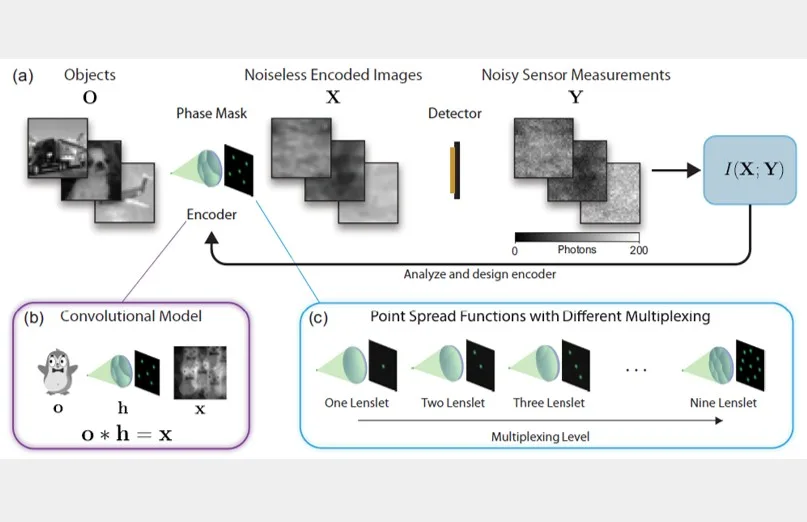
Lensless imagers can make cameras far thinner than conventional optics and can compress rich scene information into a single measurement. But the same optical multiplexing that enables those advantages can also scramble a scene so strongly that reconstruction loses the information it needs. We address this design problem by evaluating lensless encoders through mutual information . . .
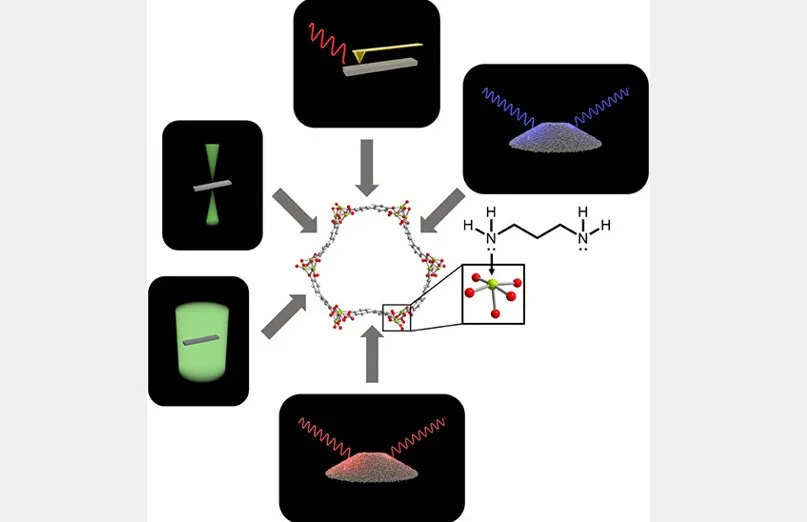
Currently, host-guest interactions in metal–organic frameworks (MOFs) are mainly understood via theoretical simulations, bulk characterization techniques, and x-ray diffraction, all of which can average out information related to defects, interfaces, and spatial heterogeneity among adsorption sites. Since these structural features can directly impact the functionality of MOFs we applied local pro…
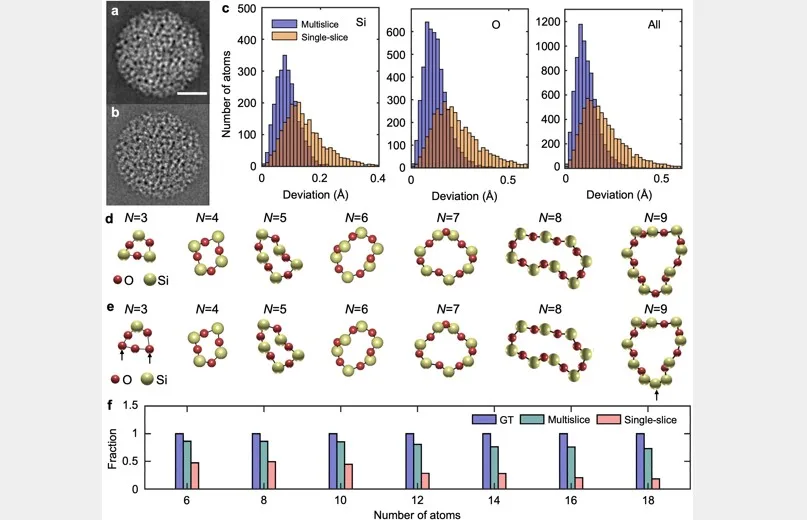
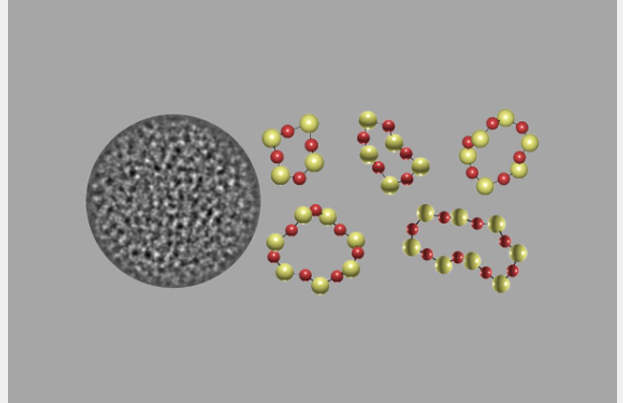
Amorphous materials — solids lacking long-range periodic order — are vital to technologies spanning thin-film electronics, solar cells, phase-change memory, magnetic components, biomedical devices, and quantum hardware. Yet their structural disorder has long prevented full three-dimensional (3D) atomic mapping. Despite major advances in probing short- and medium-range order, experimentally determ…
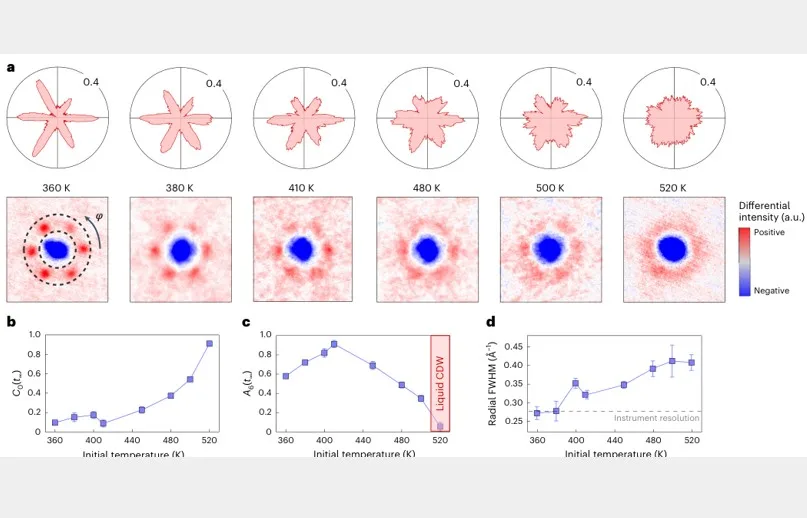
Researchers from UCLA have used ultrafast electron diffraction to reveal a hidden electronic phase that cannot be reached by ordinary heating. The study focuses on 1T-TaS₂, a layered material in which electrons naturally organize into a periodic charge pattern known as a charge density wave. Theory has long suggested that such ordered electronic patterns could . . .
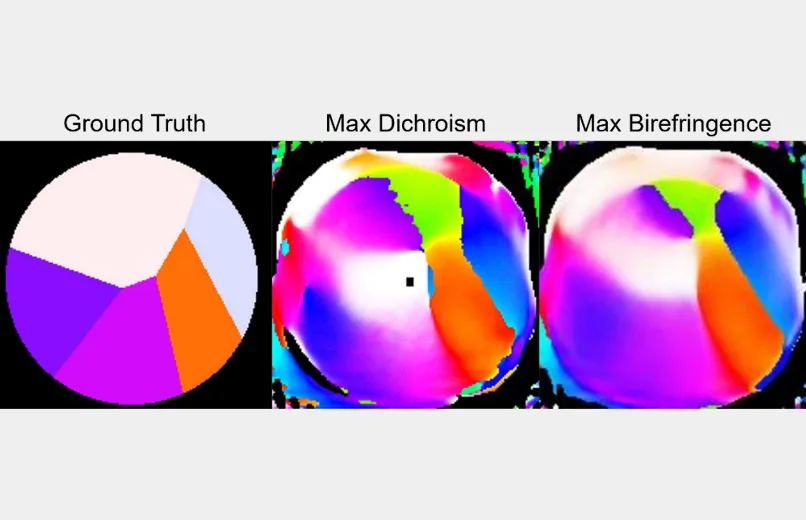
Dichroic X-ray tomography resolves a sample's 3D crystal orientation (linear dichroism) or magnetization (circular dichroism) from projections taken at varying beam directions and polarizations. Like most tomographic methods, its reconstruction assumes that absorption along a ray is a simple line integral of a local, voxel-independent absorption coefficient. This work showed that for linear dichr…
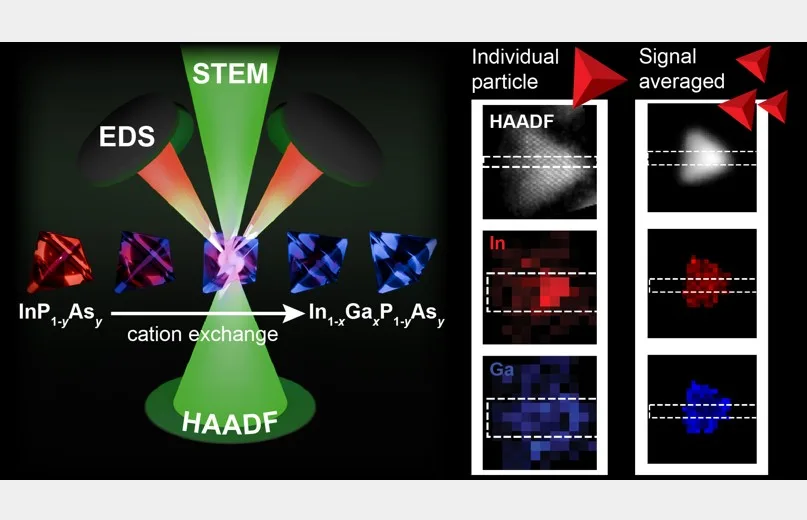
Colloidal semiconductor nanocrystals (NCs) offer remarkable tunability of optoelectronic properties through synthetic control of their size, shape, and composition. An emerging strategy is the synthesis of III-V nanocrystals in molten salts, where high temperatures and unique redox chemistry enable the production of highly crystalline binary, ternary, and quaternary semiconductor NCs. A notable e…
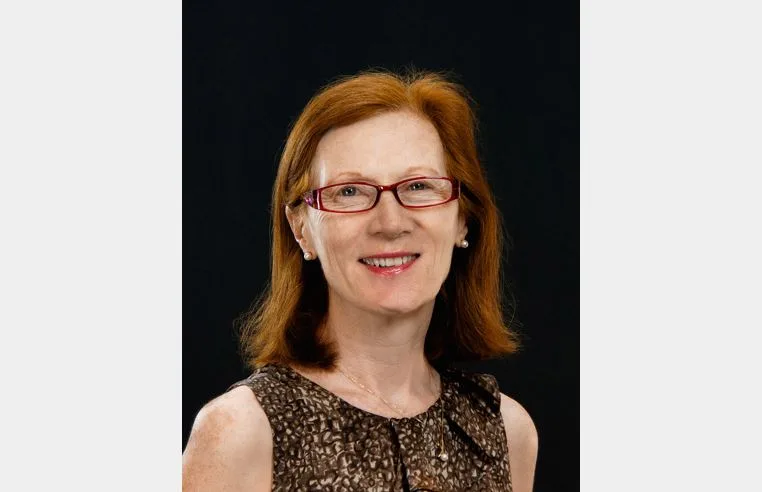
Title: Responsible Conduct of Research Presenter: Prof. Mary A. Allen, BioFrontiers, CU Boulder Research Associate Professor | Faculty Director, Responsible Conduct of Research Education Programs | Associate Director of the Crnic Institute Boulder Branch, CU Boulder Abstract: This seminar will include discussion of data falsification, giving appropriate credit for research contributions and resul…
Congratulations to Ke Xu for receiving the 2026 Miller Professorship! The Miller Institute is an interdisciplinary hub at UC Berkeley, bringing together researchers from all areas of STEM, including postdoctoral fellows, UC Berkeley faculty, visiting faculty and senior faculty. The Miller Institute for Basic Research in Science at UC Berkeley offers four primary programs designed . . .
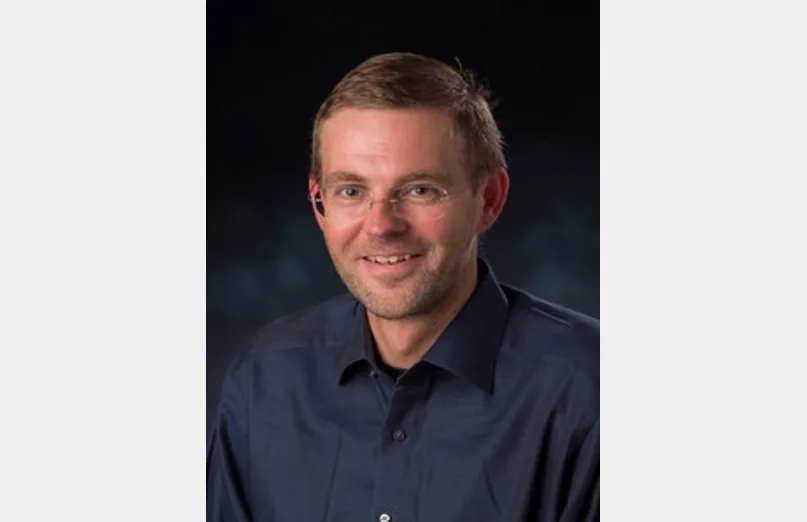
Markus Raschke received the 2026 IMS Distinguished Faculty Scholar Award from Los Alamos National Laboratory. This program supports the visit of a faculty member to spend 8 to 12 weeks at Los Alamos National Laboratory together with some of their students. The goal of this program is to enhance Laboratory collaborations that will generate . . .
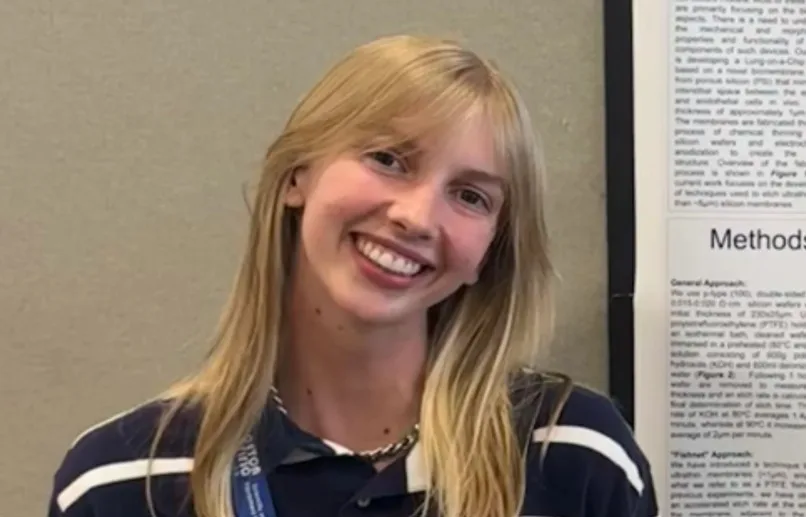
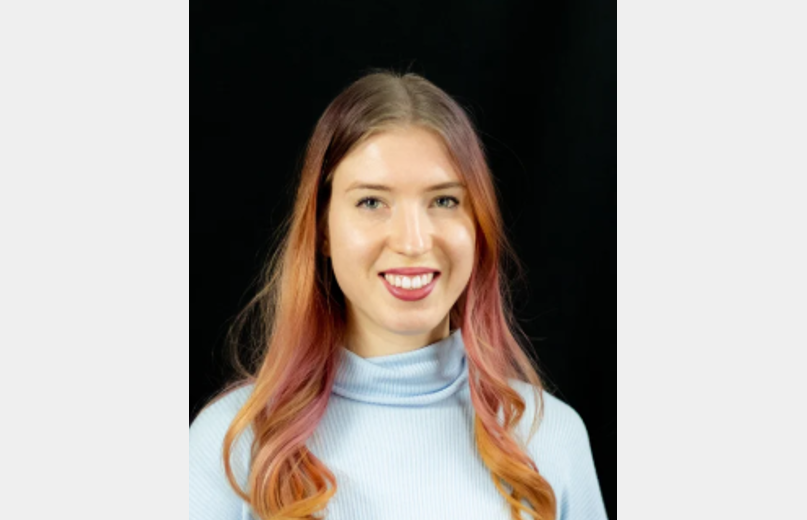
Congratulations to Sally Thompson, an undergraduate student at Fort Lewis College, for receiving Scholar of the Year Award for her research in the Physics Department.
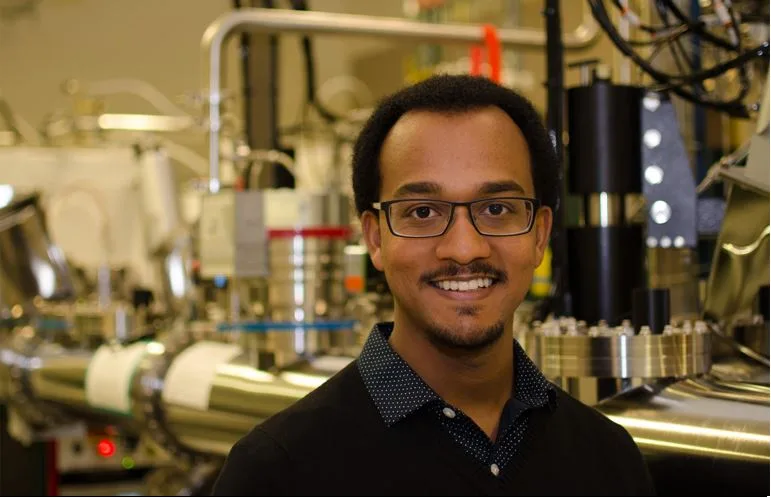
ENY ACS recognized Dr. Kwabena Bediako with the 2025 Buck-Whitney Award. Dr. Bediako’s work in magnetic solids offers promising solutions to accelerating energy demand by electronic and computing systems. This award was established by the Eastern New York ACS section executive committee in 1976. The name of the award, Buck-Whitney, was chosen to recognize two . . .
WASHINGTON — Optica, Advancing Optics and Photonics Worldwide, has named Margaret M. Murnane an Optica Honorary Member, the most distinguished of all Optica Member categories. Murnane is recognized for pioneering advances in ultrafast laser technology and XUV science, as well as exceptional service to the optics community through sustained mentorship and leadership. She is currently a Distinguish…
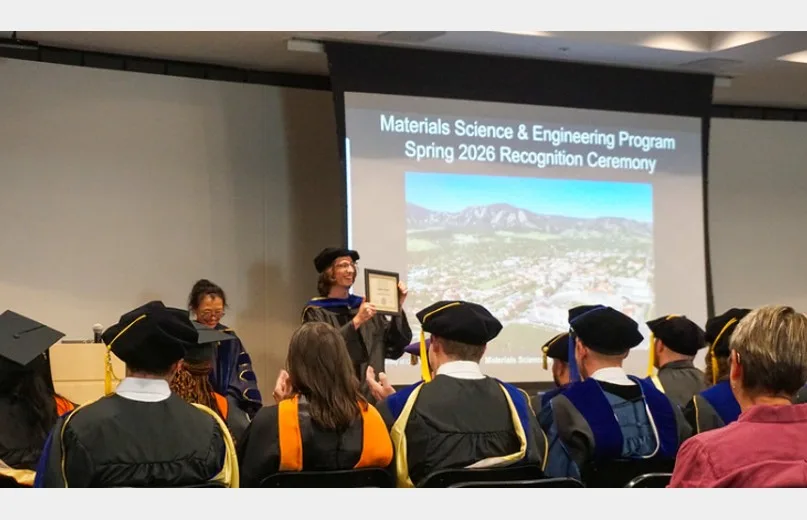
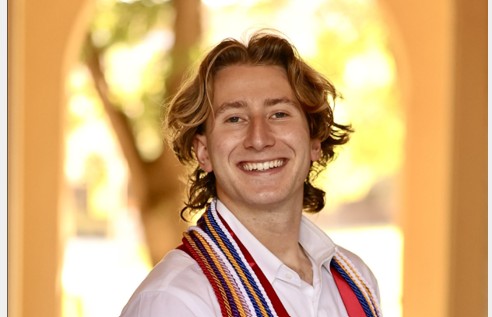
Benjamin Hammel was recognized with the "Outstanding Graduate Award" and served as the Graduation Speaker for the Materials Science and Engineering Program's Graduation Ceremony at the University of Colorado Boulder on Saturday, May 2, 2026. Benjamin was recognized for "outstanding research" and "all around contributions" to the Materials Science and Engineering community. Congratulations, . .…
The purpose of the NSF Graduate Research Fellowship Program (GRFP) is to help ensure the quality, vitality, and strength of the scientific and engineering workforce of the United States. Since 1952, the program recognizes and supports outstanding graduate students who are pursuing full-time research-based master's and doctoral degrees in science, technology, engineering, and mathematics (STEM) .…


 research.io