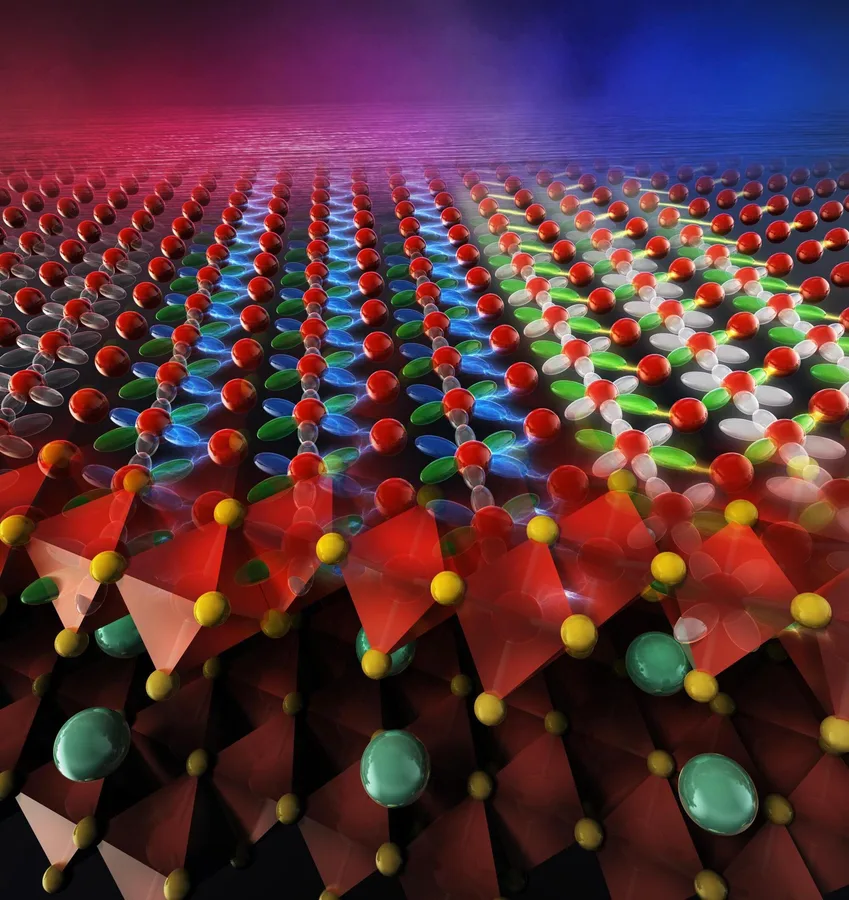
Physicists have uncovered an in-plane Hall response that overturns a century-old assumption about how this famous electrical effect works. The discovery could eventually make multidirectional magnetic sensing possible with one tiny device. Scientists at Carnegie Mellon University have identified an unexpected form of the Hall effect that challenges a long-standing assumption about how electronic …
Let's consider the 4d Nonlinear Sigma model with $SU(n)$ target space, without a topological term. The Lagrangian is $$\frac{f^2}{16}\mathrm{Tr}(\partial_{\mu}U^{-1} \partial^{\mu}U)$$ where $U$ is a $SU(n)$ matrix, and $f$ is a coupling constant.
Dimensional analysis shows $f$ has mass dimension 1. This means under RG, $f$ will grow. I am puzzled what happens when we flow to deep infrared? Does …
Scientists blasted diamonds with lasers to get the best measurement of the mineral's melting point yet. The new, more accurate numbers could help improve fusion experiments and studies of giant planets.
What happens to water when the usual rules no longer seem to apply? Scientists have recreated extraordinary conditions in the lab, uncovering a state of matter that could be hiding deep inside distant planets.
While chemical bonds usually determine the structure and properties of a material, bonds between neighboring metal atoms can also change as temperature or other conditions change. These changes can lead to unusual electronic and magnetic behaviors. A new study on Li₀.₅VS₂ shows that bonding between vanadium atoms can reorganize as the material passes through successive […]
Using a cold atom quantum simulator, Harvard researchers observed a crossover to a pseudogapped metal in the Hubbard model, achieving several-fold lower temperatures.
Magnons now move slower than previously calculated due to an unexpected ‘dressing’ by surrounding quantum particles, revealing a direct link between speed and unseen entanglement. Increasing on-site repulsion weakens this connection and diminishes any resulting paired states formed when magnons interact. This offers a new way to probe these correlations via measurable velocity deficits without di…
In nonlinear classical field theories that admit localized or topological solutions (for example, Skyrme-type or Faddeev–Skyrme-type models), what mathematical and numerical evidence is normally considered sufficient to distinguish a genuinely stable localized solution from a stationary... Read more
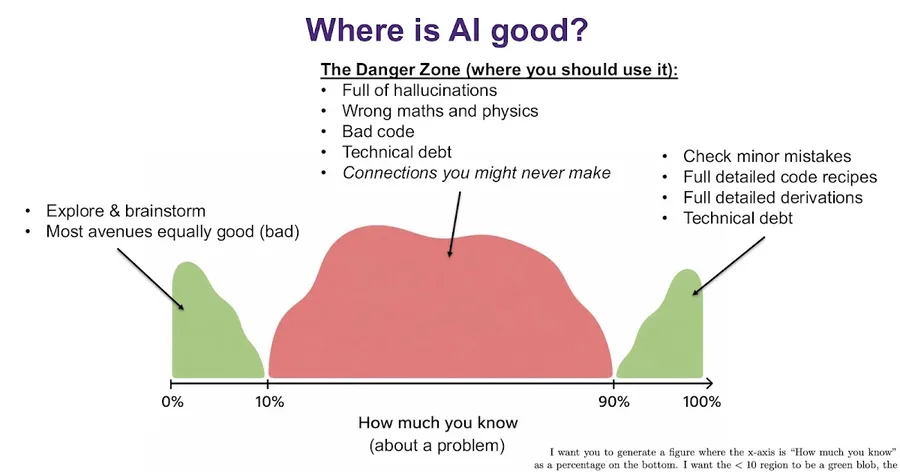
I have been dabbling a little with using AI (at a very basic level) to help me with some research problems. For example, in a recent preprint, I did the maths in the Appendix with help from AI. I am curious to hear from the experience of others of using it for research in condensed matter theory and theoretical chemistry. Peter Woit made a similar request to the high-energy theory community. The …
In particle physics I am used to the Feynman propagator being decomposed into positive and negative frequency Wightman functions. For example, this is the representation used in Eq. (6.2.13) of Weinberg's volume I [1]. In his notation, \begin{equation}
-\mathrm{i} \Delta_{\text{F}}(x) = \theta(x) \Delta_+(x) + \theta(-x) \Delta_+(-x)
\end{equation} This is constructed to have only positive freque…
Dense frustration typically forces systems into disordered ‘glassy’ states, but simulations now demonstrate an alternative outcome: a continuous loss of global compatibility that maintains finite integrated adjacent correlation weight. This unexpected behaviour reveals a “correlated gauge liquid” where networks retain order even under extreme disruption. Unlike conventional models, this system av…
Can subtle shifts in magnetism predict changes deep within complex materials? Measurements utilising diamond sensors now resolve these dynamic patterns with unprecedented detail, accessing spatial scales improved by three orders of magnitude alongside tunable frequencies. This allows mapping previously hidden magnetic noise, opening new avenues for understanding material behaviour.
This question regards Ewing's molecular theory of magnetism . I.) Ewing's molecular theory of magnetism describes every magnetic substance as being a collection of dipoles that are initially in a state where there is no specific and uniform orientation as a result of the application of a magnetic field and because of this the net magnetic field strength of the substance becomes zero. Now, let us …
Nature Communications, Published online: 10 September 2026; doi:10.1038/s41467-026-77528-7 Flat-band localization and non-Hermitian skin effects are well known features in modern physics, yet the interplay between the two is often poorly characterised. Here, the authors focus on 1D and quasi−1D lattices with tunable non-reciprocal hopping terms, experimentally realized with topoelectrical circuit…
Nature Physics, Published online: 10 September 2026; doi:10.1038/s41567-026-03444-8 A trion fluid—which forms when excitons bind to an extra electron or hole—is expected to exhibit a Hall effect in magnetic fields. Now, this is demonstrated in electron–hole double layers.
Nature Physics, Published online: 10 September 2026; doi:10.1038/s41567-026-03434-w Ferrons are the quasiparticles associated with the collective excitations of spontaneous polarization. External electric fields have now been shown to tune their properties in a nonvolatile manner.









 research.io