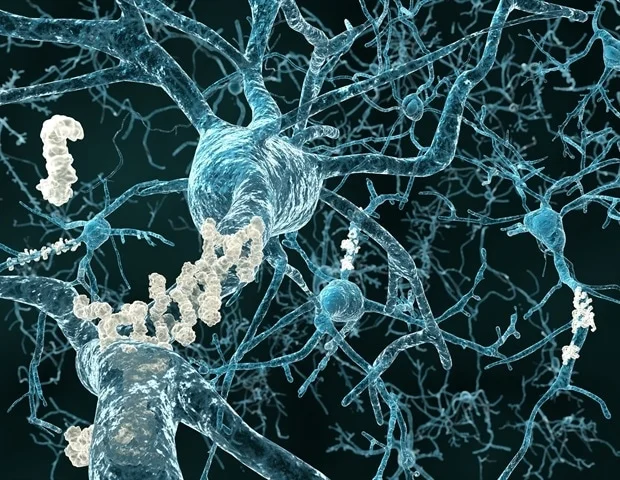
How can Alzheimer's research be made faster, better, and more effective? After decades of intensive research worldwide and despite recent therapeutic advances, scientists have not managed to fully arrest the progress of the disease.
Since launching in April, the North Texas Alzheimer's Disease Research Center (NT-ADRC) based at UT Southwestern Medical Center has quickly established the foundation needed to support cutting-edge research into Alzheimer's and related dementias.
Intermittingly inhaling a high dose of carbon dioxide seems to remove the proteins amyloid and tau, which are implicated in Alzheimer's disease, from the brain by boosting its glymphatic system
Researchers have uncovered a surprising culprit behind sleep loss in Alzheimer’s disease: the brain’s own immune cells. In mice with amyloid plaques, overactive microglia triggered inflammation that kept the brain from getting enough deep, restorative sleep. Temporarily removing most of these cells restored more than two hours of sleep per day, even though the plaques remained unchanged.
A protein called SORLA may act as a powerful defense against the toxic tau tangles involved in Alzheimer’s disease. Mice with extra SORLA had less tau accumulation, less brain atrophy, and healthier connections between neurons, while mice without it experienced more severe damage. The findings also revealed a possible drug target that could help control harmful activity in supporting brain cells.
Alzheimer’s disease is the most common cause of dementia, affecting millions of people around the world. It gradually destroys memory, thinking, and the ability to carry out everyday tasks. Although scientists have studied the disease for decades, many questions remain about exactly how it develops and how it can be slowed. Two proteins have long […] The post Clearing Amyloid Early May Slow Alzhe…
Scientists may have found a promising new way to fight Alzheimer’s disease using a natural compound found in common herbs such as rosemary and sage. Researchers at Scripps Research have developed a new, more stable form of this compound and discovered that it improved memory and reduced brain damage in mice with Alzheimer’s disease. The […] The post Rosemary-Inspired Compound May Restore Memory i…
The human brain has its own cleaning system. Every day, waste products and damaged proteins are removed to keep brain cells healthy and functioning properly. When this cleaning system breaks down, harmful materials can accumulate and damage the brain. Scientists believe this failure may play an important role in Alzheimer’s disease. Alzheimer’s disease is the […] The post Can a Copper-Based Medic…
For many years, scientists have searched for the causes of Alzheimer’s disease. Most attention has focused on abnormal protein deposits that build up inside the brain. These protein clumps are considered one of the main signs of the disease. However, a new study suggests that another process may also be involved, and it comes from […] The post Could Alzheimer’s Disease Start With Mutated Immune C…
Alzheimer’s disease (AD) is a progressive neurodegenerative disorder characterized by relentless cognitive decline. Despite decades of research dominated by the amyloid and tau hypotheses, clinical interventions targeting these classical hallmarks have yielded limited success in halting disease progression, underscoring a critical conceptual and therapeutic gap: the early, persistent, and under-a…
28bio today announced the launch of the CNS-3D Induced Alzheimer's Model, a brain organoid assay enabling researchers to evaluate whether therapeutic candidates can reduce or prevent disease progression in patients.
Two amino acids. That is all that separates the APOE2 and APOE4 versions of the apolipoprotein E gene, a difference so small it seems almost irrelevant. Yet carriers of APOE2 are dramatically more likely to reach their nineties and beyond, and they develop Alzheimer’s disease at a fraction of the rate of people who carry APOE4, which is the single largest genetic risk factor for the disease. For …
With a new model of the brain region essential to memory formation, from cells to whole-brain networks, the team hopes to identify critical changes in the progression of Alzheimer's disease that could point the way to earlier, more effective treatments.
ZHANG Nannan·Chinese Academy of Sciences Headquarters
2/25/2026
Forty-Hz auditory stimulation increased amyloid clearance markers in aged primates and produced lasting effects, supporting its potential as a non-invasive Alzheimer’s therapy. Scientists at the Kunming Institute of Zoology (KIZ) of the Chinese Academy of Sciences have shown for the first time in non-human primates that sound stimulation at 40-Hz can significantly increase β-amyloid levels [...]
Blood tests that detect a protein involved in Alzheimer’s disease could help predict the age at which the disease may strike people long before they develop symptoms, according to a new study. But questions remain about the accuracy and uncertainty of these tests, and experts caution that the assays aren’t ready for prime time.
“While the results here are encouraging, they are not yet at the leve…
Alzheimer’s disease changes everything for patients, their families, and the communities that support them. Yet even in the face of this devastating illness, there is hope through innovation, collaboration, and compassion. This conversation was inspired by Taking Care, a 38-minute documentary following the journey of acclaimed filmmakers Seth Rogen and Lauren Miller Rogen as they ...







 research.io