A feather discovered inside 66-million-year-old fossilized dinosaur poop may help explain why modern birds survived the asteroid catastrophe. The extinct bird it came from had more primitive insulating feathers, suggesting superior plumage may have helped the ancestors of living birds endure the deadly impact winter.
Star formation across the universe has fallen dramatically over the past 4.5 billion years, but astronomers have uncovered a surprising twist: the supply of neutral hydrogen, a key ingredient for making stars, has barely declined. Using China’s FAST radio telescope and data from roughly 2.5 million galaxies observed by DESI, researchers found that star formation was about 2.5 times higher 4.5 bil…
September’s sky features brilliant Venus, the Milky Way’s hazy center, and the seasonal turning point of the equinox. The month ends with a glowing Harvest Moon rising near Saturn and faint Neptune.
Elephant Butte Reservoir, New Mexico’s largest reservoir, plunged to just 1.4 percent capacity in July 2026 after years of extreme drought and record early snowmelt. The dramatic decline exposed long-submerged debris and underscored the growing strain on Rio Grande water supplies used by farms in New Mexico and Texas.
Some of the attention patterns that make ADHD challenging may also help spark creativity by allowing the brain to explore more ideas and unexpected connections. Researchers think creative activities could potentially channel this “defocused attention” while helping strengthen the brain systems involved in focus and self-control.
Sitting for long, uninterrupted stretches may carry greater health risks than sitting the same amount of time in shorter bouts. Researchers found that each extra hour of prolonged sedentary behavior was associated with a 9% higher risk of cancer death. Breaking up sitting with movement showed the opposite pattern, while replacing an hour of prolonged sitting with light activity was linked to a 12…
Brain changes associated with Alzheimer’s may begin at least seven years before amyloid plaques become detectable with current PET scans. Researchers uncovered the signal by tracking healthy older adults with repeated brain imaging over nearly 20 years. The discovery could help scientists identify Alzheimer’s earlier and suggests that important disease processes may start before visible plaque bu…
Where you live in early adulthood may quietly shape your heart health for decades. Researchers found that adverse neighborhood conditions were linked to a higher risk of coronary artery calcification in midlife, an early warning sign of cardiovascular disease.
Obesity appears to leave a molecular imprint on key immune cells that may persist for 5 to 10 years after weight loss. This long-lasting “obesity memory” could help explain why some obesity-related health risks remain elevated even after body weight returns to normal.
Scientists have created an injectable gel that can remain inside arthritic joints for weeks, slowly releasing medication while also improving lubrication. The approach could make it easier to deliver disease-modifying drugs directly where they are needed while limiting exposure elsewhere in the body.
A simple waist measurement may be nearly as effective as more complicated methods for detecting unhealthy levels of body fat. Researchers also found that BMI alone missed many people with obesity, suggesting waist size could provide an important warning sign.
Scientists have uncovered hidden complexity inside two ultrathin superconductors that seemed much simpler than they really are. Niobium diselenide and tantalum disulfide appeared to have a single superconducting state, but highly sensitive measurements revealed that each actually contains two strongly interacting states working so closely together that they masquerade as one.
Physicists have demonstrated a new way to entangle distant quantum bits without the constant measurements and active control normally required. The team created a “quantum bath,” a shared environment filled with correlated microwave photons that automatically pushes separated qubits into an entangled state and helps keep them there. The experiment confirms a theoretical prediction made more than …
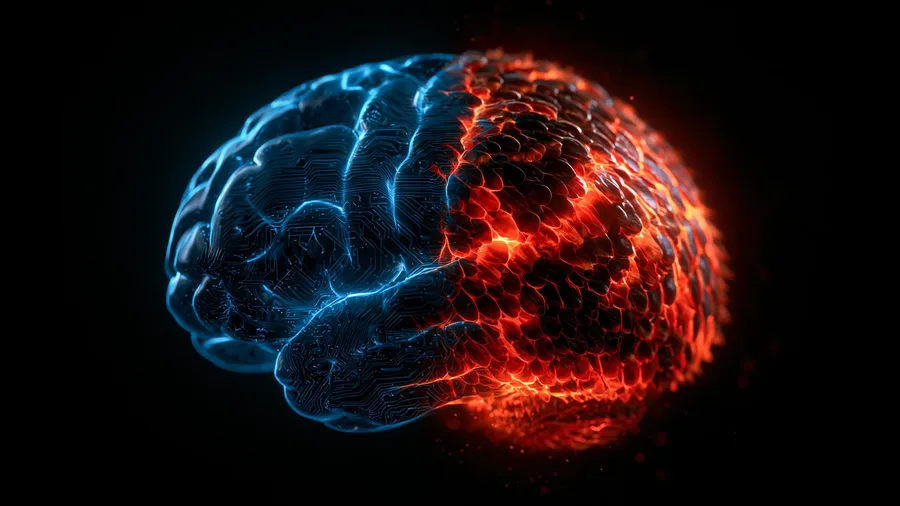
A long-standing picture of brain evolution as newer, rational layers stacked on top of an ancient “lizard brain” may be deeply misleading. Researchers found that evolution instead appears to balance two competing styles of brain wiring, expanding one while shrinking the other depending on what an animal needs to survive.
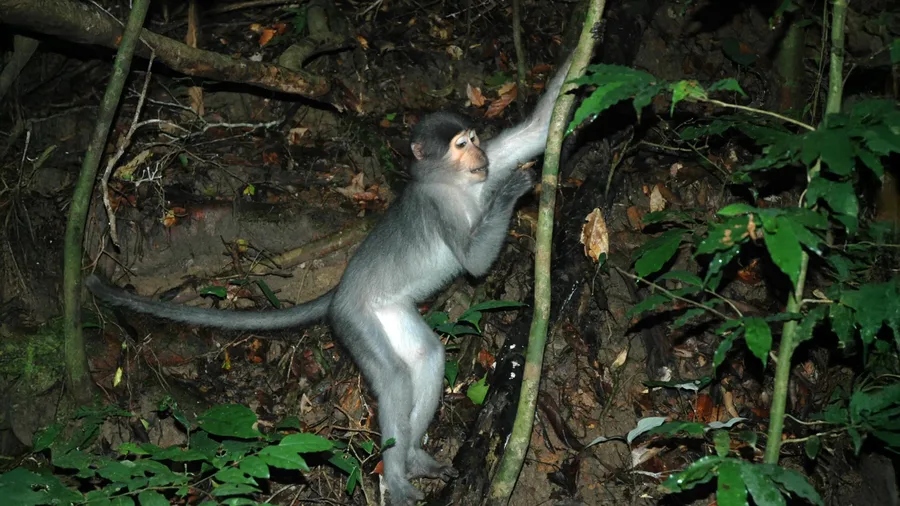
Wild monkeys in West Africa can climb vertical tree trunks using foot flexibility scientists did not realize they possessed. The discovery challenges a key assumption about what the last common ancestor of humans and chimpanzees looked like and how it moved.
Scientists have created light-activated drugs that helped blind mice perceive light again and restored visually guided behavior without gene therapy, implants, or specialized lighting. Even more intriguingly, two of the most promising compounds worked when administered as eye drops, pointing toward a potentially simple new approach to restoring vision.
NASA’s Roman Space Telescope will combine Hubble-like detail with a field of view 100 times larger, giving astronomers a sweeping new way to explore the cosmos. Its observations could uncover hidden planets, map billions of cosmic objects, and help scientists unravel the mysteries of dark matter and dark energy.
Some chimpanzees in West Africa repeatedly throw rocks at particular trees, creating piles of stones that can remain in use for more than a decade. Researchers think this unusual behavior may be cultural and could serve as a form of communication, territorial signaling, or something more symbolic. Camera traps and audio recordings are now being used to reveal who throws the stones and how nearby …
A popular vanilla flavoring in e-cigarettes may interfere with some of the earliest steps of human development. In lab experiments, vanillin caused embryonic stem cells to lose their ability to develop normally and pushed them toward forming only certain types of tissue.
A low-carb diet may raise LDL cholesterol much more sharply in people who are genetically predisposed to high cholesterol, particularly when they consume lots of saturated fat. The findings could help explain why people following seemingly similar diets can have dramatically different results.

 research.io