Spinach, almonds, and sweet potatoes are celebrated as some of the healthiest foods on the planet. But for the millions of Americans living with inflammatory bowel disease (IBD), a new study from the UNC School of Medicine suggests that these same foods may be quietly worsening gut inflammation through a compound most people have never heard of.
PurposeThis study aims to explore whether the exposure to proton pump inhibitor (PPI) is a potential independent risk factor for the development of new-onset hyperuricemia in patients who were hospitalized due to gastrointestinal bleeding, and to establish a validated clinical prediction indicator.MethodsWe conducted a retrospective cohort study involving inpatients of the gastroenterology depart…
BackgroundThe neural mechanisms underlying brain injury-induced gastric mucosal injury remain poorly defined, with conflicting evidence regarding vagal versus sympathetic dominance. This study aimed to characterize the temporal profile of gastric injury and autonomic nervous activity following subarachnoid hemorrhage (SAH), and to clarify the role of autonomic regulation in SAH-associated gastric…
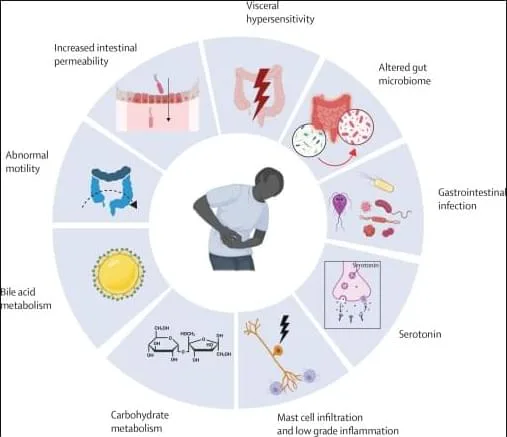
Despite the continued absence of a definitive biomarker for irritable bowel syndrome (IBS), research over the last three decades has identified a wide range of underlying pathophysiological abnormalities. Peripheral mechanisms include gastrointestinal infection, changes in the gut microbiome, visceral hypersensitivity, increased intestinal permeability, low-grade mucosal inflammation and altered …
Fatty liver disease has become a growing health problem around the world. One of its most serious forms is metabolic dysfunction-associated steatohepatitis, or MASH. In this disease, fat builds up inside the liver, causing inflammation and damage that can eventually lead to scarring, liver failure or liver cancer. Around 7% of people worldwide are believed […] The post New Drug May Repair the Gut…
Gegen Qinlian Decoction (GQD), a classic traditional Chinese medicine formula recorded in Shang Han Lun, has been used clinically for approximately two thousand years. In recent years, its potential roles in ulcerative colitis (UC) and colorectal cancer (CRC) have attracted increasing attention because of the multi-component, multi-target, and multi-pathway regulatory characteristics of tradition…
Irritable bowel syndrome, commonly called IBS, is one of the most common digestive disorders. Millions of people live with repeated stomach pain, bloating, diarrhea, constipation, or changing bowel habits that can seriously affect work, sleep, and quality of life. Despite how common the condition is, there is still no single test that can diagnose IBS […] The post Study Links Blood Fats to Irrita…
Scientists have made an important discovery that could change the way doctors understand irritable bowel syndrome (IBS), a digestive condition that affects more than one in ten people worldwide. IBS often causes repeated stomach pain, bloating, constipation, diarrhea, or a mixture of both. Although it is very common, doctors still do not fully understand why […] The post Scientists Find an Unexpe…
The $10 million donation enables Dr. Field F. Willingham to advance the growth of a division focused on innovation, research and training, building on Griffin's prior support for UHealth-University of Miami Health System.
In recent years, multiple clinical and translational studies have investigated the application and mechanisms of transcutaneous auricular vagus nerve stimulation (taVNS) in gastrointestinal disorders (GIDs), with consideration given to pathophysiology, stimulation parameters, and patient-specific factors. In this review, we systematically synthesize recent evidence from clinical trials and precli…
BackgroundPlant-Derived Exosome-Like nanoparticles (PELNs) are vital bioactive vesicles from medicinal plants, containing protective flavonoids, polyphenols, alkaloids, terpenoids, saponins, polysaccharides, and microRNAs. These compounds play crucial roles in PELNs’ anti-inflammatory and other pharmacological effects. PELNs show promise as a treatment in animal experiments for ulcerative colitis…
Liver transplantation (LT) is a critical intervention for end-stage liver disease, while complications, such as infections, graft rejection, and metabolic disturbances are common post-transplant. The gut microbiota-bile acid (GM-BA) axis plays a pivotal role in regulating liver function and overall health, influencing both the gut microbiota and bile acid metabolism. This review explored the comp…
Background and aimsFecal microbiota transplantation (FMT) has emerged as a promising therapeutic approach for ulcerative colitis (UC). This single-center retrospective cohort study evaluated the clinical effectiveness and safety of an optimized FMT protocol, in which donor bacteria were concentrated by tangential-flow micropore membrane filtration and delivered after pre-FMT antibiotic preconditi…
The Division of Gastroenterology and Hepatology at Feinberg has a distinct strength in understanding how behavior and lifestyle influence gastrointestinal (GI) health. The Division conducts research aimed at improving treatments for disorders of the digestive tract and related organs. The post Expanding the Evidence for Behavioral Interventions in Gastroenterology appeared first on News Center .
BackgroundUpadacitinib, a selective Janus kinase 1 (JAK1) inhibitor, has demonstrated efficacy in inflammatory bowel disease (IBD). However, safety data in real-world Asian populations remain limited. This study aimed to characterize the adverse event (AE) profile of upadacitinib by integrating large-scale pharmacovigilance data with real-world clinical evidence.MethodsWe conducted a dual-source …
Irritable bowel syndrome (IBS) is a common functional gastrointestinal disorder involving dysregulation of the microbiota-gut-brain (MGB) axis. Acupuncture effectively alleviates IBS symptoms, yet its underlying mechanisms remain incompletely understood. This review synthesizes current evidence to propose a mechanistic framework by which acupuncture treats IBS through MGB axis modulation. We syst…




 research.io