
antibiotics
Nature Communications, Published online: 31 July 2026; doi:10.1038/s41467-026-76186-z India is emerging as an important developer and manufacturer of antibiotics, which includes several agents that are in clinical use or advanced stages of development. Here, the authors discuss the successes, and the implications for global access to antimicrobials.
Scientists have discovered two new mechanisms for how a well-established antibiotic works, paving the way for potential development of new antibiotic treatment.

Ceftibuten is being developed in combination with the oral prodrug of avibactam. Outpatient isolates ( n = 500) from 11 US states underwent susceptibility testing with manual broth microdilution. Ceftibuten had susceptibility rates of 64% (CLSI) and 23% (EUCAST). Ceftibuten-avibactam achieved 96.4% inhibition at MIC ≤ 1 µg/mL. Susceptibility rates were as follows: cefpodoxime (2.6%), ceftriaxone …

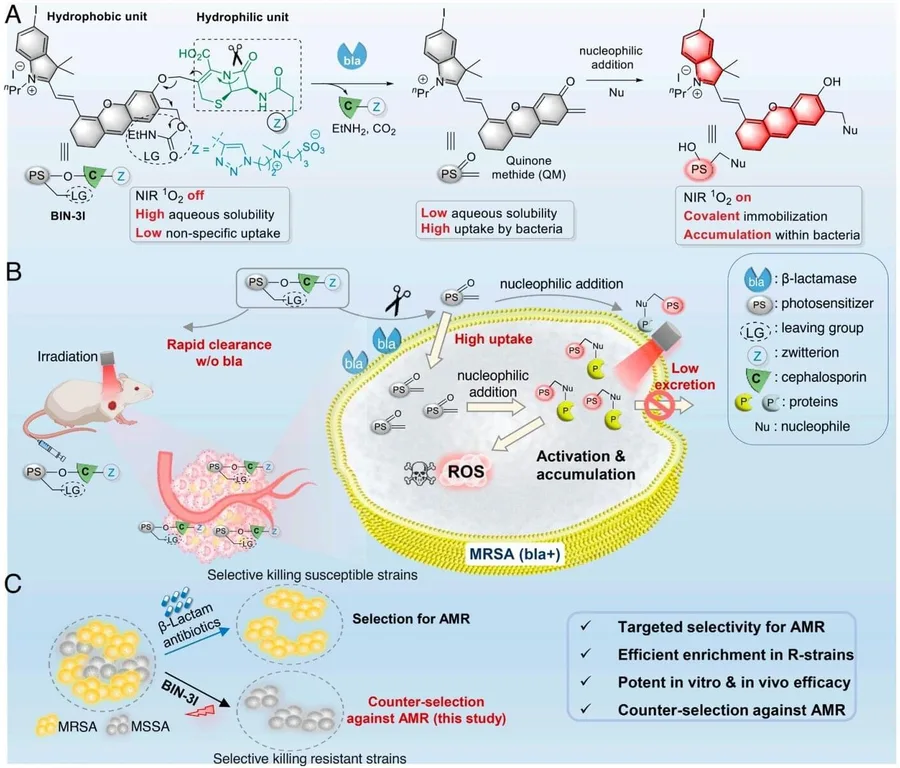
Antibiotic resistance is becoming an accelerating crisis because of the overuse and misuse of antibiotics over many years. The problem is exacerbated when antibiotics wipe out susceptible bacteria but leave resistant bacteria behind to multiply, further spreading resistance. There is an ongoing search for new treatments to fight resistant bacteria, and now researchers may have […]

In a study published in Nature today1, researchers report a ‘megacluster’ of genes in Streptomyces bacteria that target a key metabolic process in bacteria. Streptomyces is one of the most studied bacterial genera and produces many antibiotic compounds, including those used to produce streptomycin, the first effective antibiotic against tuberculosis. “They’ve discovered something new in […]

To sift through 6 million molecules in pursuit of new gonorrhea treatments, researchers trained AI to select the best drug candidate and then tested it in a "vagina on a chip."
Nature, Published online: 24 June 2026; doi:10.1038/d41586-026-01987-7 The bacterium Neisseria gonorrhoeae has evolved resistance to most antibiotics used to treat it, but a machine-learning screen reveals potential therapies.

Nature, Published online: 24 June 2026; doi:10.1038/d41586-026-01990-y Four antibiotic compounds produced in Streptomyces bacteria attack multiple parts of an essential metabolic pathway.

Nature Reviews Drug Discovery, Published online: 18 June 2026; doi:10.1038/d41573-026-00105-6 New antibiotic targets novel ribosomal site
Researchers have created a smart wound dressing that can sense when harmful bacteria are present and respond by releasing antibiotics only when needed. Biomedical engineers at Brown University have created a wound dressing that releases antibiotics only when harmful bacteria are detected. In a new study, the team found that the material may quickly eliminate [...]
Nature, Published online: 08 June 2026; doi:10.1038/d41586-026-01818-9 A suite of artificial-intelligence tools is helping to speed up the process of discovering new antibiotics.
The emergence of drug-resistant porcine enterotoxigenic Escherichia coli (ETEC) necessitates the exploration of alternative antibacterial approaches. Two lytic bacteriophages, PES-1 and PES-2, have been isolated and characterized to control ETEC. PES-1 exhibited a wide host range, lysing five ETEC strains, whereas PES-2 displayed restricted specificity, impacting only one of the seven strains. Bo…
A newly developed antibiotic called EVG7 could offer a powerful new way to stop Clostridioides difficile, a dangerous gut bacterium that often returns after treatment. In mouse studies, researchers found that even a very small dose of EVG7 was highly effective at clearing the infection and preventing it from coming back. Unlike many current antibiotics, which wipe out large portions of the gut mi…
The Guide to Pharmacology have been collaborating with AntibioticDB (https://www.antibioticdb.com; ADB) since 2019, with the aim of extending the coverage of antibacterial compounds in GtoPdb and providing comprehensive chemistry and pharmacology for selected antibacterials curated with ADB. The collaboration has been supported more recently by the Global Antibiotic Research and Development Partn…
Antibiotic resistance is racing toward a global crisis, with “superbugs” projected to cause over 10 million deaths annually by 2050. Now, scientists at UC San Diego have unveiled a powerful new CRISPR-based tool that doesn’t just fight resistant bacteria—it can actively strip away their drug resistance. Inspired by gene drives used in insects, the technology spreads a genetic “fix” through bacter…
Antibiotics are essential tools in modern medicine. They treat bacterial infections by killing harmful bacteria or making it harder for them to grow and multiply. Whether it be for […] Van Andel Institute - Van Andel Institute transforms human health through groundbreaking biomedical research and cutting-edge science education.
FEBRUARY 10, 2025 — Undergraduates at UTSA are tackling the growing antibiotic resistance crisis as part of a microbiology course studying soil samples. The U.S. Centers for Disease Control and Prevention describes antimicrobial resistance as “one of the world’s most urgent public health problems.” It occurs as pathogens develop defense mechanisms against common antibiotic medications. According …

research.ioSign up to keep scrolling
Create your feed subscriptions, save articles, keep scrolling.