advanced-neural-network-applications
Physical exercise is known to improve mental health. A new study reveals that a muscle-released protein called apelin travels to the brain during exercise, promoting neuron growth and alleviating depression.
A new study of retired athletes found that repetitive head trauma can lead to a "leaky" blood-brain barrier. This long-lasting damage allows immune cells to enter the brain, causing persistent inflammation and accelerating cognitive decline.
A large-scale study suggests that men with higher levels of the amino acid tyrosine may have shorter lifespans, potentially losing close to a year of life expectancy. The finding is especially intriguing because tyrosine is commonly associated with brain health and is often used in supplements aimed at boosting focus and performance.

Are we finally on the right track to understand our consciousness?
New research finds that high psychopathic personality traits are associated with a thinner outer layer of the brain in specific regions. This structural brain pattern was identical in men convicted of domestic violence and non-violent men.
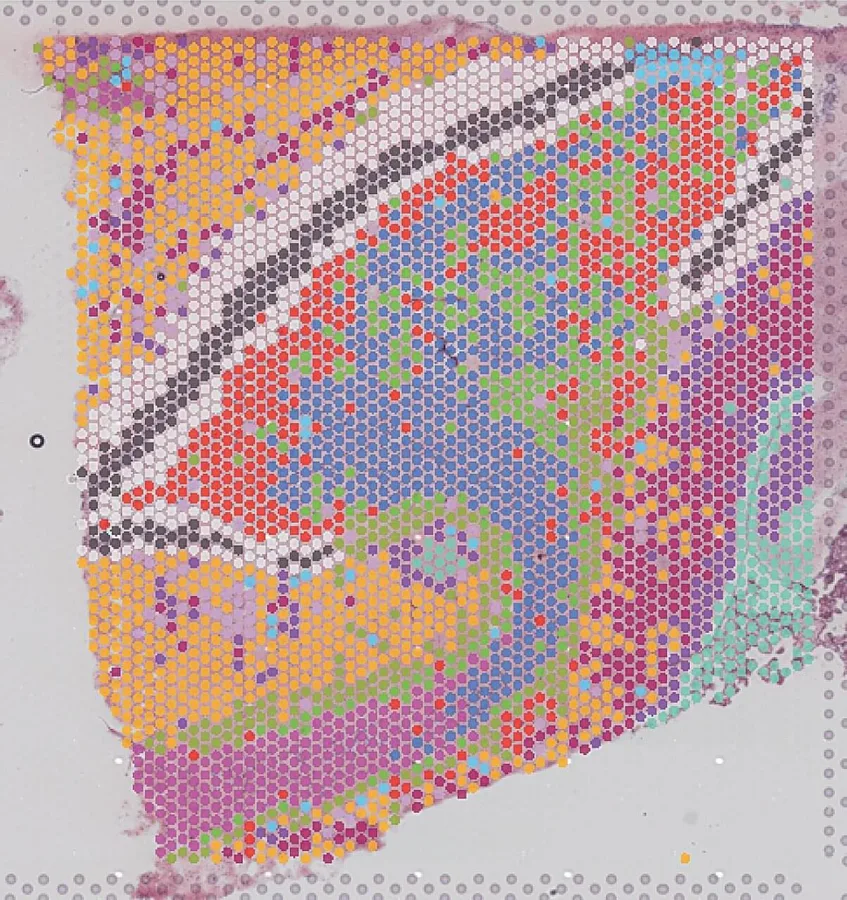
The foreign body reaction to implanted electrodes in the brain has long been recognized as a major challenge impacting the performance and reliability of indwelling neurotechnologies. Spatially resolved transcriptomic approaches have enabled high-resolution mapping of cellular and molecular dynamics at the device-tissue interface, yielding novel insight into both acute and chronic tissue response…
IntroductionCortical and subcortical alterations in brain intrinsic function have been widely reported in Parkinson’s disease (PD). However, sex differences in brain intrinsic function in PD are poorly understood. This study aimed to examine sex differences in spontaneous brain intrinsic function in PD and their associations with neuropsychological measurements.MethodsUsing Parkinson’s Progressio…
Nature Medicine, Published online: 15 June 2026; doi:10.1038/s41591-026-04432-4 Neural decoding algorithms that leverage physiological principles of locomotor encoding support activity-dependent deep brain stimulation therapies that improve locomotor deficits in people with Parkinson’s disease.
Nature Medicine, Published online: 15 June 2026; doi:10.1038/s41591-026-04434-2 A randomized crossover study shows that gait-phase-synchronized adaptive deep brain stimulation is feasible and safe, and reduces falls compared to continuous stimulation in Parkinson’s disease.

UC San Francisco researchers have developed a new form of deep brain stimulation (DBS) that adjusts in real time as a person walks, helping improve gait and reduce falls in people with Parkinson's disease. The study demonstrates for the first time that an implanted brain stimulator can detect neural signals associated with each step and automatically adjust stimulation within fractions of a secon…
Scientific Reports, Published online: 15 June 2026; doi:10.1038/s41598-026-57930-3 Accurately modeling resting-brain functional connectivity using hypergraph neural field-Fourier deep neural network
Cognitive neuroscientists typically posit representations that relate to various aspects of the world, which philosophers call representational content. Anti-realists about representational content argue that contents play no role in neuroscientific explanations of cognitive capacities. In this paper, I defend realism against an anti-realist argument due to Frances Egan, who argues that for conte…
Conflict adaptation refers to the adjustment of cognitive control to reduce interference on subsequent trials. Its neural mechanisms are often studied by assessing the congruence sequence effect (CSE) in face–word Stroop tasks during neuroimaging. The present behavioral study aimed to address two key methodological issues when aiming to translate standard response conflict tasks into fMRI setting…
A new study uses eye-tracking and EEG to uncover the linguistic brain waves programmers produce when reading confusing code.
Early and accurate detection of Alzheimer's disease (AD) from Magnetic Resonance Imaging (MRI) scans is crucial for clinical intervention. A novel S3Net, a Synthesis–Segmentation–Spiking Network, is proposed for this purpose. It integrates synthetic MRI generation, pathology-aware segmentation, and spike-based classification. The Synthesis Network uses a generative adversarial network framework. …
IntroductionAlzheimer’s disease (AD) is responsible for many dementia-related deaths worldwide, and Mild Cognitive Impairment (MCI) is often its earliest clinical manifestation. Early detection of MCI is essential to initiate timely interventions that can slow progression and improve the patient’s quality of life. The emergence of diffusion tensor imaging (DTI) has made it a powerful neuroimaging…
Nature Communications, Published online: 15 June 2026; doi:10.1038/s41467-026-74228-0 Neural mechanisms underlying rhythmic motor behaviors are not fully understood. Here authors propose a theory of how the nervous system generates and controls walking, which entails a spatial layout of spinal nerve cells that form longitudinal connectivity patterns of a ‘Mexican hat’, i.e. local excitation and l…
Multisensory integration differences have been reported in individuals with Autism Spectrum Disorder (ASD) and Attention-Deficit/Hyperactivity Disorder (ADHD), yet little is known about how these traits may jointly influence multisensory processing. Given the high comorbidity between ASD and ADHD, examining their individual and combined effects is critical for understanding sensory integration in…
Researchers at the Monell Chemical Senses Center found that common dietary sugars fructose and glucose, despite having the same amount of calories, communicate with the brain through different gut-brain pathways, a difference that may help shape our food and beverage preferences. In mice, the team i...
research.ioSign up to keep scrolling
Create your feed subscriptions, save articles, keep scrolling.