sociocultural-evolution

The Guardian

This corrective to our habitual emphasis on competition had me writing ‘wow’ in the margins again and again When Charles Darwin published On the Origin of Species in 1859, the Industrial Revolution and British colonialism were in the ascendant. Charles Dickens had published Hard Times five years earlier; Queen Victoria nominally ruled a fifth of the world’s population. Darwin, writes science writ…

biologyecologyevolution
Frontiers in Veterinary Science | New and Recent Articles

Hibernation is a specialized adaptive energy-saving survival strategy evolved by animals to withstand winter cold stress and food scarcity. Its core feature lies in profound metabolic suppression, characterized by a drastic reduction in metabolic rate during hibernation, accompanied by the coordinated downregulation of multiple physiological functions such as body temperature, heart rate, and res…

biologyecologyevolution
Sci.News: Breaking Science News

Two elusive groups of millipedes, Siphoniulida and Siphonocryptida, were the last missing pieces in the evolutionary history of Earth’s oldest land animals, according to a team of entomologists led by Virginia Tech. The post Entomologists Reconstruct Evolutionary History of Millipedes appeared first on Sci.News: Breaking Science News .

biologyentomologyevolution
Biological sciences : Scientific Reports subject feeds
Scientific American
Knowridge Science Report

For millions of years, some of Earth’s earliest animals barely changed. They lived, grew, and spread across the seafloor, but evolution seemed stuck in slow motion. Now, a new study suggests that the reason may have been surprisingly simple: these ancient creatures were reproducing without sex. Researchers from the University of Cambridge have found evidence […] The post A lack of sex may have de…

biologyevolutionmarine-biology
Botany News -- ScienceDaily

Millipedes may have been crawling across Earth's landscapes nearly 460 million years ago, long before vertebrates ventured onto land. A new study finally completes their evolutionary family tree, revealing surprising clues about these ancient ecosystem engineers and their early chemical defenses.

biologyevolutionpaleontology
Latest Science News -- ScienceDaily

Ancient encounters between humans and the mysterious Denisovans are still shaping people today. By analyzing genomes from populations across the Pacific, researchers uncovered evidence that the ancestors of Near Oceanians interbred with at least three different Denisovan groups, leaving behind genetic variants that remain active in modern humans.

biologyevolutiongenetics
Biological sciences : Scientific Reports subject feeds
Nature Communications
Latest Science News -- ScienceDaily

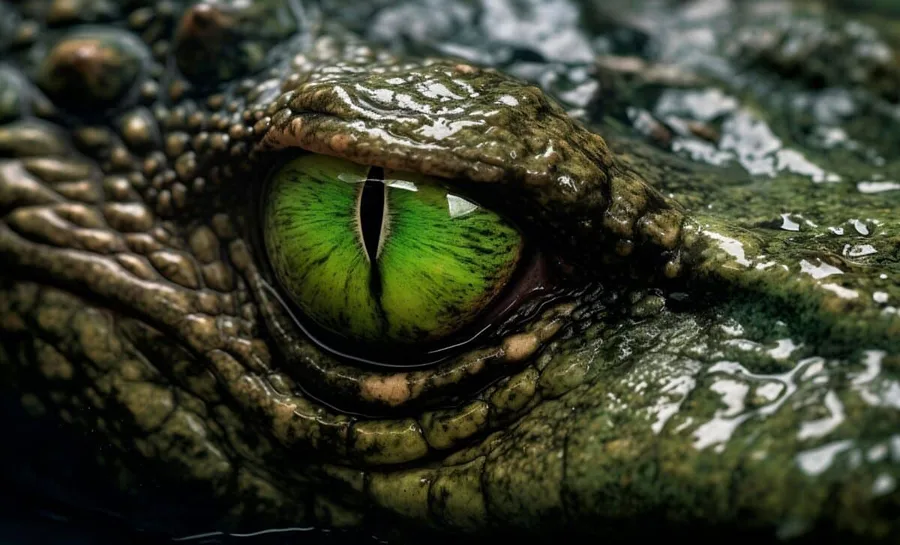
A newly identified crocodile species nicknamed “Lucy’s hunter” prowled Ethiopia’s rivers when Lucy’s species walked the Earth more than 3 million years ago. The giant predator was likely the most dangerous animal in the ecosystem and may have regularly hunted early human relatives.

biologyevolutionpaleontology
Nature Communications

Nature Communications, Published online: 13 June 2026; doi:10.1038/s41467-026-74074-0 Researchers use evolutionary game theory and human embryoids to show that competitive cell killing, though costly to individual cells, is a strategic behavior to maintain embryo size — suggesting competition underpins embryonic cooperation.

biologydevelopmental-biologyevolution
SciTechDaily

Rare charcoal fragments from an ancient lakeshore campsite are offering new clues about fire use, resource management, and the environmental knowledge of some of humanity’s earliest fire users. Long before cities, farms, or written language existed, some of humanity’s ancestors had already discovered a resource that would transform the course of human evolution: fire. But [...]

biodiversitybiologyenvironmentevolutionsustainability
SciTechDaily

A new study suggests evolution stayed stuck for millions of years until sexual reproduction helped unleash a burst of biodiversity. New research suggests that the earliest animals on Earth may have unintentionally slowed the pace of evolution for millions of years. Scientists have found that their reliance on asexual reproduction limited competition and reduced the [...]

biologyevolution
Lifeboat News: The Blog

The search for “alien” intelligences isn’t only looking to outer space: some biologists are convinced that weird and wonderful forms of intelligence already exist right here on earth, and that they hold the key to understanding intelligence itself. In the first of a two part series, Michael Levin tries to shake us out of any […]

bioinformaticsbiologyevolution
Google News Content : ScienceAlert : The Best in Science News and Amazing Breakthroughs
Biological sciences : Scientific Reports subject feeds
Lifeboat News: The Blog

A new Yale-led study provides one of the most detailed and comprehensive analyses to date of genetic variation in human populations in Oceania, filling a major gap in representation in genomics research. Despite harboring remarkable diversity, populations in this vast region in the South Pacific historically have been overlooked in global human genetic studies, which […]

biologyevolutiongenetics
Newswise: Latest News

A Virginia Tech-led team of international scientists has solved one of the last major mysteries in millipede evolution, revealing new clues about a group of animals that helped pave the way for life on land. The findings, published in Current Biology, complete the first evolutionary history of all living millipede orders. By combining genomic data from living species with morphological evidence f…

biologyevolutiongeneticspaleontology
research.ioresearch.io

Sign up to keep scrolling

Create your feed subscriptions, save articles, keep scrolling.

Already have an account?