On 23 August, it will be 100 days since the Bundibugyo strain was first reported. How did it became the DRC’s most deadly outbreak and what must be done to stop it becoming the world’s largest? Almost 100 days ago, Africa’s public health watchdog reported an outbreak of Ebola in the Democratic Republic of the Congo. There have now been almost 5,000 cases and more than 2,000 deaths since 15 May, m…
The TV presenter and author on the evolutionary biologists who inspired her, the genius of George Eliot – and fun with Frog and Toad My earliest reading memory The first books I remember were from The Village with Three Corners series Sheila K McCullagh. I loved the – literally – colourful characters, like Johnny Yellow Hat. I was reading with my Grandma, in her garden perhaps, sitting on a small…
Decade-long study finds stark gender difference in outcomes of people with heart disease Millions of men with heart disease have a higher risk of developing and dying from cancer, according to a decades-long study. The biggest drivers behind male cases were smoking, obesity and drinking too much alcohol, researchers said, with the link most pronounced in lung and oesophageal cancers. Continue rea…
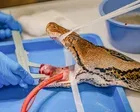
Chester zoo resident, 23, ‘back to her usual feisty self’ after electrochemotherapy for tumour in her jaw A 15ft (4.5-metre) python is believed to be the first snake in the world to be given a pioneering, life-saving cancer treatment normally used on humans. The 50kg reticulated python, named Jodie Foster after the Hollywood star, has just turned 23 and lives at Chester zoo. Keepers first became …
Presented by Madeleine Finlay·...·Joshan Chana and Jacob Liebenberg . The executive producer was Ellie Bury
2d ago
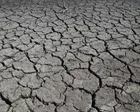
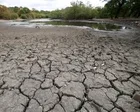
After a summer that has seen England and Wales experience the driest July since records began, rain is finally on the horizon. But with reservoirs at ‘exceptionally low’ levels, will there be enough rain to replenish stocks? Madeleine Finlay hears from Dr Anna Murgatroyd, a lecturer in hydrology at Newcastle University, about how much rain we need to see us through next summer, why we’re now at i…
Channel 4’s programme wastes a chance to ask important questions about how ADHD is diagnosed and treated, instead indulging in unscientific methods and conspiracy theories When Channel 4 announced that it would air a documentary titled The Great ADHD Myth?, an outpouring of fury followed. Despite this, I set out to approach it as a scientist – not just as a scientist whose own work has dealt with…
A selection of winning images from DarkSky International’s 2026 Capture the Dark photography contest. It is the sixth edition of the annual night-time photography competition, which drew 2,288 submissions from 30 countries Continue reading...
Presented and produced by Madeleine Finlay·...·the executive producer was Ellie Bury
2d ago
After a summer that has seen England and Wales experience the driest July since records began, rain is finally on the horizon. But with reservoirs at ‘exceptionally low’ levels, will there be enough rain to replenish stocks? Madeleine Finlay hears from Dr Anna Murgatroyd, a lecturer in hydrology at Newcastle University, about how much rain we need to see us through next summer, why we’re now at i…
Nooks and crannies in urban areas provide a welcome alternative to intensive farming and other rural pressures Wildflowers are having a rough time in the countryside, mostly from the onslaught of intensive farming with fertilisers, pesticides and herbicides and less grazing. On top of that, there are building developments, competition from invasive plant species and the climate crisis to contend …
Footage streamed by SpaceX shows the moment Elon Musk’s 52-metre Starship Flight 13 landed in the Indian Ocean west of Australia. The rocket landed in the ocean on 24 July. Nearly four weeks later, it was recovered off the coast of Christmas Island Continue reading...
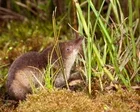
Study of long-clawed shrew skulls from Japan shows that while skulls get smaller in winter, snouts elongate Humans turn to heated blankets and fluffy socks to cope with winter, but long-clawed shrews have a very different adaptation: they increase the size of their snouts. Researchers have previously discovered that certain small mammals, including the common shrew and European mole , reversibly …
Cedric Lodge, 58, sentenced in December to eight years in prison for stealing and selling body parts in national scheme Harvard University has agreed to pay a $53m settlement to resolve civil lawsuits stemming from the illegal theft and sale of human remains that had been donated to its medical school for scientific research. A former Harvard medical school morgue manager, Cedric Lodge, 58, was s…
Presented and produced by Madeleine Finlay·...·the executive producer was Ellie Bury
4d ago
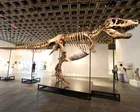
One of the UK’s best fossil collections has been sold overseas in what experts have called a loss to the nation. The collection, which is now on display at the Natural History Museum in Abu Dhabi, was gathered on Dorset’s Jurassic Coast. As dinosaur fossils sell to private collectors for increasingly large sums, scientists are worried that domestic museums are being priced out of the market, and …
The solution to today’s puzzle Earlier today I set you a new twist on the Monty Hall problem, which is (according to AI) the most discussed recreational maths puzzle in history. The standard Monty Hall problem is as follows: Continue reading...
Take this puzzle by the horns Today’s puzzle is a new twist on The Monty Hall problem, arguably the greatest maths puzzle of all time. (According to Gemini, who trawled the internet for me, it is the most discussed and debated recreational maths puzzle of all time.) Continue reading...
Lyra, the lyre, represents the harp played by the Greek poet Orpheus We turn our attention this week to one of the sky’s smallest constellations. High overhead from the UK after darkness falls, Lyra, the lyre, is easy to find thanks to the brilliant white star of Vega. The chart shows the view facing south and looking up towards the zenith from London at 22:30 BST on 17 August. Continue reading...
Sale of one of UK’s top collections overseas prompts call new rules to help keep items in country One of UK’s best fossil collections sold in ‘loss to the nation’ An MP has called on ministers to change export controls so that significant fossils can be classed as national treasures after one of the UK’s best collections, unearthed on Dorset beaches, was sold overseas. Last week, a Guardian inve…
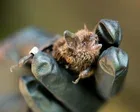
Bat experts were shocked at how fast white-nose syndrome had spread to Canada’s northernmost colonies from the US. Now, the race is on to find a cure before species disappear Crawling through a narrow passage in a cave beneath a boreal forest near Fort Smith in Canada’s Northwest Territories in May, two biologists spotted a lifeless bat on a limestone ledge, its body covered in a spindly white fu…
Each year the Guardian runs a competition to find the invertebrate of the year. To find out more about the 2026 nominees science editor Ian Sample hears from climate reporter Petra Stock, environment reporter Oliver Milman and Science Weekly co-host Madeleine Finlay. They each nominate an incredible invertebrate that you might never have heard of, and argue why their choice should be crowned the …
Sarah Ann Harris·Mathilde Poncet and Augusta Anthony
11d ago
On August 12, the moon will pass in front of the sun, completely obscuring it in a solar eclipse. According to Nasa, parts of Greenland, Iceland, Spain, Russia and Portugal will experience a total solar eclipse. In the UK, there will be a partial eclipse, with up to 96% of the sun covered, the deepest eclipse the country has seen since 1999. But no matter where you’re hoping to watch from, it’s i…



 research.io