Researchers at the U.S. Department of Energy's (DOE) Brookhaven National Laboratory and the State University of New York at Stony Brook (Stony Brook University) have successfully transmitted light particles containing quantum information through open air between the two institutions. This is the first demonstration of its kind in the United States and a key milestone toward extending the nation's…
Researchers at Graz University of Technology (TU Graz) have shown that deliberately introduced defects in a crystal lattice can activate a previously blocked transport pathway for lithium ions in the battery material lithium titanate.
Researchers at the FAMU-FSU College of Engineering and the Florida State University-headquartered National High Magnetic Field Laboratory have designed new quantum computing architecture that uses magnetic levitation to smooth over design flaws in the intricate bits necessary to run a quantum computer. Quantum bits, or qubits, can be as small as a few nanometers, and manufacturing them inevitably…
Red blood cells serve as the foundation for nanocarriers that show promise in a new study as effective and efficient vehicles for gene therapy, tumor targeting and other medical treatments.
Targeted radionuclide therapy has great potential for developing cancer treatments. One approach is to combine a radioisotope with a nanoparticle that transports it to the tumor. Scientists produced a layered nanoparticle that strongly binds the radioisotope to itself and delivers it to the target.
Recently published research from a team led by scientists at Argonne National Laboratory demonstrates how a hybrid of biological components and technology can be used to efficiently produce hydrogen peroxide and other chemicals.
Researchers from the RIKEN Center for Sustainable Resource Science (CSRS) and RIKEN Pioneering Research Institute (PRI) in Japan together with collaborators from the University of Munster, Germany, have developed a new hydrogel that offers significant advantages over others currently on the market in the field of biomaterials. Based on a single synthetic peptide called FQ(Pyr), the new hydrogel h…
The use of nanoparticles in drug delivery offers key advantages: They can enable targeted drug delivery, protect active ingredients from premature degradation, extend their duration of action in the body and reduce side effects.
Scientists have identified a geometric rule that governs how nanoscale magnets are arranged and how they relax toward stable states -- an advancement that could enable computing devices that use far less energy than conventional electronics.
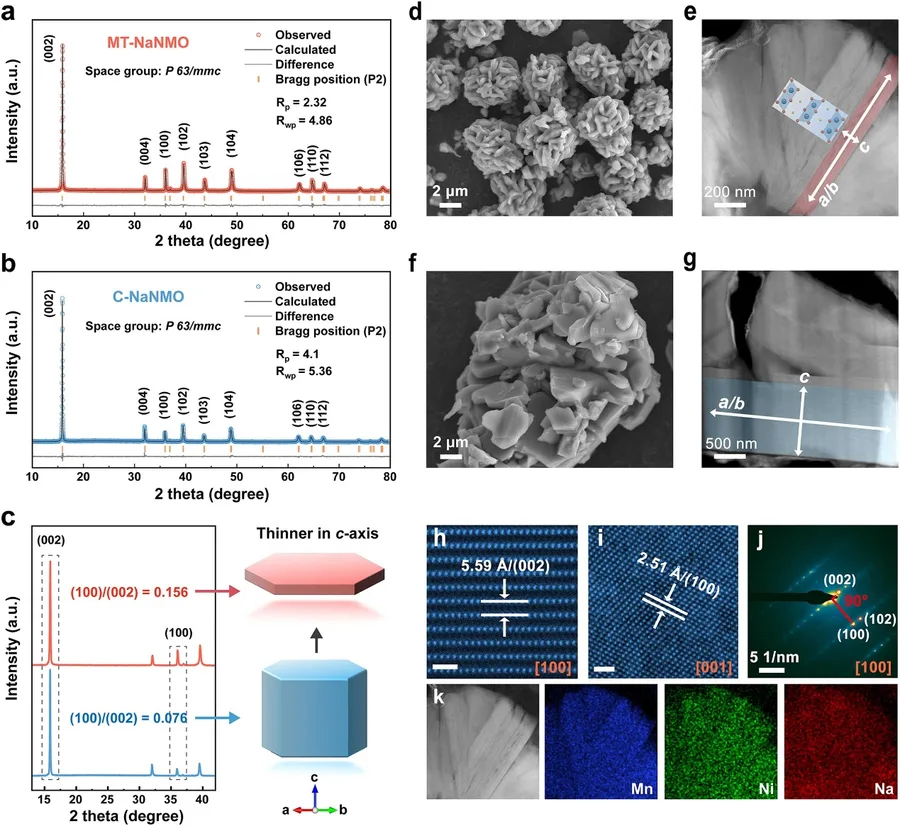
Layered oxide cathodes are among the most promising materials for sodium-ion batteries (SIBs), but their internal grains can crack as sodium ions repeatedly move in and out during cycling. A new study shows that this failure can be reduced by reshaping the crystal grains rather than only changing chemical composition. By tailoring the c-axis dimension of P2-Na0.75Ni0.25Mn0.75O2, the researchers c…
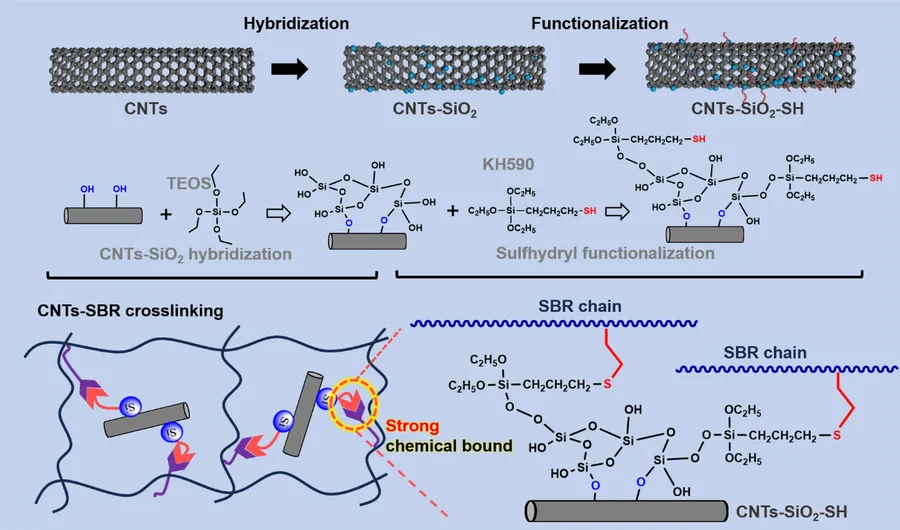
Using a dual-modification strategy of in-situ silica and mercaptosilane alongside a covalent co-vulcanization network, the study constructs ultra-durable carbon nanotube strain sensors. This design effectively suppresses filler secondary agglomeration.
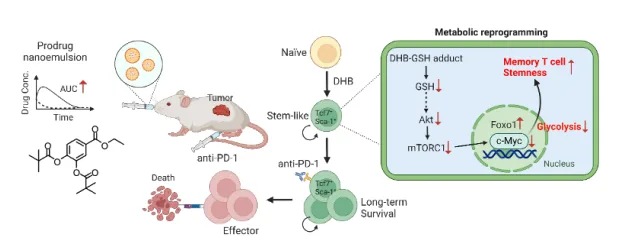
Engineered a DHB prodrug-based oral nano-emulsion with enhanced bioavailability, dramatically improving the efficacy of immune checkpoint blockade therapy
Argonne's DONUT, a machine learning tool, delivers real-time X-ray data analysis at the Advanced Photon Source, giving scientists faster insights into material structures and accelerating discovery in advanced materials research.
Researchers at the Department of Energy's (DOE) Oak Ridge National Laboratory (ORNL) and the University of Tennessee (UT), Knoxville, have made a scientific advance by using a natural substance from fungi, called chitin, to create hydrogels that are both significantly stronger and tougher. This new material could lead to safer medical devices, longer-lasting coatings and other innovations that im…
Researchers at JGU have visualized the interaction of magnetic vortices and shown that antiferromagnetic skyrmions move in line with an applied current
Rigoberto "Gobet" Advincula, a Governor's Chair Professor jointly appointed at the Department of Energy's Oak Ridge National Laboratory and the University of Tennessee, has been named a 2026 Fellow of the American Chemical Society's Industrial & Engineering Chemistry Division.
Spatial light modulators in the terahertz (THz) band have lagged behind their visible and near-infrared counterparts, despite growing demands for miniaturized, integrable, and multifunctional THz systems. This raises the question of how to realize optically addressed phase-type THz modulators with efficient, independent pixel-level programmability. Researchers propose a compact VO₂-based programm…
Most sensors are designed to do only one thing: detect what passes through them. But what if a sensor could do more? To create a new generation of technology, researchers have looked at living systems for inspiration.
research.io
Sign up to keep scrolling
Create your feed subscriptions, save articles, keep scrolling.

















 research.io