The familiar fight between “mind as software” and “mind as biology” may be a false choice. This work proposes biological computationalism: the idea that brains compute, but not in the abstract, symbol-shuffling way we usually imagine. Instead, computation is inseparable from the brain’s physical structure, energy constraints, and continuous dynamics. That reframes consciousness as something that …
Deep-brain recordings showed that Mounjaro and Zepbound briefly shut down the craving circuits linked to food noise in a patient with severe obesity. Her obsessive thoughts about food disappeared as the medication quieted the nucleus accumbens, the brain’s reward hub.
Scientists discovered that more muscle and less hidden abdominal fat are linked to a younger biological brain age. Deep visceral fat appeared to accelerate brain aging, while muscle mass offered a protective effect.
Researchers have discovered that ADHD’s hallmark mind wandering might actually boost creativity. People who deliberately let their thoughts drift scored higher on creative tests in two large studies. The findings hint that mindful management of mental drift could turn ADHD’s challenges into creative strengths.
A groundbreaking wireless implant promises real-time, personalized pain relief using AI and ultrasound power no batteries, no wires, and no opioids. Designed by USC and UCLA engineers, it reads brain signals, adapts on the fly, and bends naturally with your spine.
Researchers have created a hairlike device for long-term, non-invasive monitoring of the brain's electrical activity. The lightweight and flexible electrode attaches directly to the scalp and delivers stable, high-quality electroencephalography (EEG) recordings.
While exploring a digitally represented object through artificially created sense of touch, brain-computer interface users described the warm fur of a purring cat, the smooth rigid surface of a door key and cool roundness of an apple.
Mind blanking is a common experience with a wide variety of definitions ranging from feeling 'drowsy' to 'a complete absence of conscious awareness.' Neuroscientists and philosophers compile what we know about mind blanking, including insights from their own work observing people's brain activity.
A team has developed a soft, thin-film ABI. The device uses micrometer-scale platinum electrodes embedded in silicone, forming a pliable array just a fraction of a millimeter thick. This novel approach enables better tissue contact, potentially preventing off-target nerve activation and reducing side effects.
A new study by neuroscientists shows that our brain deals with different forms of visual uncertainty during movements in distinct ways. Depending on the type of uncertainty, planning and execution of movements in the brain are affected differently. These findings could help to optimize brain-computer interfaces that, for example, help people with paralysis to control prostheses or computers with …
A new study has discovered what researchers say is the first drug to fully reproduce the effects of physical stroke rehabilitation in model mice, following from human studies.
Scientists have developed an approach that combines rehabilitation robotics with spinal cord stimulation to restore movement in people with spinal cord injuries. The technology enhances rehabilitation and enables activities like cycling and walking outdoors.
Researchers have enabled a man who is paralyzed to control a robotic arm through a device that relays signals from his brain to a computer. He was able to grasp, move and drop objects just by imagining himself performing the actions.
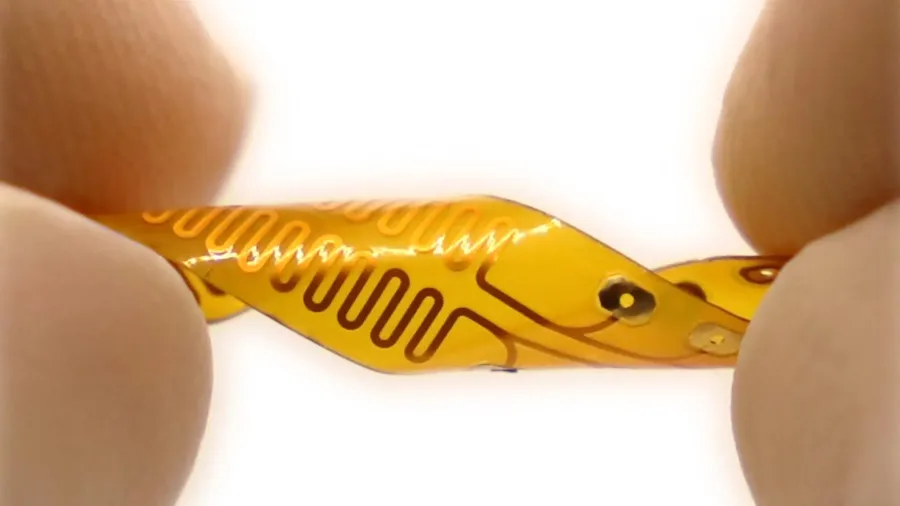
A research team has developed a three-dimensional neural electrode that deforms smoothly using soft actuation technology. It is expected to be used in various next-generation soft bioelectronic devices, including electroceuticals for peripheral nerve treatment.
Researchers have mapped and catalogued more than 70,000 synaptic connections from about 2,000 rat neurons, using a silicon chip capable of recording small yet telltale synaptic signals from a large number of neurons. The research is a major advance in neuronal recording and may help bring scientists a step closer to drawing a detailed synaptic connection map of the brain.
Doctors could soon reduce epilepsy misdiagnoses by up to 70% using a new tool that turns routine electroencephalogram, or EEG, tests that appear normal into highly accurate epilepsy predictors, a study has found.
Two new articles document progress in neuroprosthetic technology that lets people feel the shape and movement of objects moving over the 'skin' of a bionic hand.
Neural implants contain integrated circuits (ICs) -- commonly called chips -- built on silicon. These implants need to be small and flexible to mimic circumstances inside the human body. However, the environment within the body is corrosive, which raises concerns about the durability of implantable silicon ICs. A team of researchers address this challenge by studying the degradation mechanisms of…
A team of neuroscientists investigates communication pathways in the brain and predicts intelligence. A new study approach uses machine learning to improve our conceptual understanding of intelligence.

















 research.io