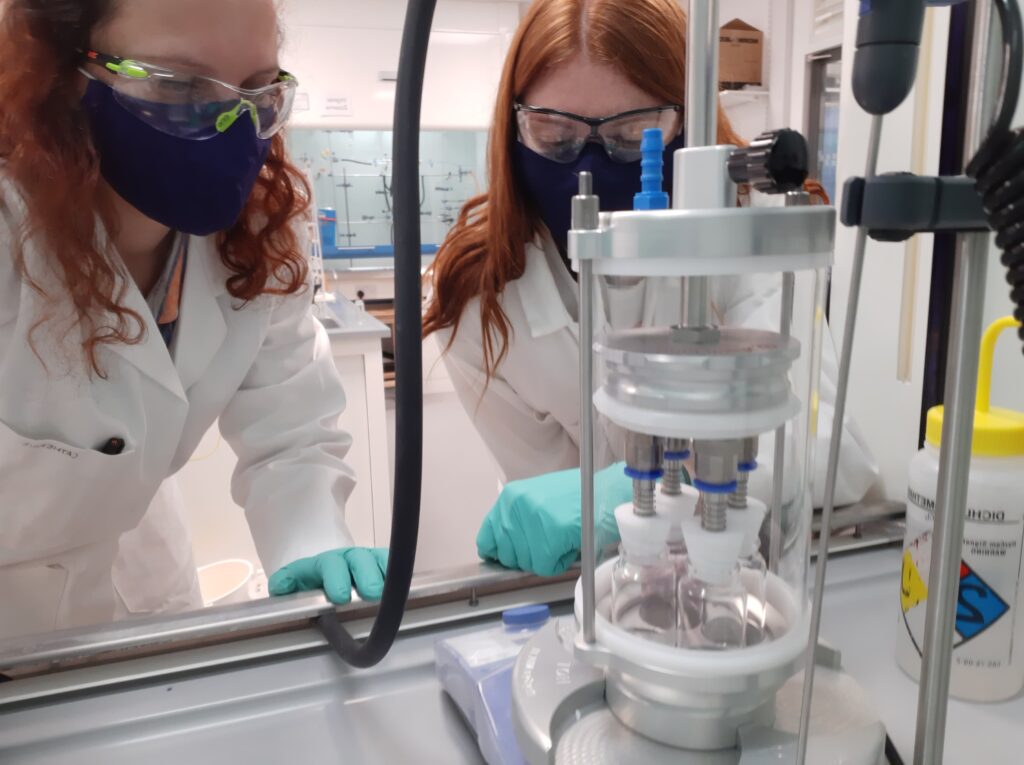
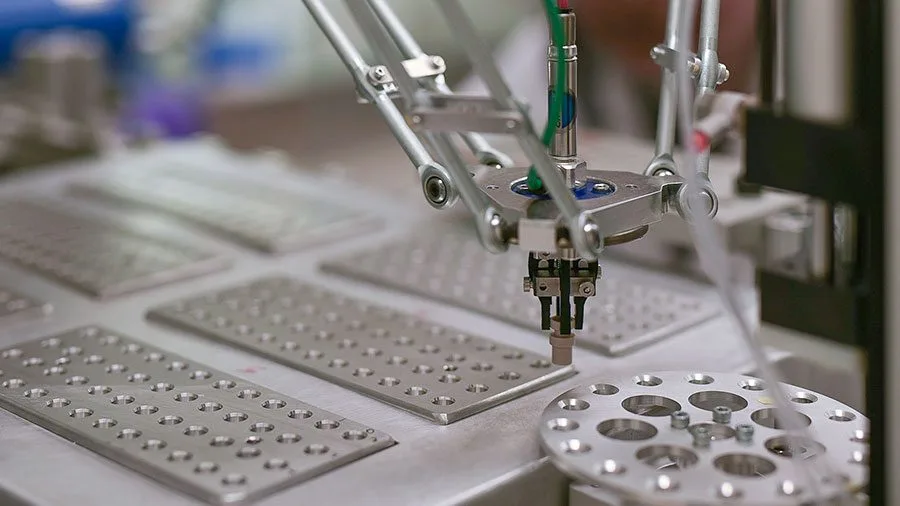
SRI - A global leader in R&D with deep roots in Silicon Valley. An AI-powered synthetic chemistry platform helps biopharma companies bring new molecules to market faster. The post Case study: AI brings new molecules to market faster with SynFini appeared first on SRI .
Nature Communications, Published online: 25 July 2026; doi:10.1038/s41467-026-75992-9 Developing methods that enable single-atom exchange within an aromatic scaffold, while preserving its peripheral substitution, represents an important but highly ambitious goal in synthesis. Here the authors present a boron-to-carbon swapping reaction via a substituent-rebound process, converting 1,2-benzazabori…
Nature Chemistry, Published online: 14 July 2026; doi:10.1038/s41557-026-02204-8 Although phenols are abundant and widely useful synthetic feedstocks, selective remodelling of their aromatic skeletons remains elusive, limiting access to broad regions of chemical space. Now it has been shown that a programmable nitrogenative arene ring-opening methodology enables phenol diversification, forming va…
Nature Communications, Published online: 08 July 2026; doi:10.1038/s41467-026-75338-5 Cycloaddition reactions enable rapid assembly of cyclic molecular frameworks, yet precise control of single-atom bridged variants remains challenging. Here, the authors report a metal-free selenium-atom transfer [3+2+1] heterocycloaddition that efficiently constructs diverse selenium–nitrogen heterocycles.
First-year Ph.D. student Adriana Zayia has been awarded the highly competitive National Defense Science and Engineering Graduate (NDSEG) Fellowship, securing three years of support for her doctoral research in synthetic chemistry. The post Graduate Student Adriana Zayia Awarded Prestigious NDSEG Fellowship appeared first on Department of Chemistry .
Professor Ning Jiao’s Editor’s Choice We are delighted to share with you our latest Editor’s Choice collection that presents a selection of notable research contributions in synthetic chemistry from 2023 to 2024. The featured articles selected by Ning demonstrate significant methodological developments such as nitrogen insertion reactions for heterocycle synthesis, machine learning ap…
Researchers have developed technology that can alter, within the body, the recognized identity of proteins, which allowed researchers to target mouse tumors with a protein and then transport that protein out of the body. This means that cancer-killing drugs could be sent directly to tumors and then excreted from the body after dropping off their payload. The technology also has the potential to a…
Join us for the first Joint ACS-RSC-SCI Symposium. This is a semi-annual cross-Atlantic virtual symposium between the DOC with the RSC and SCI (Society for the Chemical Industry, a UK based industry group) The first session is scheduled for June 11 at 12 noon ET which is 9 am PT and 5 PM UK/6 PM … Read More The post Joint ACS-RSC-SCI Symposium – Oliver Ring and Sarah Reisman – Excellence in Synth…
Three researchers whose work has revolutionised synthetic chemistry by allowing unprecedented insights into living cells will receive the Nobel Prize in Chemistry 2022. Der Beitrag Nobel Prize in Chemistry 2022: Chemistry That ‘Clicks’ Into Place erschien zuerst auf Lindau Nobel Laureate Meetings .
We are very pleased to announce the Polymer Chemistry special collection on Synthetic methodologies for complex macromolecular structures, in honour of Professor Yusuf Yağci’s 70th birthday   Professor Yusuf Yağci has worked on various aspects of polymer synthesis during his long research career and has developed several new synthetic methodologies to create functional macromolecules. He [&#…
Almost 15 years ago, Robert Gilliard posed for a photo in front of MIT’s Great Dome. At the time, he was an undergraduate at Clemson University visiting MIT with his research advisor, former MIT postdoc and Clemson University professor Rhett Smith. Just last month, Gilliard arranged a similar photo in front of the dome. This […]
The National Science Foundation recently awarded a five-year, $20 million grant to Duke University researchers to explore and optimize the chemical structure and physical properties of individual molecules in a polymer network. The NSF Center for the Chemistry of Molecularly Optimized Networks (MONET) will bring together experts in polymer chemistry, synthetic methods, photochemistry, multi-scale…
Researchers from the School of Chemistry at the University of St Andrews (UK) are using a DrySyn Spiral Evaporator to help synthesize novel reactive colloidal nanoparticles that present an exciting tool to create a new generation of 'smart' nanomaterials. The post Colloidal Nanoparticles Advance Frontiers of Synthetic Chemistry appeared first on Asynt .
Research Summary
We study molecular structure and reactivity. Our goal is to bring new reactions into the arena of synthetic organic chemistry and to develop superior synthetic strategies. For each reaction a mechanistic framework is established. The transformation is then developed into a preparative method and applied to specific targets, such as to the synthesis of molecules that pose practica…
Research Summary
My research interests are in synthetic organic chemistry, including the development of new synthetic methods and the synthesis of natural products. Over the last 45 (https://research.rutgers.edu/news/rutgers-chemist-named-2022-american-chemical-society-fellow) years we have developed methods for the stereoselective functionalization of alkenes, the construction of a variety of ni…
Literature in synthetic chemistry is full of reactions that do occur but very little or no attention is payed to those that do not proceed. The question here is what can we learn from reactions that are not taking place even when our chemical intuition tells us they’re feasible? Is there valuable knowledge that can […]







 research.io