The Translational Genomics Research Institute (TGen), part of City of Hope, today announced it has been selected as part of a national team to join the Collaborative Research Network (CRN), an international, multi-institutional initiative focused on addressing high-priority research questions in Parkinson's disease.
BackgroundPost-translational modifications, particularly SUMOylation, plays a crucial role in α-synuclein (α-syn) aggregation, a key pathological feature of Parkinson’s disease (PD). Curcumin, a natural polyphenol, has shown neuroprotective potential, but its effects on SUMOylation-related signaling in PD remain unclear.ObjectiveThis study aimed to investigate whether curcumin modulates α-syn SUM…
Parkinson’s disease is a long-term brain disorder that mainly affects movement. As the disease progresses, people may develop slower movements, stiffness, shaking, balance problems, and difficulty walking. These symptoms often change throughout the day depending on medication and the stage of the disease. Because of this, doctors need accurate information about how a person moves […] The post New…
Parkinson’s disease is a complex neurodegenerative disorder that, over time, impairs the ability to move and affects a wide range of other non-movement-related functions. For scientists, one of the biggest […] Van Andel Institute - Van Andel Institute transforms human health through groundbreaking biomedical research and cutting-edge science education.
BackgroundFreezing of gait (FOG) is one of the most debilitating motor symptoms in Parkinson’s disease (PD), affecting a substantial proportion of people with PD. Numerous hypothetical mechanisms exist, attempting to explain FOG. Current evidence originated from stationary measures in lying positions, limiting the understanding of neurophysiological changes elicited by FOG episodes during regular…
Parkinson’s disease is a long-term brain disorder that slowly gets worse over time. It mainly affects movement because it damages brain cells that produce dopamine, a chemical that helps control smooth and coordinated muscle movements. People with Parkinson’s disease may develop shaking, stiff muscles, slow movement, poor balance, and difficulty walking. As the disease progresses, […] The post Th…
Researchers at the Federal University of São Paulo (UNIFESP) in Brazil have discovered a new strategy that may protect neurons and other brain cells involved in Parkinson's disease in the future.
Non-motor symptoms (NMS) in Parkinson’s disease (PD) are highly prevalent and significantly impact quality of life. However, they are under-recognized and undertreated. Current classification systems of NMS inadequately reflect the phenomenological complexity and interrelationship of these symptoms. In this narrative review, we synthesized recent evidence about NMS in PD to critically appraise th…
BackgroundMicroRNA-7-5p (miR-7-5p) may play a neuroprotective role in people with Parkinson’s disease (PwP), as it has been found to regulate α-synuclein (α-syn) and the NLRP3 inflammasome in animal models of Parkinson’s disease (PD).ObjectiveThe study aimed to investigate the use of miR-7-5p as a potential biomarker for disease progression in PwP by correlating it with time, clinical measures, a…
Copied to clipboard Dopamine is more than the “rush molecule”. This chemical messenger, produced by neurons in the midbrain, acts as a traffic controller that regulates the flow of electrical signals between neurons, assisting with brain functions like cognition, attention, movement, and behavior. But, in instances of Parkinson’s disease (PD), a progressive brain disorder, dopamine-producing […] …
A mutated protein expressed in lysosomes may contribute to Parkinson’s disease, according to a new Northwestern Medicine study published in the Journal of Cell Biology. The post Mutation Provides Insights Into Mechanisms of Neurodegeneration in Parkinson’s Disease appeared first on News Center .
Thousands of triathletes from around the world will descend on Kona, Hawaii, this week for the 2023 Ironman World Championship on Saturday, Oct. 14. Among them is Sara Whittingham, M.D., [...] The post Clinical faculty member raises awareness and funds for Parkinson’s disease research at Ironman Kona appeared first on NEOMED .
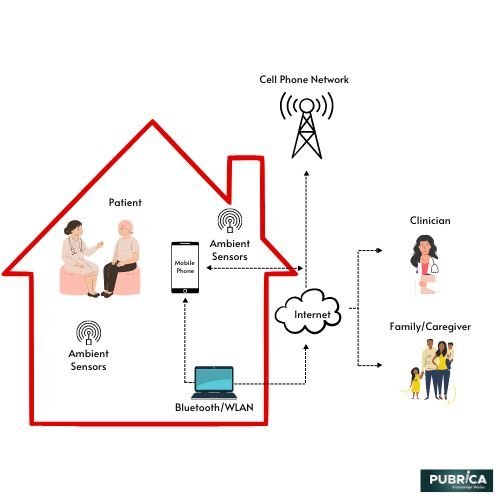
A Systematic Review on the Limitations and Challenges of Parkinson’s Disease In brief The miniaturization, complexity, proliferation, and accessibility of technology enable capturing inaccessible events in […] The post A Systematic Review on the Limitations and Challenges of Parkinson’s Disease appeared first on Pubrica .
Recent advances from Northwestern investigators have powered a new, deeper understanding of Parkinson's disease that could pave the way to a disease-modifying treatment. The post Elucidating Parkinson’s Disease appeared first on News Center .