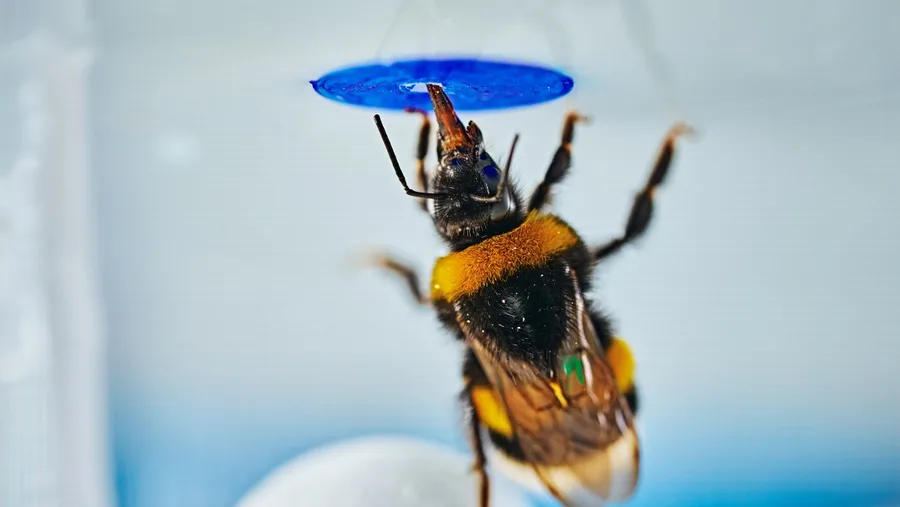
Bumble bees astonished researchers by inventing a new way to reach a hidden reward, despite never being taught the trick. The discovery adds to growing evidence that these tiny insects are far smarter and more adaptable than once believed.
Live Science spoke with animal researcher Andreas Nieder about how animals process mathematical concepts like statistical reasoning and the idea of zero.
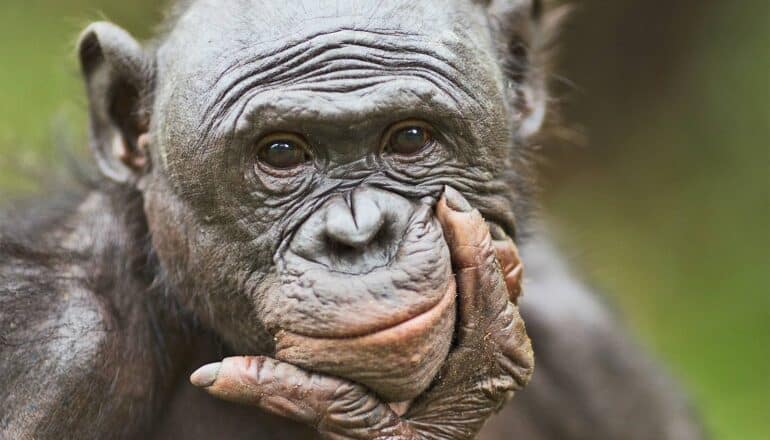
Insects join list of species capable of solving simple ‘box-and-banana’ problem that demonstrates basic intelligence Bumblebees can use tools to solve a problem, according to experiments that demonstrate their remarkably advanced cognitive abilities. The bees were given an adapted version of an experiment that, 100 years ago, first demonstrated chimpanzees could work out how to retrieve an out-of…
The Complex Nature of Language: Meaning, Mind, and the Architecture of Communication
Language is humanity’s most remarkable invention and its most enduring mystery. In The Complex Nature of Language, the twenty-fourth volume of The Miscommunication Trilogy: The Entropy of Communication, Vol. II, the intricate structures, hidden mechanisms, and evolving dynamics of language are examined through an…
Intelligence has been attributed to a growing number of non-primate species, including birds, cephalopods, and jumping spiders. This review outlines key findings in animal intelligence, finding that there is significant support for the presence of a wide variety of intelligent capacities in these groups. Yet, how intelligence can be achieved with relatively small, non-mammalian brains remains an …
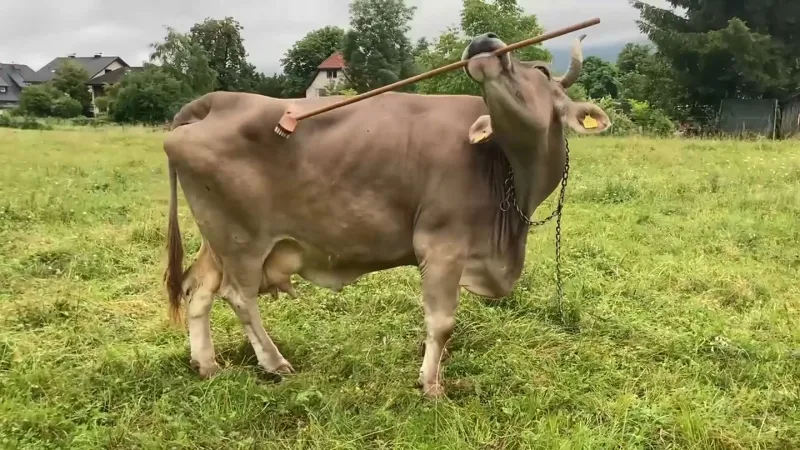
A cow named Veronika has stunned scientists by using tools in a flexible and purposeful way. She chooses different ends of a brush depending on the part of her body and adjusts her movements accordingly. This level of tool use is incredibly rare and was previously seen mainly in primates. The finding hints that cows may be much smarter than we assume.
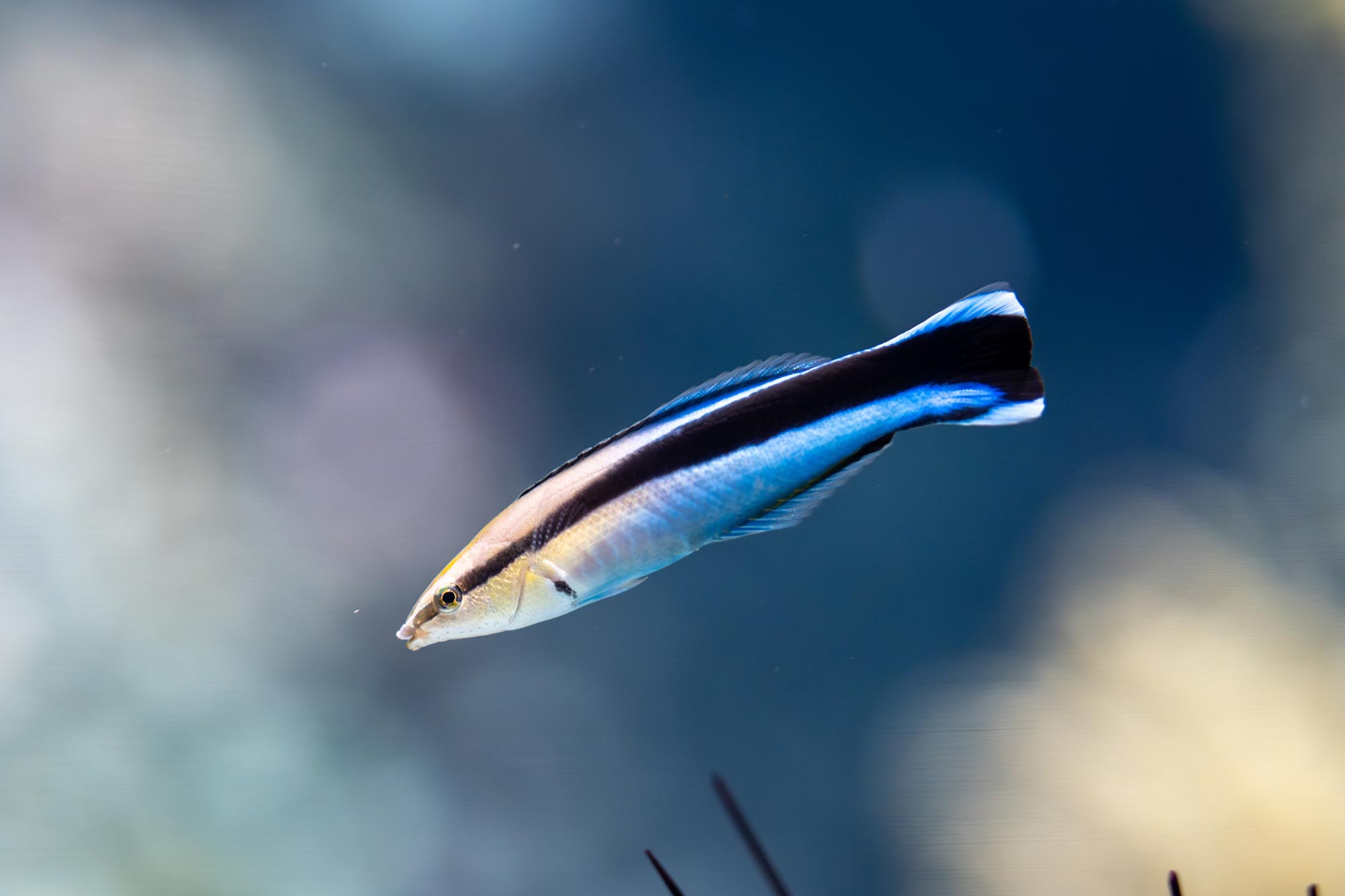
Cleaner wrasse may be far more cognitively sophisticated than previously thought. Scientists at Osaka Metropolitan University in Japan have identified a new and unexpected behavior in cleaner wrasse (Labroides dimidiatus). When shown a mirror, these small reef fish did more than appear to recognize their reflections. They also began interacting with the mirror using a [...]
Disciplines
Alternative and Complementary Medicine | Cognition and Perception | Developmental Psychology | Development Studies
Publication Date
2021
Document Type
Article
DOI
10.25778/h97m-ba67
Abstract
Pregnancy is a very physical and mental process during which many women face a wide variety of complications. The influx of hormones that happens during pregnancy has the ability to make pregnant …
Prof Susan Healy
Principal Investigator
Contact
Email: Susan Healy
Phone: +44 1334 462065
Biosketch
Susan Healy is a Professor in the School of Biology, University of St Andrews. She has several avenues of research currently underway all stemming from an interest in adaptation and cognition. Her research investigates cognitive abilities in non-model organisms such as hummingbirds, zebra finches a…
Jonah Lehrer discusses the new Gallup poll numbers on the (non)acceptance of evolutionary theory versus creationist beliefs in his New Yorker blog post “Why We Don’t Believe in Science.” He cites a study by Andrew Shtulman in Cognition that finds … Continue reading →