The macroevolutionary consequences of island hopping
by Nathalie Feiner
24 March 2021
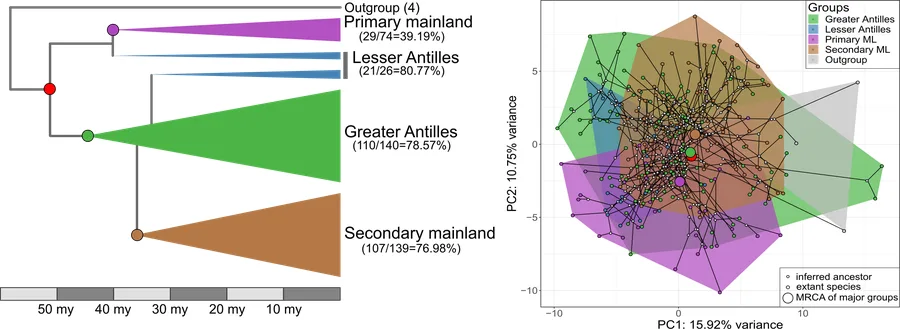
Natural historians have known for a long time that islands often harbour an extraordinary amount of biodiversity. One reason is that lineages that colonize islands can exploit open ecological niches and therefore diversify along new evolutionary trajectories. So did Anolis lizards following their arrival to the …
Niche Construction: a new resource website
20th June 2020
We have just launched a new resource website on niche construction and niche construction theory: nicheconstruction.com
This website was developed in the hope that it will prove a valuable resource for the community of academics, students and other individuals interested in the topic of niche construction. The website is designed to provid…
Does evolution go where plasticity leads? New paper by Radersma et al. in Evo Letters.
20th June 2020
Tobias Uller writes:
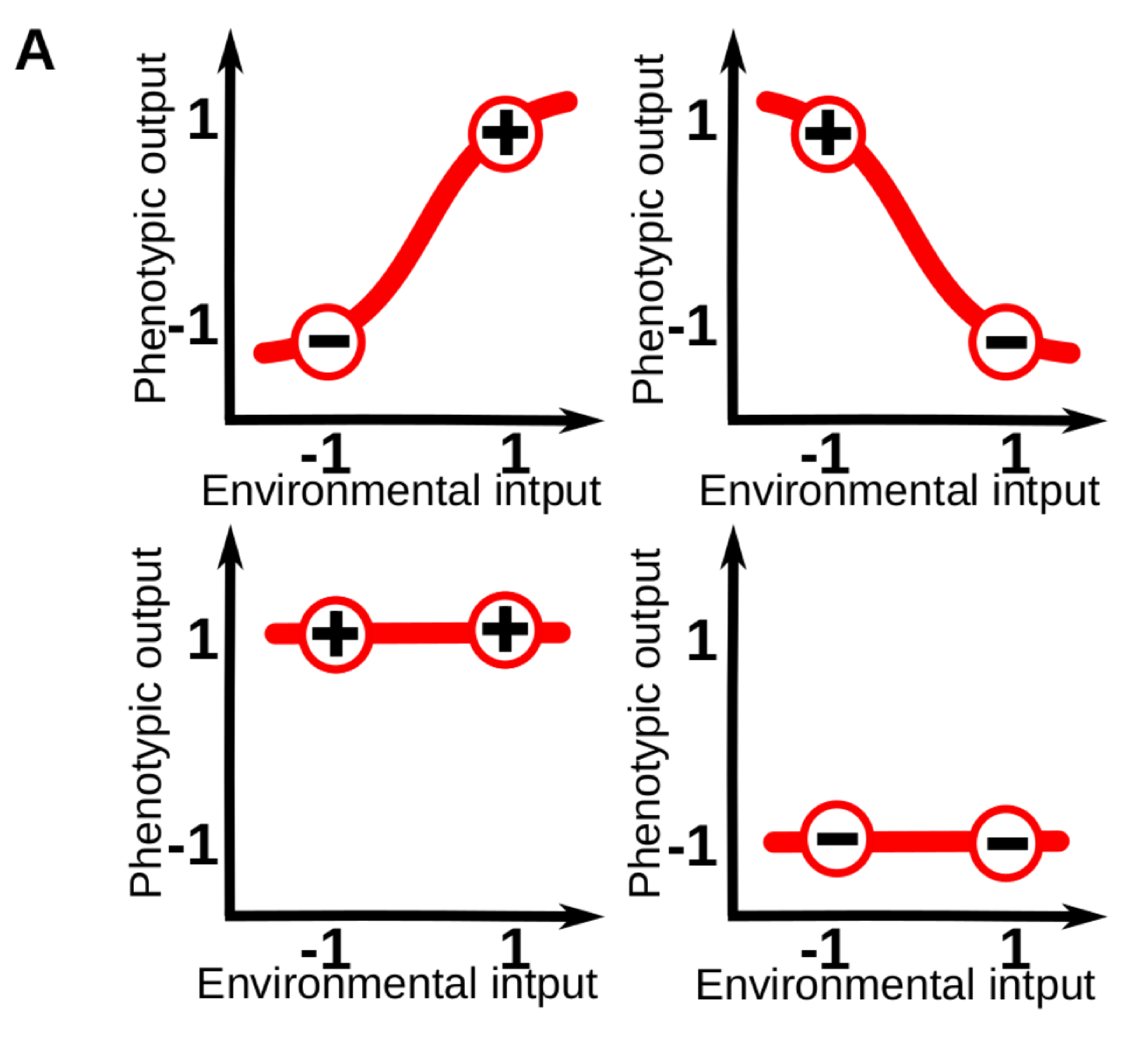
West-Eberhard famously suggested that plasticity ‘takes the lead’ in adaptive evolution. But how can you tell if you are not there to see it happen? In a new paper in Evolution Letters, we show one way to tackle the problem. We figured that we can look for signatures of plast…
Pigliucci M.
14th June 2020
Do we need an extended evolutionary synthesis? Evolution. 2007;61(12):2743–49
14th June 2020
Do we need an extended evolutionary synthesis? Evolution. 2007;61(12):2743–49
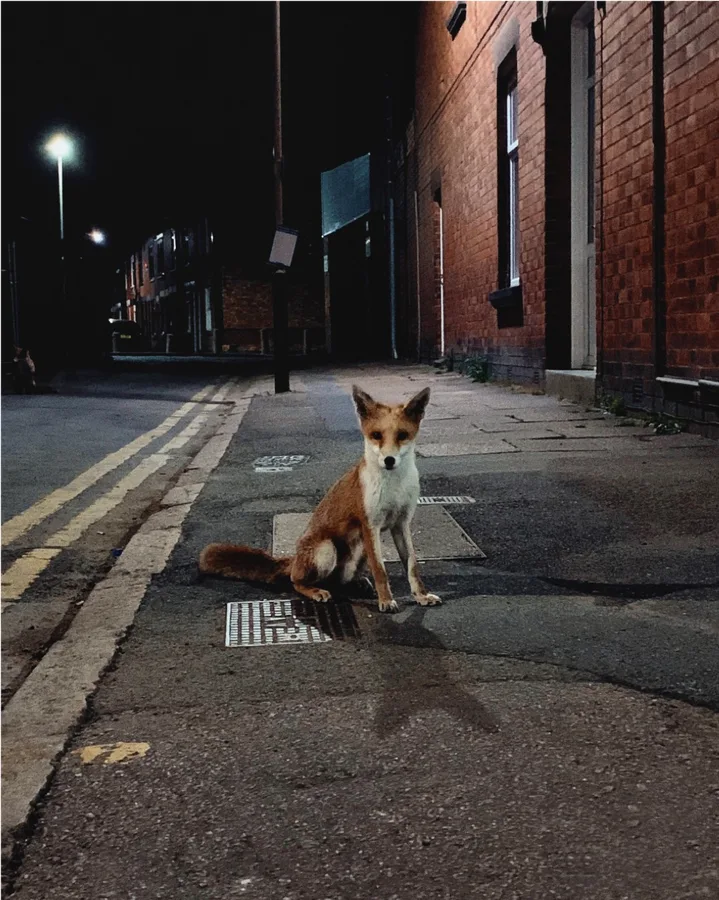
Developmental bias driving self-domestication processes and macroevolution? The case of red foxes living in urban and rural habitats
by Kevin Parsons
12 June 2020
Darwin was particularly fascinated by changes in animals that occurred during domestication which helped to form some of his major ideas. Indeed, the Origin of Species contained a chapter on pigeons, and Darwin even bred pigeons himself…
Evolution: The Extended Synthesis
5th June 2020
edited by Massimo Pigliucci and Gerd B. Müller (2010)
5th June 2020
edited by Massimo Pigliucci and Gerd B. Müller (2010)
Müller GB.
5th June 2020
Why an extended evolutionary synthesis is necessary. Interface Focus. 2017;7(5):20170015
5th June 2020
Why an extended evolutionary synthesis is necessary. Interface Focus. 2017;7(5):20170015
Laland KN, Uller T, Feldman M, Sterelny K, Müller GB, et al.
5th June 2020
Does evolutionary theory need a rethink? Nature News. 2014;514(7521):161.
5th June 2020
Does evolutionary theory need a rethink? Nature News. 2014;514(7521):161.
Mesoudi A, Blanchet S, Charmantier A, Danchin É, Fogarty L, et al
5th June 2020
Is non-genetic inheritance just a proximate mechanism? A corroboration of the extended evolutionary synthesis. Biol Theory. 2013;7(3):189–95.
5th June 2020
Is non-genetic inheritance just a proximate mechanism? A corroboration of the extended evolutionary synthesis. Biol Theory. 2013;7(3):189–95.
How to fit in: The learning principles of cell differentiation
by Miguel Brun-Usan
27 April 2020
The logic underlying cell differentiation has motivated an intense field of debate over years. How can plastic, developing cells “know” exactly where and how to differentiate ? Given that cells are aquipped with genetic networks, could they benefit from some form of basic learning, as cognitive system…
After Darwin: Evolution beyond the selfish gene
24th January 2020
Massimo Pigliucci, Tim Lewens, Zanna Clay
The brutal mechanism of natural selection gave rise to all life on our planet, or so the Darwinian story goes. But from mice to great whales, it now appears that animals can inherit socially acquired characteristics. And after a century of hype, the tools to build a brave new world through …
Special issue: Developmental Bias in Evolution.
24th January 2020
Special issue in Evolution & Development. January-March 2020 Edited by: Armin P. Moczek
24th January 2020
Special issue in Evolution & Development. January-March 2020 Edited by: Armin P. Moczek
The extended evolutionary synthesis: its structure, assumptions and predictions
24th January 2020
Laland KN, Uller T, Feldman MW, Sterelny K, Müller GB, et al. 2015. Proc. R. Soc. B. 282(1813):20151019
24th January 2020
Laland KN, Uller T, Feldman MW, Sterelny K, Müller GB, et al. 2015. Proc. R. Soc. B. 282(1813):20151019
Our special issue on Developmental Bias in Evolution is officially published online
22nd January 2020
We are delighted to announce that the full volume of the special issue “Developmental Bias in Evolution,” edited by Armin P Moczek, is now out in the journal Evolution & Development. This special issue follows our third workshop at Santa Fe in 2018.
In November 2018 the Santa Fe Institute hosted …
Does Inheritance Need a Rethink? Conceptual Tools to Extend Inheritance beyond the DNA
by Sophie Veigl, Javier Suárez, & Adrian Stencel
5 November 2019
Inheritance is an essential component of evolutionary processes. Without inheritance, evolution by natural selection cannot lead to the accumulation of complex, adaptive traits. But what can be inherited, and how?
Eva Jablonka and Marion J. Lamb a…
The Evolution of Robustness
by Wim Hordijk and Lee Altenberg
1 November 2019
In Darwin’s theory of evolution by natural selection, the key phrase is “survival of the fittest”: those organisms that are best fit to carry out the tasks of living in their world are the ones that survive. But they won’t live forever — they must have offspring that inherit the traits that made them fit in order for evo…
It’s out! 15 chapters. 345 pages. “Evolutionary Causation: Biological and Philosophical Reflections“, edited by Tobias Uller and Kevin Laland, has just been released through the MIT Press. This is THE book of the EES project, a collection of tightly integrated essays written by biologists and philosophers to together investigate the causal structure of evolutionary processes.
In today’s early career spotlight, we talked to Thomas Oudman, visiting scholar at the Laland Lab, University of St. Andrews. Two of his papers just came out: Northward range expansion in spring‐staging barnacle geese is a response to climate change and population growth, mediated by individual experience.[download PDF]Tombre IM, Oudman T, Shimmings P,
research.io
Sign up to keep scrolling
Create your feed subscriptions, save articles, keep scrolling.



 research.io